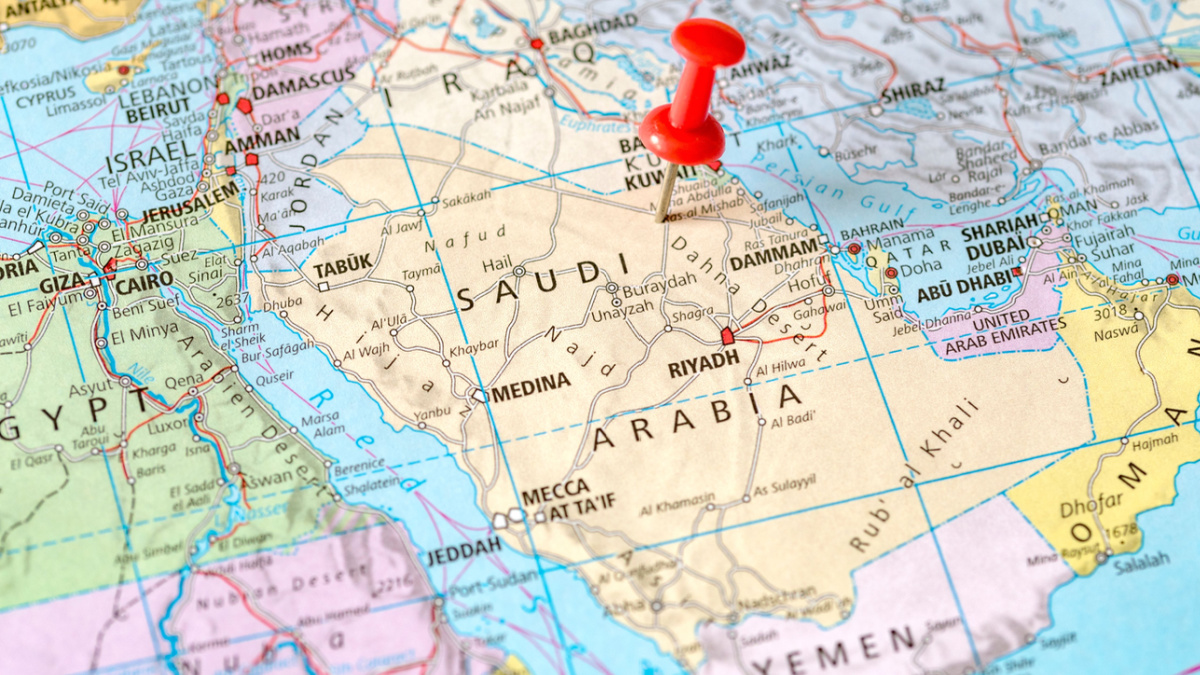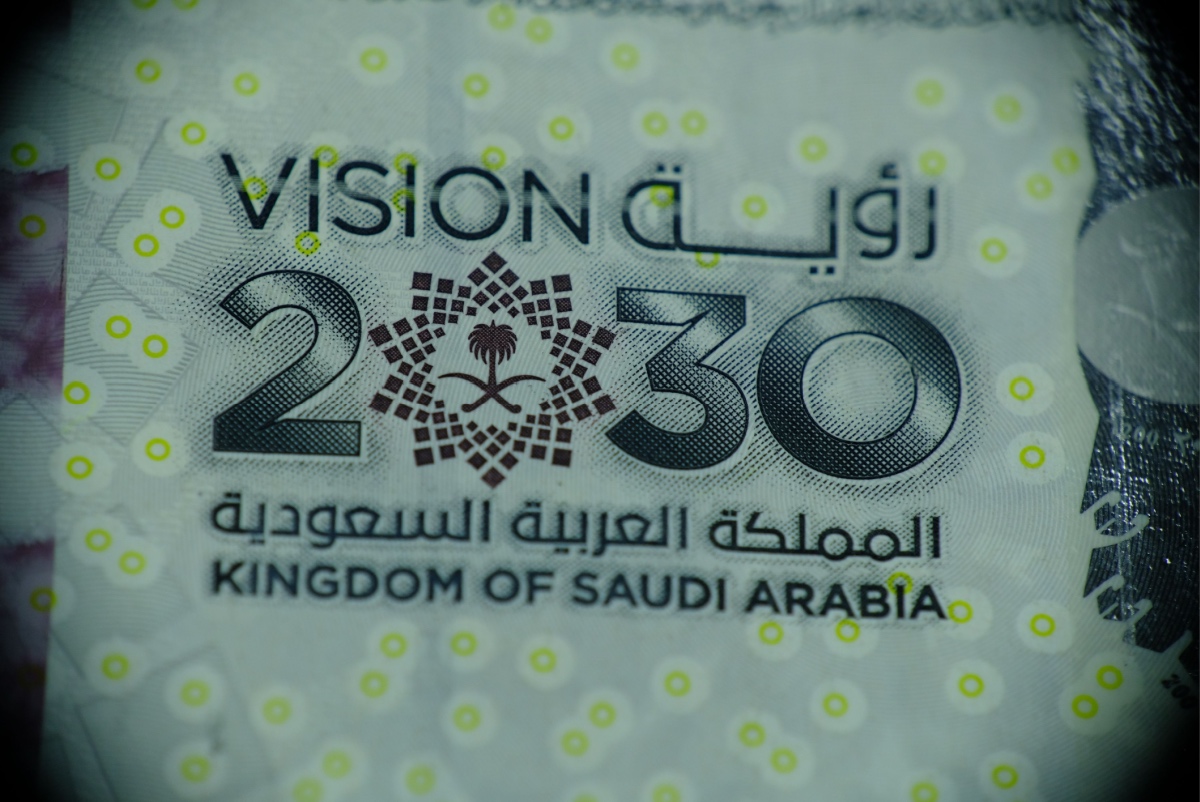
Saudi Arabia has transformed into a digital-first, cashless society, which has been government-backed through the Saudi 2030 Vision since 2016.
Saudi Vision 2030, launched in April 2016, is a government initiative designed to reduce Saudi Arabia’s dependence on oil and diversify its economy.
As part of this vision, the country has made significant investments in infrastructure to support global sporting events, expanded its tourism sector by easing previously stringent visa requirements, and strengthened support for domestic small and medium-sized enterprises.
A key pillar of Vision 2030 is the FinTech Strategy, led by the Saudi Central Bank (SAMA). This strategy reflects a commitment to transitioning towards a cashless society by promoting digital payments and investing in emerging financial technologies, aligning Saudi Arabia with adoption trends seen in many Western markets.
The FinTech Strategy also aims to position Saudi Arabia as a global leader in financial technology by fostering innovation, supporting startups, and enhancing both traditional and digital financial services. A core objective is to improve financial inclusion across the population.
To achieve this, the strategy focuses on developing robust digital financial infrastructure through the adoption of open banking, blockchain, and AI-powered financial services. These efforts are intended to attract both domestic and international investment, particularly from payment companies, to further expand the Kingdom’s digital payment ecosystem.
One of the key implementations to support these goals has been the establishment of Mada, Saudi Arabia’s national payments network.
Rebranded to Mada from the Saudi Arabia Payments Network (SPAN) in 2015, the network connects all local bank debit and credit cards to ATMs, point-of-sale (POS) terminals and online e-commerce businesses and merchants to process payments.
In 2016, Mada Atheer was rolled out to begin accepting contactless payments. Three years later, in 2019, Mada Pay was launched, a digital payments service compatible on smart phone devices to make payments using near-field communication (NFC) technology. Mada has also issued co-branded cards with Visa and Mastercard to support international payments.
The statistics behind Saudi’s digital transformation
In line with the objectives of Saudi Vision 2030, the initiative sets an ambitious target for non-cash payments to account for 80% of all transactions by 2030. It also aims to generate up to 18,000 jobs within the fintech sector and contribute approximately SAR 13.3bn ($3.5bn) to the Kingdom’s GDP.
In its most recent update on 12 April, SAMA revealed electronic payments accounted for 85% of all retail payments in 2025. This was a 79% increase from 2024 total retail payments.
SAMA attributed this growth to Mada as total electronic payments reaching 14.6 billion in 2025, an increase from 12.6 billion transactions in 2024, and 10.8 billion payments in 2023.
As of July 2025, SAMA revealed online transactions performed by Mada rose by 80% year-over-year.
Regulatory frameworks
Underpinning Saudi Arabia’s digital transformation are the regulatory frameworks and guidelines established to incentivise local and international payment companies to operate under compliance.
In 2018, one of SAMA’s first acts was to launch a regulatory sandbox. This invited local and global companies to test digital payment services in a regulatory environment, such as digital wallets and peer-to-peer (P2P) payments before regulations could then be established to accommodate them.
SAMA further enforced new regulations in 2020 by formalising a framework by defining Electronic Money Institutions (EMIs) as digital wallet providers, and Payment Institutions (PI) as acquiring and processing entities.
These regulations regulate all fintech, EMIs and payment service providers by requiring them to obtain operating licenses from SAMA, adhering to minimum capital requirements of $532,000 (SAR 2m) and that client funds must be separated from the operators’ funds for security reasons.
The Ministry of Investment (MISA) has also laid out requirements for international payment companies. They must pass a formal licensing process, which includes risk assessments and financial disclosures, before they can operate as either a local LLC or a branch office.
There are also regulations for buy now, pay later and open banking. For BNPL firms to operate in Saudi Arabia, firms must hold at least $1.332m (SAR 5m) in capital, secure an operating licence, and employ 50% Saudi nationals, rising to 75% each year.
In 2021, SAMA issued its open banking policy to allow customers to share their financial data with third-parties to create a more personalised user experience and for payment companies, tailored solutions for customers.
This has progressed to allow SAMA to undergo its first phase of its open banking licensing policy. Introduced in early 2026, regulated fintechs can apply for these licenses to offer commercialised account information services and payment initiated services to customers.
Value added services: BNPL and digital currencies
While digital payment growth is the bedrock of Saudi Vision 2030’s FinTech Strategy, the country has also developed value added services to create more options for customers to pay in Saudi Arabia.
BNPL has particularly grown in popularity and adoption amongst consumers. A January 2026 report revealed the Saudi BNPL market has grown by 28.8% CAGR from 2022-2025, backed by two local providers Tabby and Tamara. The report projected the market to grow a further 21.3% CAGR from 2026-2031, jumping from a market value of $2.7bn in 2025, to $8.8bn by 2031.
The growth of BNPL, and digital payments, has been attributed to the adoption amongst younger, digital-native, demographics.
With more than 60 licensed BNPL operators in Saudi Arabia the payment method has been backed by regulatory frameworks that have yet to be established in mature markets like the US and UK.
Like many global markets, Saudi Arabia has been developing digital currency projects in the form of a regulated market for cryptocurrencies, and for the potential issuance of a central bank digital currency (CBDC).
Cryptocurrency is not recognised as legal tender in Saudi Arabia and SAMA has also banned banks and payment companies from offering crypto asset services. Despite this, SAMA is undergoing a framework alongside the Capital Market Authority (CMA) to provide legislation for Virtual Asset Service Provider (VASP) licenses to allow local financial institutions to provide crypto custody services for customers.
The country is also planning a carbon-neutral Bitcoin mining framework to launch in 2028. This will align with the country’s Saudi Green initiative to become a Bitcoin mining hub and incentivise compliant crypto mining to attract further investment from international crypto companies.
SAMA is also leveraging distributed ledger technology (DLT) to develop a wholesale CBDC in favour of a retail CBDC. A ‘digital Riyal’ would allow local commercial banks to settle payments near instantaneously using the CBDC within the same regulatory parameters of its fiat counterpart.
SAMA has also joined mBridge, an initiative launched by the Bank for International Settlements (BIS) to foster collaboration amongst global banks to further develop the Digital Riyal for cross-border use cases.