Tobias Adrian argues programmable assets and real-time settlement are shifting risk away from institutions and into infrastructure, raising questions over liquidity, governance and cross-border oversight.
The International Monetary Fund has warned tokenised finance could reshape the foundations of the global financial system.
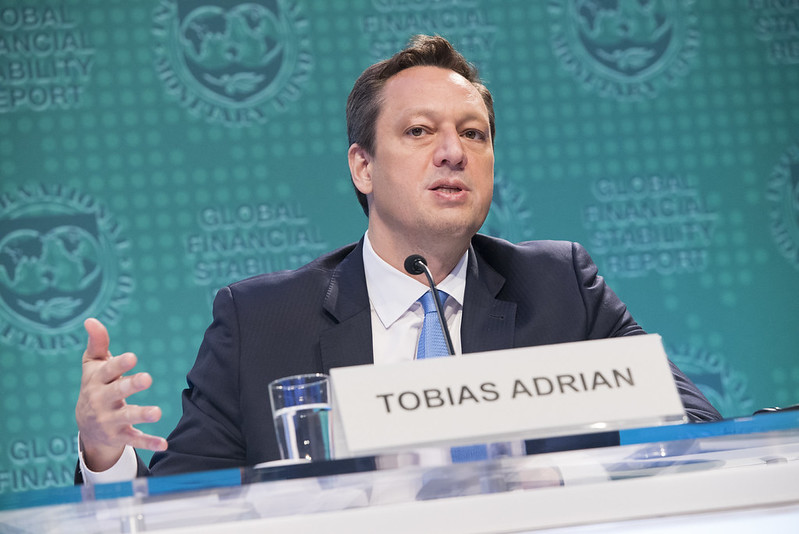
The assessment comes in a new paper, Tokenized Finance, authored by Tobias Adrian (Financial Counsellor and Director of the Monetary and Capital Markets Departmen), who argues tokenisation represents “a structural shift in financial architecture,” altering how settlement, liquidity and risk are managed across markets.
At the centre of the report is a distinction between digitisation and tokenisation. While financial markets have operated digitally for decades, they still rely on fragmented processes, with transactions passing through multiple intermediaries before settlement. Tokenisation changes this model by embedding ownership and transfer directly into digital tokens recorded on shared ledgers.
This allows transactions to be executed and settled simultaneously. The IMF notes that tokenisation “collapses multiple stages of the traditional financial value chain into a synchronised process,” removing the need for reconciliation between institutions.
The result is a system where trading, settlement and elements of risk management can occur in a single step, rather than across multiple stages.
Continuous settlement and liquidity pressure
One of the most significant changes outlined in the paper is the move to continuous, real-time settlement.
Traditional financial systems operate with delays that allow institutions to net exposures and manage liquidity over the course of a business day. Tokenised systems remove these delays.
“Settlement becomes continuous, margining becomes automated, and liquidity demands materialize instantaneously,” Adrian states.
While this reduces counterparty risk, it also alters how liquidity must be managed. Obligations that were once predictable and periodic may instead arise at any moment, requiring institutions to hold or access funds on a constant basis.
Adrian places particular emphasis on how tokenisation changes the location of risk within the financial system. In existing frameworks, risk is managed through regulated institutions, legal agreements and layered processes. In tokenised environments, these functions are increasingly embedded into smart contracts and shared infrastructure.
This introduces a different category of vulnerability. “Failures can originate in algorithms or data feeds,” the report notes, rather than through traditional institutional weaknesses.
Because these systems operate automatically, errors can propagate quickly. The report highlights that the same features that improve efficiency, such as speed and automation, may also amplify the impact of faults in code or data.
Competing forms of digital money
The paper also revisits a long-standing question in payments and monetary policy: what serves as the settlement asset.
It identifies three emerging forms of tokenised money:
- tokenised commercial bank deposits
- privately issued stablecoins
- wholesale central bank digital currencies
Each reflects a different balance between public and private risk. Stablecoins, for example, may offer global reach but depend on the quality and liquidity of their backing assets, while tokenised deposits remain tied to the banking system.
Adrian notes these developments raise broader questions about maintaining the “singleness of money” across platforms and jurisdictions, particularly as multiple forms of digital money circulate simultaneously.
Faster markets, less time to react
Across capital markets and financial infrastructure, tokenisation is expected to compress multiple functions into integrated workflows.
This includes trading, settlement, custody and collateral management, all of which can be automated through smart contracts. While this may reduce operational friction, it also changes how stress events unfold.
“Stress events in tokenised markets are likely to unfold faster than in traditional systems, leaving less time for discretionary intervention,” Adrian states.
Automated margin calls and collateral movements may respond immediately to market changes, potentially reinforcing volatility during periods of stress.
The report also highlights tensions between global infrastructure and national regulatory frameworks. Tokenised systems operate across shared ledgers that can span jurisdictions, allowing assets and liquidity to move without a clear geographic anchor. However, legal authority and resolution frameworks remain nationally defined.
This creates what the IMF describes as a “fundamental mismatch” between the global operation of tokenised finance and jurisdiction-based oversight. The challenge becomes more pronounced in crisis scenarios, where the ability to intervene may depend on control over infrastructure rather than institutions.
Governance moves into infrastructure
Beyond market structure, the paper frames tokenisation as a shift in how financial systems are governed. As more financial logic is embedded in software, oversight extends beyond institutions to the design and control of code. “Tokenisation embeds governance in code,” Adrian notes, pointing to the need for clear frameworks around how systems are built, tested, and, if necessary, overridden.
Adrian emphasises legal certainty remains a barrier to wider adoption. Questions around ownership, settlement finality and enforceability must be addressed for tokenised systems to move beyond pilot stages.
The note concludes by positioning tokenisation as a reconfiguration of financial infrastructure rather than a discrete innovation.
By enabling programmable assets and real-time settlement, it changes how trust is distributed across the system. The outcome, the IMF suggests, will depend on how governance, legal frameworks and settlement assets evolve alongside the technology.