Kelly Devine, President of Mastercard Europe, argues that as geopolitical pressures reshape the payments landscape, Europe must balance resilience and sovereignty with openness and innovation

Geopolitical shifts are putting Europe’s payment systems under the spotlight like never before. In recent months, instability has led European policymakers, central banks and market participants to increasingly perceive payments as critical infrastructure that should be managed more locally. Some are openly advocating for preferential treatment of homegrown, European or national solutions.
Wherever one stands in this debate, one thing is clear: payments sit at the heart of Europe’s economic system. They connect its governments, businesses and people with the rest of the world, underpin consumer confidence and economic activity, and are crucial to the effective functioning of the Single Market.
Europe remains a global leader in payments innovation. Contactless payments, first pioneered and widely deployed in Europe, now dominate the region’s in-store transactions. According to the European Central Bank, over 80% of in-person card payments in the euro area are now contactless.
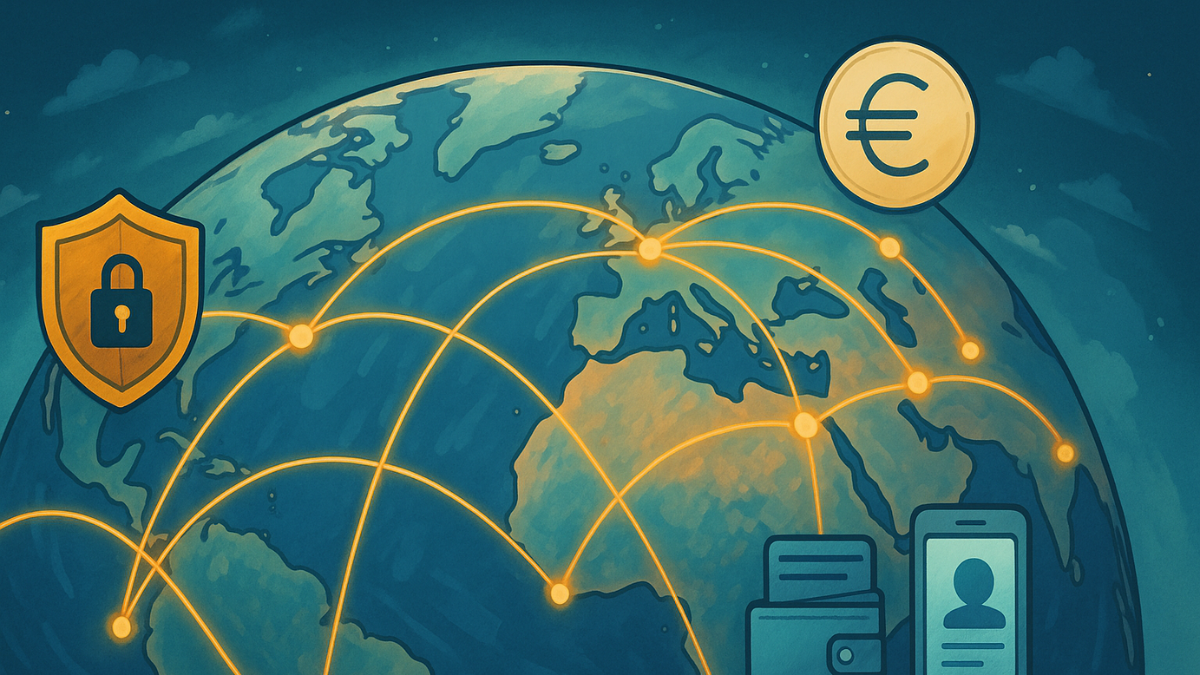
Building systems that preserve European values, while simultaneously retaining its role as a payments innovator, can be broken down into five foundational payment principles – stability, security, standards, seamlessness, and success. Combined, these principles will support a payments ecosystem continues to support growth, innovation and global competitiveness across Europe.
Stability: Infrastructure Europe can rely on
Payments systems are critical infrastructure. They must operate continuously, reliably, and at scale – availability and stability are non-negotiable.
Across Europe, billions of transactions take place every day. Digital payments alone now represent trillions of euros in annual activity. The systems that support these payments must function regardless of market volatility, cyber threats or geopolitical pressure.
Strengthening Europe’s payments resilience requires investment in local, always-on infrastructure. Financial institutions and payment networks are expanding regional processing capabilities and data infrastructure to ensure Europe’s transactions continue without interruption.
The goal is simple: greater resilience. Infrastructure that Europe can trust in all circumstances.
Security: Protecting to prosper
As the payments landscape evolves, cyber threats are also growing rapidly, both in scale and sophistication. The European Union Agency for Cybersecurity has reported a sharp rise in AI-enabled cyberattacks targeting financial services in the past year, and the increased adoption of these technologies is making fraud harder to detect than ever.
Europe’s payments systems must respond with equal sophistication. Fraud prevention, cyber resilience and data protection must be embedded directly into payments networks so that protection – and trust – is built in by design.
It is that level of trust that enables European businesses, particularly small and medium-sized businesses and fast-growing digital companies, to focus on innovation and growth, safe in the knowledge they have strong, consistent protection.
European institutions are bolstering fraud prevention tactics to protect businesses and consumers from criminal actors. Artificial intelligence is increasingly being used to identify suspicious behaviour in real time and stop fraud before it occurs. Ultimately, protecting Europe’s payments ecosystem requires international collaboration. This means regulators, financial institutions and global players working together to enable comprehensive data sharing that allows us to predict when fraud attacks are likely to occur.
As digital payments continue to expand, Europe’s focus must remain on ensuring security that supports economic momentum and underpins prosperity.
Standards: Shared values, local governance
Cybersecurity included, Europe benefits from long-established regulatory and policy frameworks grounded in consumer protection, competition, data privacy and, increasingly, AI governance. These shared standards create a payments ecosystem in which consumers, banks, fintechs and businesses can interact with confidence.
Europe’s payment providers must align with European values, uphold local laws and government requirements, and maintain transparency – without compromise.
The systems that European institutions and citizens rely on must remain consistent with today’s regulatory framework and adaptable as it continues to evolve.
Seamlessness: Connecting across borders
A key element of that regulatory framework is Europe’s openness. Europeans travel extensively, trade across borders and participate in global commerce every day. Payments must support this.
Europe must harness payment networks that work both in Europe, and for Europe. People and businesses must pay and be paid with confidence whether at home or across borders, knowing their money, rights and data are protected on European terms and values.
Innovation is central to this effort. Consumers and businesses now expect frictionless digital experiences that enable international participation, mobility and trust and payments must keep pace. Continued innovation ensures Europe remains a global leader in fintech and payments technology.
Success: Investing for growth
Europe’s success is collective. Its payments future will not be shaped by a single organisation, technology or policy choice. From established financial institutions to fast-growing fintechs, it will be built through shared responsibility and sustained collaboration.
Europe requires a payment network that operates for its benefit. A partner that invests in its technologies, talent and partnerships, and strengthens the continent’s competitiveness in a rapidly changing global economy. This is how we will create more economic opportunity for all Europeans.