The Bank of England has signalled flexibility on its proposed stablecoin caps, acknowledging industry concerns while defending the financial stability case for tighter controls
The Bank of England has indicated it may revisit its proposed limits on stablecoin holdings after facing sustained pushback from the digital asset industry.
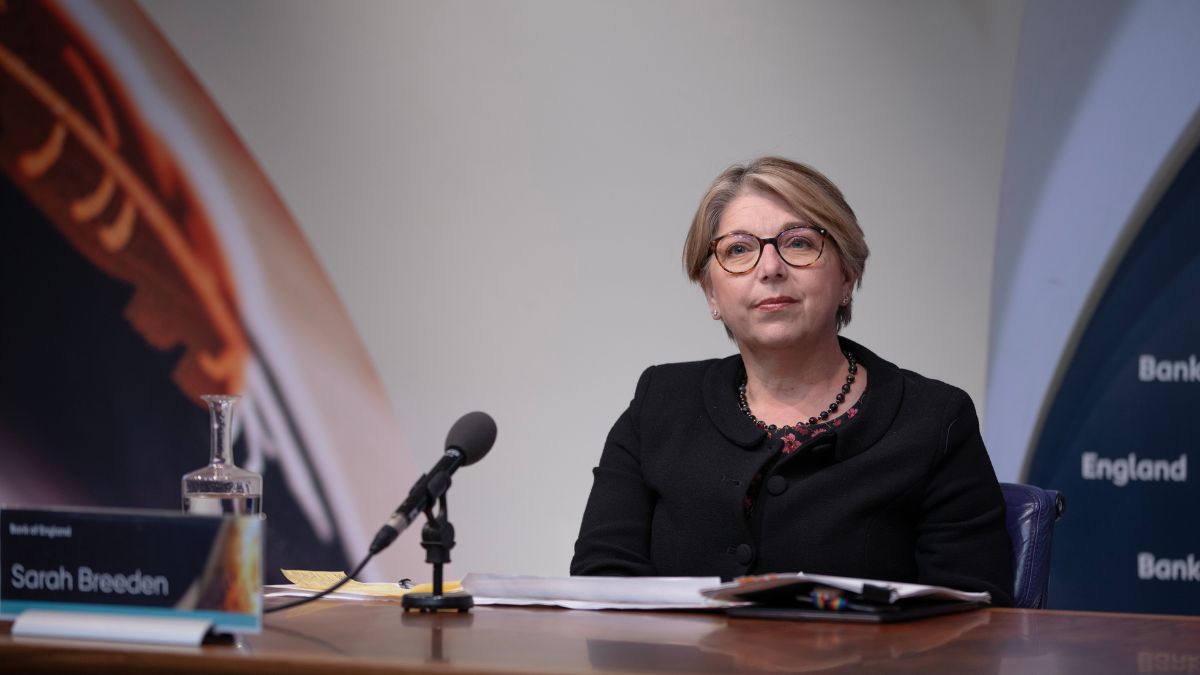
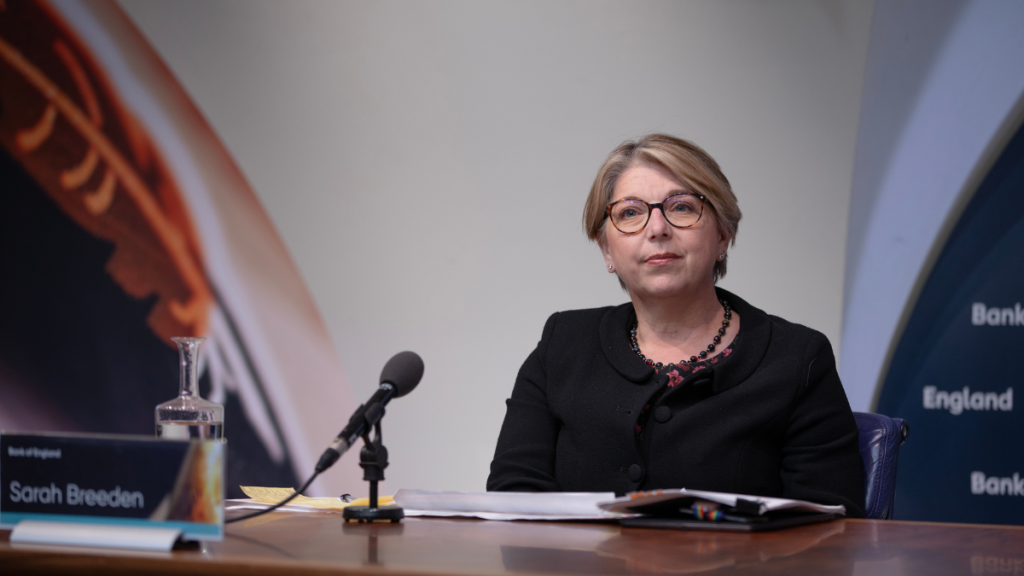
Deputy Governor Sarah Breeden told a House of Lords committee on 11 March that regulators are “genuinely open to other ways of achieving the objective.”
The admission came as Breeden appeared before the Financial Services Regulation Committee alongside Sasha Mills, the BoE‘s Executive Director for Financial Market Infrastructure, to give evidence on the UK’s stablecoin regulatory framework.
While Breeden defended the overall design of the regime, her remarks represented the clearest signal yet that the Bank is willing to revisit one of its most contested proposals.
“We proposed holding limits as a way of managing that risk,” she told the committee. “We are open to feedback on other ways of achieving it.”
The Bank’s need for caution
The limits in question would cap individual holdings of systemically important sterling stablecoins at £20,000 ($26,500), with businesses restricted to £10m, though larger firms such as major retailers could apply for higher thresholds.
The Bank’s stated rationale is to manage the risk of a sudden, large-scale migration of deposits from commercial banks to stablecoin providers, which Breeden described as “a very real risk” with significant consequences for credit provision.
Banks currently provide 85% of household credit in Britain, funded largely through customer deposits. A rapid shift of those deposits into stablecoins, which perform payments functions but do not extend credit, could, in the Bank’s view, cause a sharp contraction in lending to businesses and households. “If that funding is not replaced in banks, we are in danger of seeing a precipitous drop in credit,” Breeden said.
To stress-test the proposal, the Bank modelled the impact of various cap levels, from £5,000 to no limit at all, publishing its full assumptions and methodology alongside the consultation.
Breeden noted that at the proposed £20,000 threshold, around 94% of users would be able to manage their entire salary through a stablecoin account.
By comparison though, the European Central Bank has proposed a €3,000 cap for a digital euro – a far more restrictive position.
Industry pushback and practical problems
The industry’s objections lie in a belief the caps may stifle adoption, and they may be practically unenforceable. Stablecoins, once issued, trade freely on secondary markets across exchanges globally, many of them outside UK jurisdiction.
Tracking aggregate holdings across wallets and platforms presents a significant technical challenge, and Breeden acknowledged as much.
“We’ll have to build something for a limit that is intended to be temporary,” she said, “and how do the costs and benefits of that stack up?”
The holding limits are not the only point of contention. The Bank has also proposed that issuers hold at least 40% of backing assets in unremunerated deposits at the Bank of England itself – a requirement the industry argues materially undermines the economics of issuing a sterling stablecoin.
The remaining 60% may be held in short-term UK government debt, on which issuers can earn a return. Breeden defended the 60/40 split as grounded in actual same-day liquidity risks stablecoin issuers may face, but acknowledged the tension.
“You’d expect there to be a tension between what you hear from us and what you hear from the industry, because every change that’s made is a change that matters for their bottom line,” she said.
Where the Bank has moved, however, is significant. Its original 2023 proposals would have required 100% of backing assets to be held unremunerated at the central bank. The shift to 60/40 followed sustained industry engagement, and Breeden was explicit that further movement is possible. “We will go back and check and see if we’ve been overly conservative in those assessments,” she said.

A regime designed for the future
Breeden was keen to frame the Bank’s overall approach as forward-looking rather than restrictive.
The systemic stablecoin regime, she emphasised, is not designed for the current market – where stablecoins are predominantly dollar-denominated and used primarily to settle crypto transactions – but for a future in which programmable, instant sterling payments become a mainstream feature of the real economy.
“We know from other areas of tech that new products can adopt rapidly,” she said. “It’s on us to make sure the UK is ready.”
Central to that vision is the Bank’s offer to act as banker to systemic stablecoin issuers – providing accounts for backing assets and, potentially, a liquidity facility to help issuers monetise government debt holdings quickly.
Breeden argued this made the UK regime uniquely supportive internationally. “We are the only central bank in the world that has proposed to put our balance sheet to work to ensure these coins are truly stable,” she said. “You don’t need to go and try and get a bank account with somebody whose business you are trying to disrupt.”