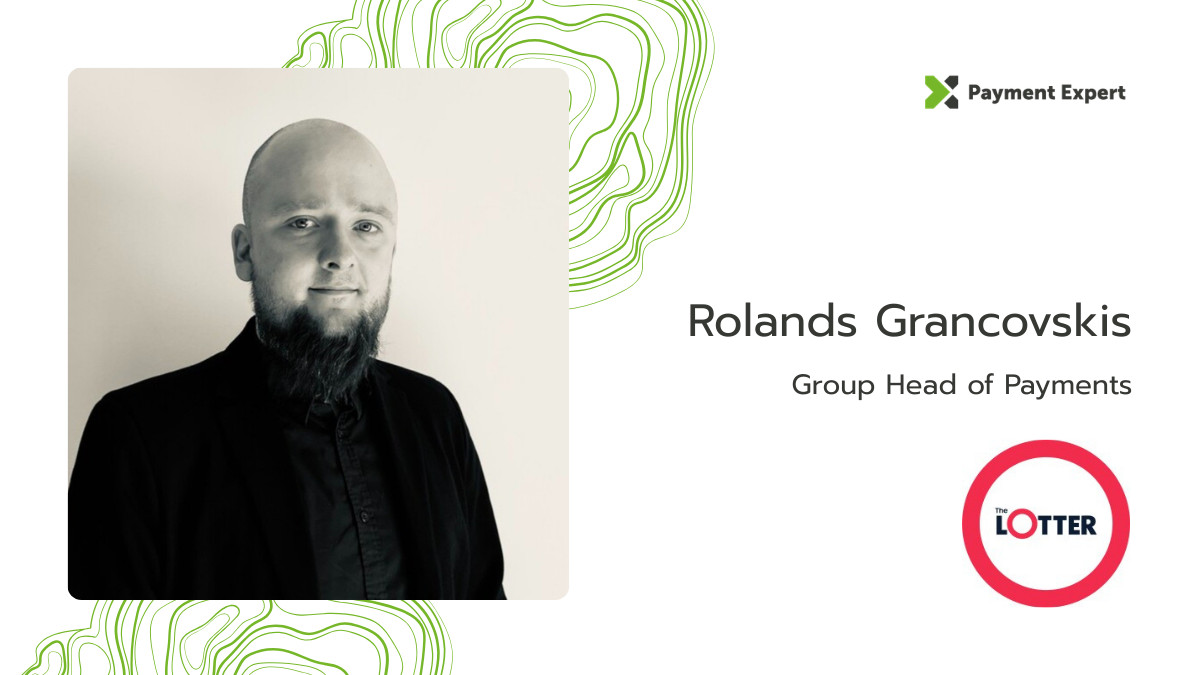
TheLotter Group’s Head of Payments on why scale changes the fraud equation, the limits of AI optimism, and what operators are still getting wrong
There is a version of the global iGaming industry that no longer exists, one where operators moved quickly, compliance was arguably an afterthought, and the rules varied so wildly between jurisdictions that the chosen strategy was often to pick the easiest route to compliance. That era, according to Rolands Grancovskis, Group Head of Payments at TheLotter Group, is largely over.
“Compared to five or seven years ago, the industry is far more mature,” he says. “The wild west phase is largely over. Serious operators invest properly, and payment providers demand higher standards.”
The Lotter Group operates across dozens of regulated markets, giving Grancovskis a vantage point that few in the industry share. Managing fraud at that scale, he is quick to point out, is not simply a question of resources but one of structure.
More markets, more surface area
In the early stages, scaling up as an iGaming operator undeniably creates exposure, says Grancovskis. Every new market brings its own regulatory requirements, payment methods and customer behaviours.
“It definitely creates more surface area at the beginning,” he says. “Every market behaves differently. Regulations differ, payment methods differ, customer behaviour differs. If you try to manage that complexity without the right structure, it becomes overwhelming very quickly.”
But once an operator reaches a certain maturity, exposure to fraud alters. Fraud rarely respects borders, and a business with visibility across multiple jurisdictions can connect signals faster than one operating in isolation.
“Fraudsters do not think in terms of brands and borders. They move where the opportunity is,” notes Grancovskis.
That broader visibility becomes especially powerful when multiple brands are involved. The same device patterns, similar transaction structures, or linked accounts – behaviours that would look unremarkable in a single brand’s data can reveal a coordinated fraud campaign when viewed across a portfolio.
“If you only look at one brand in isolation, you might miss that bigger picture,” Grancovskis says.
Consistency does not mean identical rules everywhere
One of the persistent challenges for any operator running across multiple regulated markets is the question of governance. Compliance rules differ dramatically by jurisdiction, and building a fraud prevention framework that is both consistent and locally appropriate requires a clear philosophy.
For Grancovskis, the starting point is rejecting the idea that regulatory compliance is the ceiling. “You cannot build your system to be just good enough to pass an audit,” he says. The regulator sets the minimum required standard; an operator’s internal risk appetite should determine where things go from there.
“Consistency does not mean identical rules everywhere,” he continues. “It means consistent governance and oversight, with local adjustments where needed.”
The same logic applies to third-party payment processors. Just as customers are subject to KYC, Grancovskis insists that partners face equivalent scrutiny: reputation, licensing, certifications, financial stability and operational transparency all factor into the assessment. He is clear that commercial attractiveness should always come second.
“A weak processor can damage your entire setup,” he warns. “No attractive commercial deal compensates for that risk.”
It is a philosophy that extends to how the business case for fraud infrastructure is framed internally. The perception of fraud prevention as a cost centre, Grancovskis suggests, has faded among serious operators, and for good reason.
“Fraud prevention is not a wasted cost. It is an investment that protects revenue, protects your licence, and protects your relationships with banks and payment providers. If those relationships are damaged, growth becomes impossible.”
The next threat: Faster, automated, AI-driven fraud
For all the progress the industry has made, Grancovskis is not complacent about what is coming. Asked where iGaming operators are most collectively underprepared, his answer is immediate.
“Everyone is talking about using AI internally, but fewer people are preparing for how fraudsters will use it,” he says.
“Automated agents, synthetic identities, large-scale testing of systems – this will increase volume dramatically. The challenge will not only be smarter fraud, but faster and more automated fraud.”
The tools to respond to that threat already exist, he believes, and the industry is better equipped than it has ever been. But access to technology is not sufficient on its own, because operators need to display the willingness to keep investing even when the immediate pressures of fraud ease.
“Are we permanently ahead? No. Fraud evolves constantly,” Grancovskis says. “But today, with the tools and data available, I believe well-structured operators can stay ahead if they remain disciplined and continue investing.”
Get your VIP Event Pass (€600). Group Discount: Buy 3+ VIP passes and pay just €400 per ticket.
Operators & Affiliates: Eligible attendees may receive a complimentary VIP Event Pass with full access.
Expo+ Pass (€150): Access to the exhibition floor and all conference sessions (no VIP evening events).