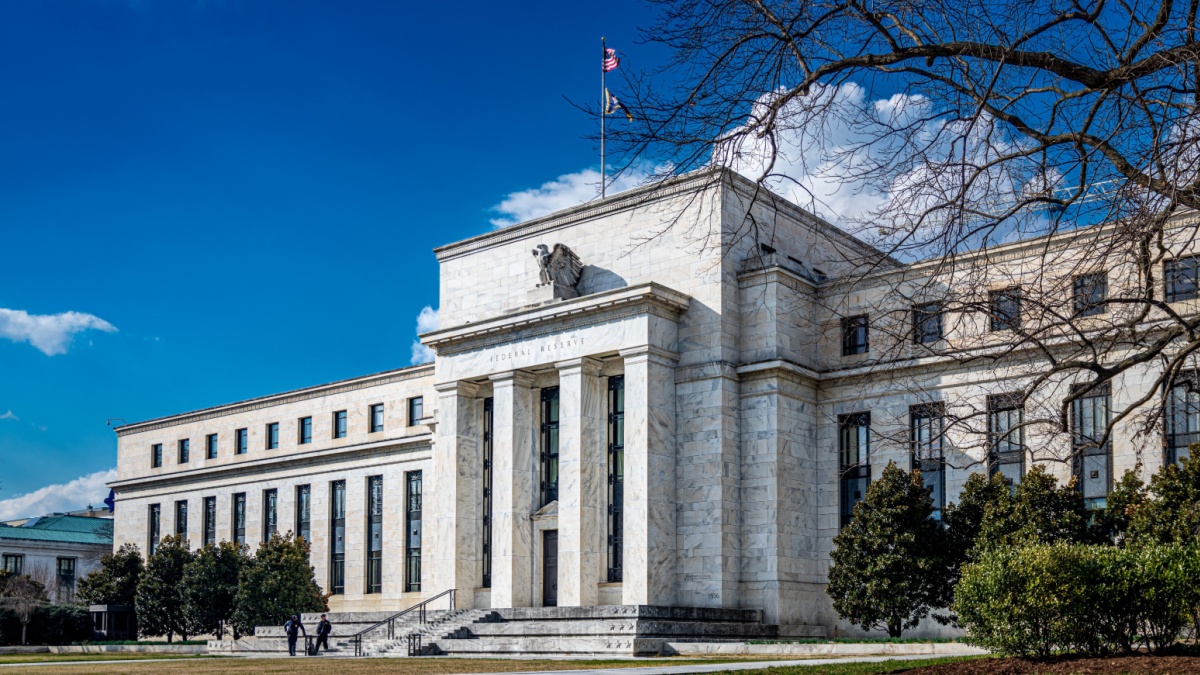
US central bank has opened a 60-day consultation on a proposal to formally remove “reputation risk” from its supervisory framework, reaffirming that banks should not be penalised for serving customers engaged in lawful activity.
The Federal Reserve Board has requested public comment on a proposal to codify its earlier decision to remove “reputation risk” from its supervision of banks, seeking to formalise a change first announced in June 2025.
In a statement released on 23 February, the Board said the proposal would embed in its supervisory framework the policy that reputation risk will no longer be a component of examination programmes. It also reiterated that supervisors should not penalise or prohibit banks from providing services to customers engaged in legal activities.
“We have heard troubling cases of debanking—where supervisors use concerns about reputation risk to pressure financial institutions to debank customers because of their political views, religious beliefs, or involvement in disfavored but lawful businesses,” said Michelle Bowman, Vice Chair for Supervision.
“Discrimination by financial institutions on these bases is unlawful and does not have a role in the Federal Reserve’s supervisory framework.”
From guidance to codification
In June 2025, the Board announced reputation risk would no longer feature in examination programmes. The new proposal would formalise that removal, helping ensure supervisory decisions are based on “material financial risks” and increasing clarity in supervisory processes.
The Board stated that the change supports its focus on core financial risk in supervising banks, while maintaining its expectation that institutions uphold strong risk management practices to ensure safety and soundness and compliance with law and regulation.
Comments will be accepted for 60 days following publication in the Federal Register.
US banking regulators have historically defined reputation risk as the potential that negative publicity – whether accurate or not – could affect an institution’s customer base, funding profile or earnings capacity.
While reputational considerations have long featured in supervisory manuals, critics have argued the concept is inherently subjective and may allow examiners broad discretion when assessing bank activities linked to politically sensitive or controversial sectors.
The Federal Reserve’s proposal signals that reputational concerns, in isolation, should not serve as a supervisory basis for action. Instead, supervisory determinations are to rest on demonstrable financial, operational, legal or compliance risks.
Debanking debate intensifies
The proposal follows sustained debate in Washington over so-called “debanking,” a term used to describe banks terminating customer relationships despite those customers engaging in lawful business.
Over the past two years, congressional hearings and industry testimony have examined whether supervisory references to reputation risk have contributed to banks exiting relationships with firms in sectors including digital assets, firearms, energy, and other legally operating but politically contentious industries.
The proposal was welcomed by some lawmakers who have criticised regulators’ handling of digital asset firms. Senator Cynthia Lummis, a Republican from Wyoming, said:
“It’s not the Fed’s role to play both judge and jury for banking digital asset companies. Glad to see this important step to permanently remove ‘reputation risk’ from Fed policy and put Operation Chokepoint 2.0 to rest so America can become the digital asset capital of the world.”
Regulators have denied the existence of any coordinated effort to exclude specific sectors from the banking system. However, the issue has gained bipartisan attention, with some lawmakers questioning whether prudential supervision has strayed into the realm of value-based risk filtering.
The Board’s statement makes clear that discrimination based on political views, religious beliefs or lawful business activity is inconsistent with its supervisory framework.
Post-crisis recalibration
The move also comes in the wake of heightened scrutiny of bank supervision following the failures of several US institutions in 2023. In this context, regulatory agencies have faced criticism over whether supervisory focus was sufficiently concentrated on liquidity, interest rate and concentration risks.
By emphasising “material financial risks,” the Fed appears to be narrowing supervisory emphasis to measurable prudential factors tied directly to safety and soundness.
The proposal does not alter capital requirements, liquidity standards or compliance obligations, nor does it introduce changes to existing guidance relating to specific industries. Instead, it addresses the scope of supervisory language and the factors examiners may cite when assessing institutions.