A candid crypto conversation between Binance’s founder and a billionaire investor lays bare Bitcoin’s privacy problem
Despite its reputation as “anonymous money,” Bitcoin’s traceable ledger and KYC-linked exchanges mean it may never deliver the privacy people assume – and that could cap its potential, according to a prominent early Bitcoin backer in conversation with Binance’s founder.
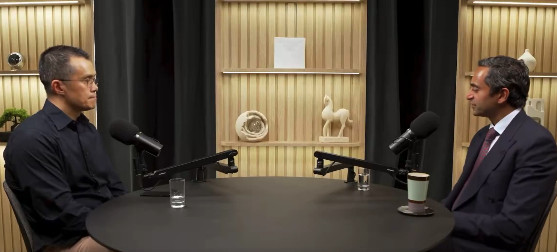
In a 11 February discussion, Chamath Palihapitiya and Changpeng Zhao “CZ” dove into the role of privacy in crypto, arguing that Bitcoin’s lack of fungibility and its fully traceable transaction history could prevent it from ever functioning like true digital cash.
“What is the role of privacy in crypto? One of the things that I struggle with, if you asked me as a Bitcoin maximalist, I would say no, even though I was early,” said Palihapitiya. “I think my biggest issue with it is that there’s a lack of fungibility, which I think is probably, to get to mega scale, that’s probably the biggest thing that will help Bitcoin back from being a business.”
Bitcoin has never truly been anonymous. It was designed to be pseudonymous: users transact with addresses rather than names. For years, that thin layer of abstraction has fuelled the myth of anonymity. But the combination of a public ledger and regulated exchanges has eroded that perception.
“I think privacy plays a very fundamental role in our society, but right now, as you said, I also think that Bitcoin and cryptocurrencies could not have enough privacy features,” said CZ.
“I think when [the] protocol was designed, it was going to be pseudo anonymous. But the fact is, every transaction on the blockchain [you] can trace, essentially now you have a centralised exchange with KYC… it’s actually very easy to make [that link].”
Every Bitcoin transaction is permanently recorded on a public blockchain. Centralised exchanges, meanwhile, are required to implement know‑your‑customer checks, tying wallet addresses to real identities. Together, those facts mean it is now relatively straightforward to reconstruct who moved what, when.
Fungibility: the quiet flaw
That traceability leads directly to a deeper monetary issue: fungibility. In traditional money, one unit is as good as any other. With cash, no one cares where a particular dollar bill has been.
Palihapitiya argues Bitcoin’s inability to offer that same property is what could ultimately hold it back: “There’s a lack of fungibility, which I think is probably, to get to mega scale, that’s probably the biggest thing that will help Bitcoin back from being a business.”
Because each coin’s history is visible on‑chain, some bitcoins can become “tainted” by association with controversial addresses or activities—undermining the idea that every unit is interchangeable. That’s a sharp contrast with physical currency:
“Tomorrow you may want to buy a certain movie or video game. You may want to buy a cigarette. And it’s not for me to judge. And dollars are fungible inputs… there’s complete anonymity. We have no idea about what it was used [for] before [I] got my hands on it,” said Palihapitiya.
Everyday privacy, not edge‑case crime
Much of the public debate around financial privacy focuses on extreme, often criminal, edge cases. But the conversation here frames privacy as a normal, everyday need – the ability to make minor, legal purchases without creating a permanent, inspectable trail.
The point is not to shield wrongdoing, but to protect ordinary choices from scrutiny and judgment. When an address can be linked to a person, a simple on‑chain search can surface their spending patterns, holdings, and habits – whether or not they’ve done anything wrong.
CZ goes further, warning that hyper‑transparent money can spill over into physical risk. “If you go to town and people know that [town] address, they will know that you… that’s a physical security [risk] for you,” he said.
If a home or business address can be tied to a visible cache of on‑chain assets, it becomes easier for bad actors to target individuals. What begins as an anti‑fraud feature can, in certain contexts, double as a roadmap for extortion or theft.
Privacy as a legal right
CZ and Palihapitiya also stressed privacy is not just a cultural preference, and is, in many jurisdictions, a legally protected right.
“This reminds me that there are real use cases for privacy… privacy is legal. Addresses in many countries—if you reveal somebody’s [address], in Japan, if you reveal somebody’s address it’s illegal,” said CZ. “There are real use cases for privacy by which Bitcoin most generally do not [belong].”
By pointing to countries where doxxing an address is itself unlawful, they argue that strong privacy protections are aligned with the law, not opposed to it. Against that backdrop, Bitcoin’s radical transparency looks like a liability for users who need discretion for legitimate reasons.