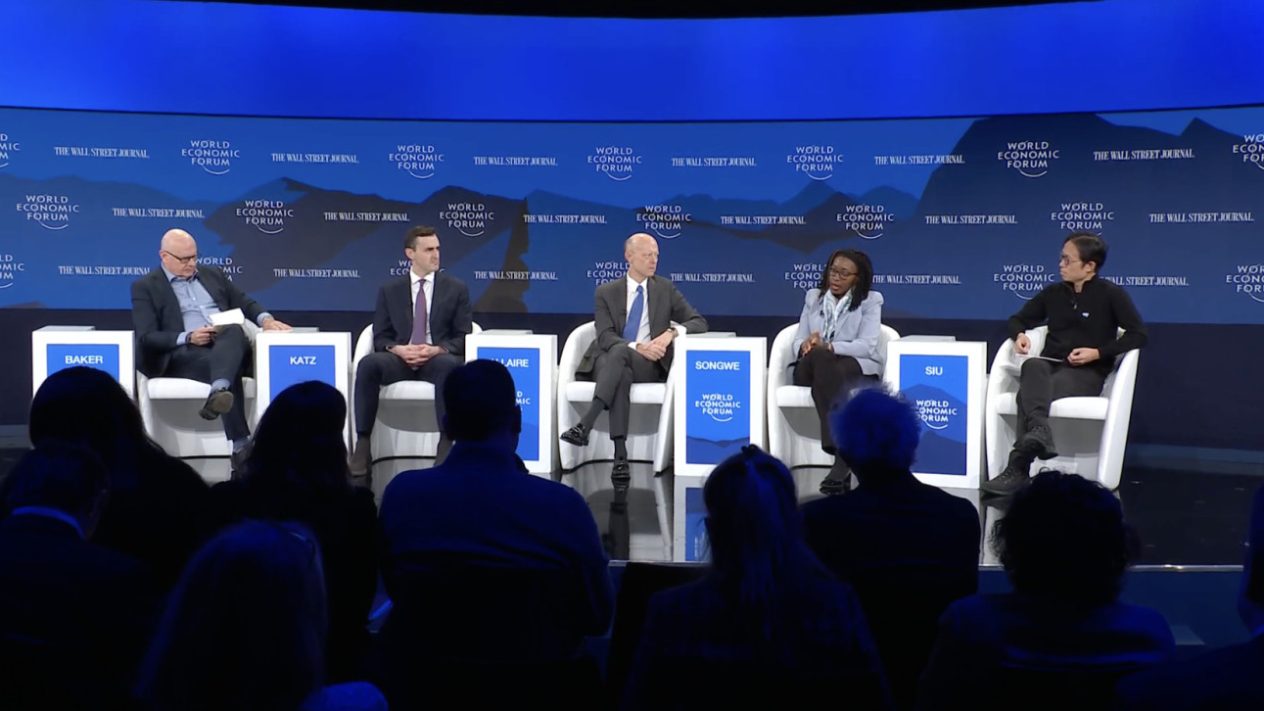
Global policymakers, emerging markets and virtual‑economy builders used a WEF panel to outline how stablecoins are moving beyond crypto trading and into mainstream payments, remittances and financial infrastructure.
Circle CEO Jeremy Allaire has argued that stablecoins are set to become the foundational payment layer for artificial intelligence, telling a World Economic Forum (WEF) panel that “billions of AI agents” will soon require a native medium of exchange – and that no traditional payment system can meet that demand.
Speaking during a session on the State of Stablecoins, Allaire said the industry is entering a phase where machine‑to‑machine commerce will become routine.
“AI agents will be conducting economic activity continuously, at very high velocity, and often in fractions of a cent,” he said. “Taking out your Visa card or firing up a bank wire is completely absurd. There is no other alternative, in my view, than stablecoins to do that right now.”
Allaire added new blockchain networks, including Circle’s own Arc chain, are being designed specifically for “agentic compute”, enabling AI systems to transact autonomously with cryptographic verification.
USDC growth and real‑world adoption
The comments came as Allaire pushed back on the idea that stablecoin adoption has been slow. He pointed to USDC’s “80% a year” supply growth over multiple years and a 580% year‑on‑year increase in transaction volume in the most recent quarter.
He highlighted expanding use across payments, e‑commerce and capital markets, noting integrations with Stripe, Shopify, Visa and Mastercard, as well as tokenised credit products issued by BlackRock and Apollo.
“We’re seeing use grow in cross‑border trade settlement, in trade finance, in peer‑to‑peer transactions,” he said.
Africa emerges as a stablecoin testbed
Vera Songwe, Chair of the Liquidity and Sustainability Facility and former UN Under‑Secretary‑General, said Africa is demonstrating the clearest real‑world benefits of stablecoins.
Remittances, which exceed foreign aid flows into the continent, remain costly and slow. “For every dollar that is sent, you have six cents of payment cost,” she said. “With stablecoins, it takes minutes and it costs $1.”
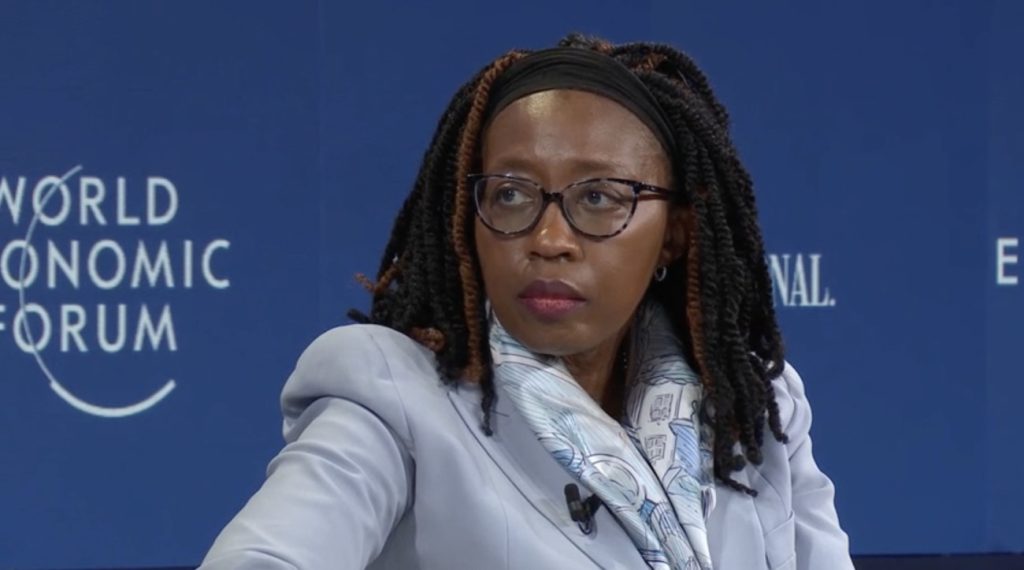
Songwe added stablecoins are becoming a hedge against inflation in countries where annual price rises exceed 20%. “Fifty million people on the African continent with a smartphone have access to stablecoins,” she said. “You can save in a currency that is not exposed to the fluctuations of inflation making you poorer.”
She also revealed ongoing work on an African stablecoin backed by IMF Special Drawing Rights (SDRs), designed to reduce reliance on the US dollar and improve monetary discipline. “It begins to mirror Africa’s trade with the rest of the world,” she said.
Virtual economies and youth adoption
Animoca Brands Co‑Founder Siu Yat described stablecoins as the financial backbone of the virtual economy, from gaming to digital labour markets. During Covid-19 pandemic, he said, workers in the Philippines and Indonesia earned virtual income and converted it into stablecoins, effectively gaining a “bank account” through a crypto wallet.
He added younger demographics are driving the shift. “The majority of people under the age of 30 in South Korea now exclusively deal in digital assets of some form,” he said.
Regulation: progress, gaps and global alignment
IMF First Deputy Managing Director Dan Katz said regulatory frameworks are still in early stages despite progress in the US, EU and Asia. He warned that cross‑border interoperability will be essential to unlocking stablecoins’ full benefits.
Katz also argued that stablecoins introduce competitive pressure on countries with weak monetary frameworks. “It creates a pressure on those countries to improve their fiscal and monetary frameworks,” he said.
Interest‑bearing stablecoins spark industry tension
The panel also addressed a growing flashpoint: whether stablecoins should be allowed to pay interest. Banks have warned that interest‑bearing stablecoins could trigger a flight of deposits from the traditional banking system.
Allaire dismissed the concern. “It’s totally absurd,” he said, arguing that stablecoins are legally defined as payment instruments and are prohibited from paying interest in the US, EU, Japan, Singapore, Hong Kong and the UAE. He compared the debate to early fears around money market funds, which ultimately did not destabilise bank deposits.
Stablecoin issuers like Circle earn revenue from reserves, but Allaire stressed that partner incentives – such as rewards offered by exchanges – are not equivalent to interest payments.