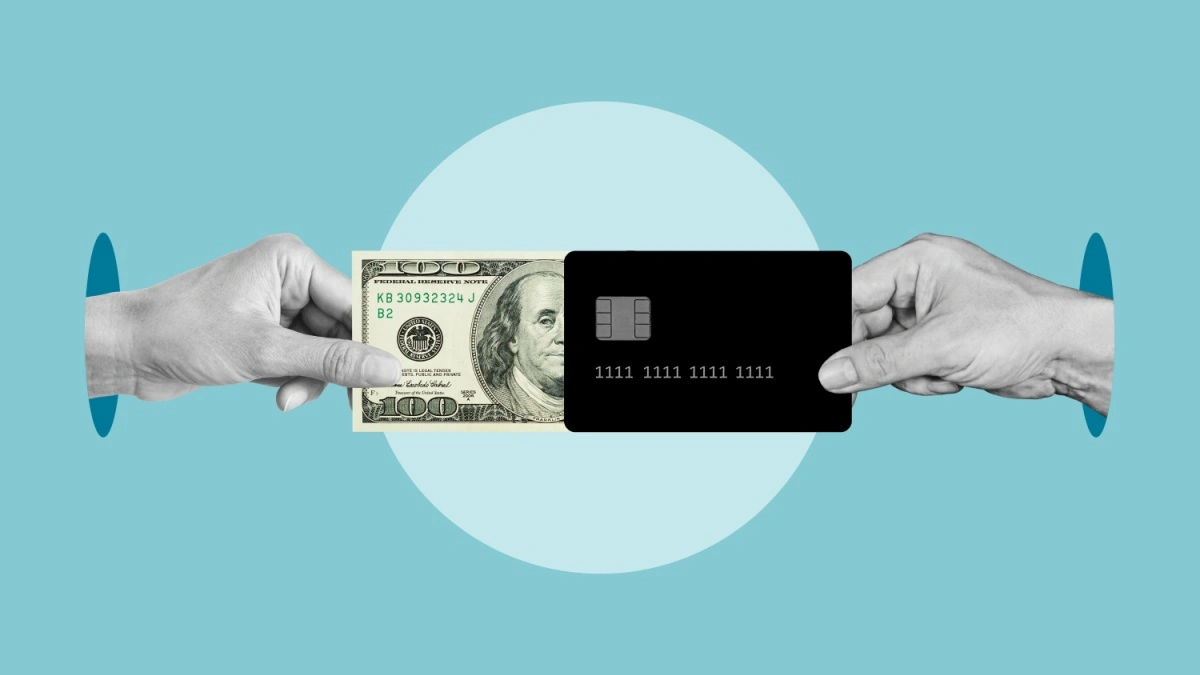
Tuyo’s buy-now, pay-maybe model turns predictable rewards on their head, raising new questions about crypto‑funded perks.
Rewards in payments aren’t new by any means. Cashback, hotel or airline points, and discounts or vouchers at select merchants are the most well-known examples.
These perks are standard across the biggest card programmes, and while the details vary, the structure is the same. They’re built on predictability, for both the issuer and the user, because this allows card companies to model costs and liabilities, and it gives consumers a sense of what they’ll earn back when they spend.
That’s why the internet went into a frenzy earlier this year when a video from a crypto company called Tuyo started circulating, announcing a very different approach to rewards. A self‑proclaimed “buy now, pay maybe” card, Tuyo gives users the chance that their purchase might be covered entirely, meaning something you expect to cost £20 could end up costing nothing.
A dopamine-hit version of cashback
Following the advert, people raised questions about whether this feature could be classified as gambling or a gamified twist on spending.
The reason for the confusion being the Tuyo’s message seemed to swap the traditional reward system built on predictability for one based on probability.
But this is not the full story.
Tuyo does not provide any odds or chance percentage of when a transaction will be covered, and it holds full discretion over when it steps in. The company also says it is not a sweepstake, lottery, contest or game of chance, and it does not publish any odds or chance percentages. It also holds full discretion over when it steps in to cover a purchase.
This means the product only feels like chance from the user’s perspective. They experience the uncertainty without ever knowing the likelihood of a payout, which leaves them carrying all the risk. The lines blur even further when you realise the model is not funded by interchange fees at all..
“Zero odds. Zero stats. Slot machines are more predictable.”
Corporate attorney Ariel Givner on X.
The company holds user funds in USDC, a dollar‑pegged stablecoin which can generate yield when pooled at scale. This means instead of relying on interchange or lending revenue, Tuyo can use the return from these pooled balances to decide when to cover a purchase.
Speaking to Payment Expert, Radi El Haj, CEO at RS2, described it as a treasury‑optimised spending model built around stablecoin yield.
“Tuyo’s model appears to invert the traditional cashback equation. In a conventional card programme, rewards are typically funded through interchange revenue, credit interest, or merchant-funded incentives,” El Haj said.
“In this case, if the product is genuinely cash-based with no lending component, then the economics likely depend heavily on yield generation from pooled USDC balances, combined with algorithmic decisioning on when to subsidise purchases.”
Where infrastructure feels the strain
While the consumer experience is intentionally light, the operational burden sits with processors and card networks. Radi explains that the entire model depends on the moment the subsidy is applied.
“These are the kinds of edge cases that processor infrastructure has to resolve in real time, often invisibly to the cardholder – the key issue is how and when the subsidy is applied within the transaction lifecycle,” he said.

“Visa and Mastercard operate under strict rules around authorisation integrity, settlement and accurate transaction value representation. If Tuyo covers the cost after clearing and settlement, then it functions similarly to a rebate or reward layered on top of the payment flow, which is operationally feasible.
“However, if the transaction is effectively ‘absorbed’ during authorisation, then reconciliation, liability allocation and scheme compliance become significantly more complex, particularly around maintaining the ‘true value’ and integrity of the original transaction within the card network.”
Payment Expert approached Tuyo for comment, but at the time of publication received no response.
Tuyo sits in a regulatory blind spot
This hybrid nature, part payments, part crypto yield and part discretionary reward, unsurprisingly creates a regulatory headache.
Tuyo is available in the US and in several other countries, according to the sign‑up process in its app. Users in the UK can also install the app, but they cannot access the buy-now pay-maybe feature because the product sits outside the current UK regulatory perimeter.
The Financial Conduct Authority (FCA) only regulates cryptoassets for anti‑money laundering purposes and financial promotions. Crypto firms can register under the Money Laundering Regulations, but this does not mean they are authorised under the Financial Services and Markets Act 2000.
The wider UK crypto regime is not expected until October 2027 and that launch may open the door for more companies to experiment with models which combine payments and stablecoin yield in the way Tuyo does.
The FCA has looked at ideas like this before, with 2024 research on digital engagement practices used by trading apps finding that features such as flashing prices, push notifications, leaderboards and prize draws increased both trading frequency and investment risk.
The effects were strongest among people with lower financial literacy, women and those aged between eighteen and thirty-four. The FCA said this raised questions about how design choices influence behaviour and how firms should meet their obligations under the Consumer Duty.
Tuyo leans into the same behavioural mechanics, as transactions are only eligible if push notifications are turned on, which means the product depends on the same attention‑grabbing techniques that regulators have already flagged as potentially harmful.
This raises consumer‑protection concerns because the sense of chance, the lack of disclosed odds and the reliance on crypto yield all fall outside the rules that normally govern financial incentives.
The FCA declined to comment on Tuyo.