Beijing’s latest joint regulator summit restates virtual currencies as illegal finance and highlights stablecoins as a particular concern for AML, capital controls and cross-border payment flows
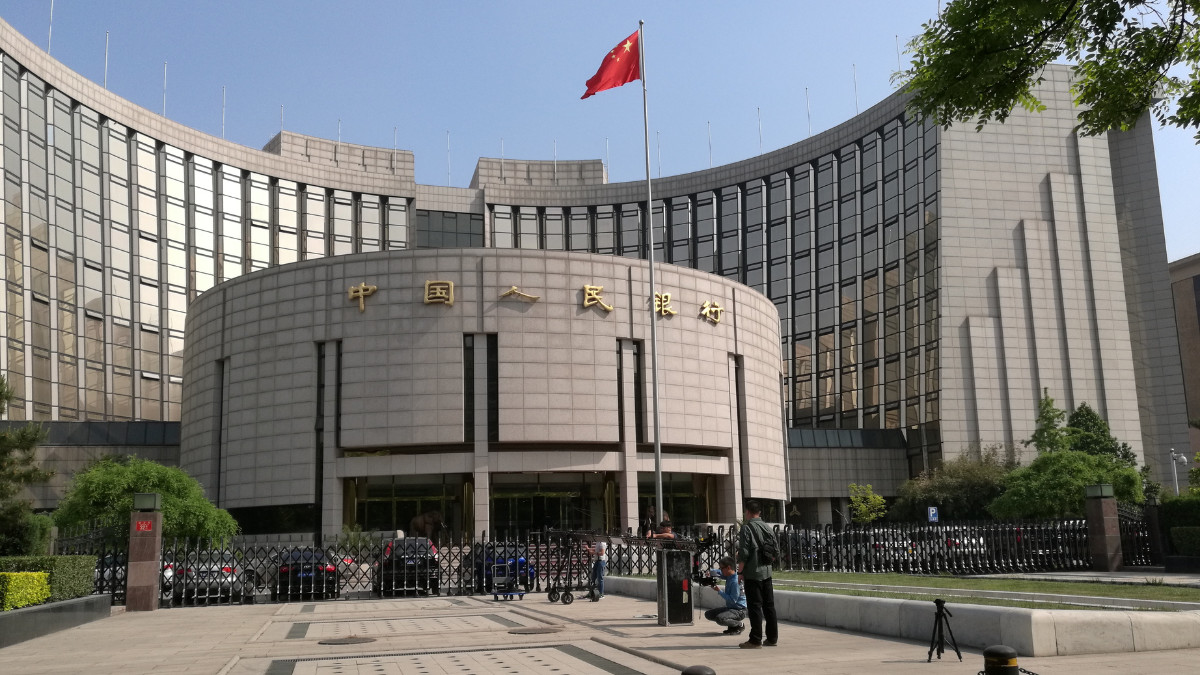
China’s central bank has convened a high-level meeting of regulators to reaffirm the country’s ban on cryptocurrency trading and explicitly flag stablecoins as a fresh focus for enforcement, in a move that underscores Beijing’s diverging approach from other major markets.
According to an official Chinese-language statement published by the People’s Bank of China (PBoC) on 29 November, the bank gathered representatives from 13 agencies on November 28 for a meeting of its “coordination mechanism for combating virtual currency trading speculation”.
Attendees included senior figures from public security, the cyberspace regulator, top courts and prosecutors, as well as the main financial and market watchdogs.
The PBoC said regulators had, in recent years, “resolutely cracked down” on virtual currency trading in line with its 2021 joint notice that effectively outlawed crypto trading and mining on the mainland. But it warned that speculation had “resurfaced” and that associated illegal activities were reappearing, creating “new challenges” for risk prevention and control.
Virtual currencies remain ‘illegal financial activities’
The statement reiterates Beijing’s core position that virtual currencies have no legal tender status in China and cannot be used as money in the market. Business activities related to these assets are again defined as illegal financial activities, reinforcing that there is no domestic licensing perimeter for crypto businesses.
Regulators were told to regard risk prevention and control as a “perpetual theme” of financial work and to continue implementing a “prohibitive policy” on virtual currencies. Authorities will deepen coordination, refine regulatory rules and legal bases, and focus on key points such as information flows and capital flows, the statement added.
In a separate report, the PBoC said it would intensify efforts to combat illegal virtual-currency activity to “maintain economic and financial stability”.
Stablecoins explicitly classified as virtual currency
The most notable element for global payments and digital-asset firms is the language on stablecoins.
For what appears to be the first time in such a high-profile statement, the PBoC explicitly defines stablecoins as “a form of virtual currency”. It states that, at present, stablecoins “cannot effectively meet requirements for customer identification and anti-money laundering”, and warns they carry a risk of being used for money laundering, fundraising fraud and illegal cross-border transfers of funds.
International coverage of the meeting has highlighted this as a clear policy signal that stablecoins will be treated in the same prohibitive category as other cryptoassets on the mainland, rather than as a separate, potentially regulatable payments instrument.
That stance runs counter to developments in other jurisdictions. The European Union’s Markets in Crypto-Assets (MiCA) regime, for example, has brought dedicated rules for asset-referenced and e-money tokens into force since June 2024, requiring stablecoin issuers to hold fully-backed reserves and comply with authorisation and disclosure requirements.
Cross-border flows and capital controls in focus
By explicitly linking stablecoins to risks around illicit cross-border transfers, the PBoC is tying the asset class directly to China’s capital-control framework. The statement warns that stablecoins may be used to move funds abroad in violation of existing rules, alongside their use in money-laundering schemes and fraudulent fundraising.
That concern comes against a broader global backdrop in which central banks and supervisors are increasingly focused on how large dollar-linked stablecoins can affect financial stability and sovereign monetary control. The European Central Bank, for example, has cautioned that foreign stablecoins could siphon euro-zone bank deposits and create run risks if they are not tightly regulated.
No opening for private stablecoins as e-CNY advances
The PBoC statement does not introduce new legislation. Instead, it positions the latest coordination meeting as a renewed enforcement drive under existing rules, including the 2021 notice that formally banned crypto trading and mining on the mainland.
However, the explicit treatment of stablecoins as virtual currencies, combined with the description of related business as illegal financial activity, leaves little room for onshore experimentation with privately issued tokens, including those marketed as compliant cross-border payment tools.
By contrast, China continues to expand pilots of its central bank digital currency, the e-CNY, which remains the only officially sanctioned “digital money” track domestically. The latest statement makes no reference to e-CNY but repeatedly stresses the need to “protect people’s property safety” and “maintain the stability of the economic and financial order” while keeping pressure on crypto-related activity.