In 1958, when Bank of America mailed 60,000 unsolicited credit cards to the residents of Fresno, California, the results were chaotic. Families received plastic rectangles promising effortless spending power, and many treated them as free money.
Merchants were unsure whether to accept them, consumers ran up debts they did not understand, and regulators scrambled to catch up. Yet from that flawed experiment grew the modern credit card industry.
Seventy years later, the same paradox surrounds Buy Now, Pay Later (BNPL). What began as a fintech convenience – interest-free instalments for a generation that mistrusted credit – is evolving into something more disciplined, regulated and hybridised.
Across markets, BNPL is less an upstart rebellion against banks than the latest chapter in the long history of consumer credit adaptation.
A model under pressure
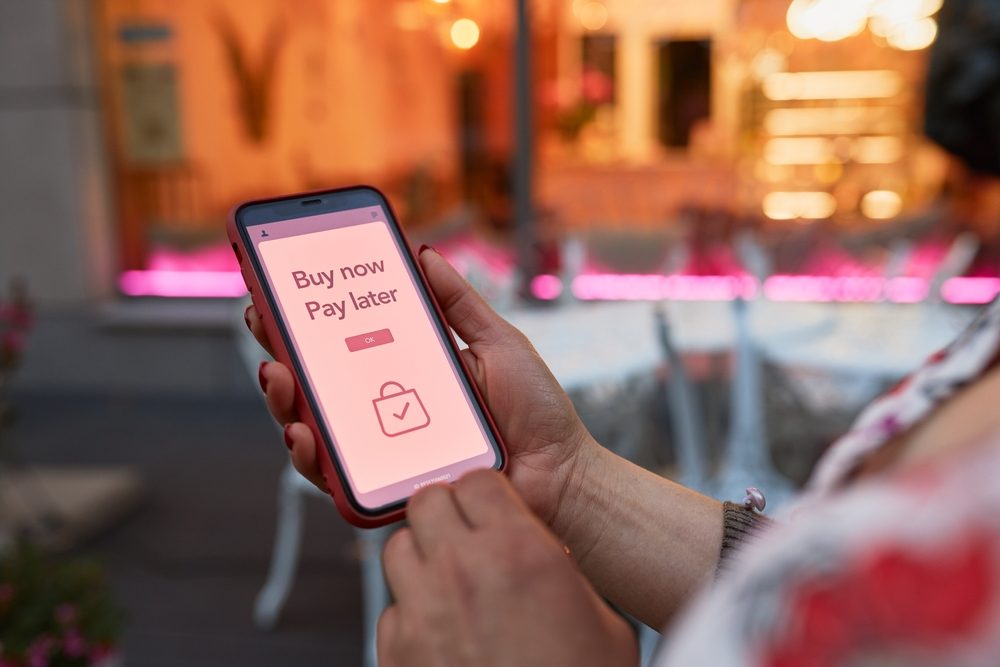
In its early phase, BNPL’s appeal was simplicity. A button at checkout allowed shoppers to split a $100 purchase into four equal payments, no interest charged. The frictionless model powered the growth of fintechs like Klarna, Afterpay and Affirm, but also drew criticism for fuelling impulsive spending and masking debt.
Regulators noticed.
The UK Treasury announced in 2021 that BNPL agreements would fall under the Financial Conduct Authority’s remit, while in the US, the Consumer Financial Protection Bureau (CFPB) demanded the same data-reporting standards applied to credit cards. Europe’s consumer credit directive, meanwhile, tightened rules on advertising and affordability assessments.
Faced with this scrutiny, the sector is reinventing itself, often in ways that mirror the institutions it once sought to disrupt.
Local reinventions
Outside Western markets, BNPL has taken on strikingly different forms. In Japan, where cash and invoices still dominate, PayPal’s Paidy built one of its BNPL offerings not on deferring payments but consolidating them.
“PayPal has been revolutionizing commerce for more than 25 years and offering Pay Later options for over 12. This long-standing presence has made PayPal a trusted and widely accessible BNPL provider, helping consumers manage their cash flow with confidence and enabling merchants to drive conversion and growth worldwide,” Scott Young, SVP for Consumer Financial Services at PayPal tells Payment Expert.
Paidy’s post-pay model allows consumers to buy goods online and settle the balance at month-end via bank transfer or convenience store, aligning perfectly with Japan’s preference for punctual, full repayment.
“We bring the trust and reach of PayPal to every market while tailoring each experience to how people live, get paid, and prefer to manage their cash flow,” Young explains. “Whether it’s flexible installments or simple, predictable post-pay options like Paidy in Japan, our goal is to give consumers confidence and control while helping merchants meet customers the way they prefer to pay.”
In India and Southeast Asia, BNPL has grown through mobile wallets and QR code ecosystems rather than standalone fintech apps. There, instalment credit is tied to national payment infrastructures – such as India’s Unified Payments Interface – and often capped at modest sums. These variations illustrate how consumer behaviour and regulation, not technology alone, determine BNPL’s shape.
Innovation under regulation
Regulatory pressure has not killed innovation; it has refined it. Fintechs are now investing heavily in credit assessment tools, open banking integrations and responsible spending dashboards. Where once speed of onboarding was the selling point, transparency has become the differentiator.
Zilch, a UK-based provider, typifies this shift. Its hybrid credit model blends regulated lending with cashback rewards, allowing users to pay in full or in instalments while earning loyalty points.
The firm has publicly positioned itself as “pro-regulation”, arguing that consumer protection and innovation are not mutually exclusive.
“We believe that the consumer credit market is broken. With credit card companies charging £40 million daily in the UK in fees and interest, customers become trapped in an endless cycle of debt,” a spokesperson from Zilch tells Payment Expert.
“We do not charge late fees to our customers and instead reward their responsible use of our products through unlocking meaningful rewards and benefits from the brands they love. We work closely with all credit reference agencies to improve financial outcomes for our customers and ensure they are using our product responsibly.”
Enter the hybrids
Perhaps the clearest sign of BNPL’s evolution lies in its convergence with traditional credit. American Express’s Plan It feature, for example, lets customers split eligible card purchases into fixed monthly instalments directly within their existing account.
There are no separate apps, accounts or opaque terms – simply the flexibility to plan repayments while staying within the credit card ecosystem.
This approach leverages what fintechs lack: decades of consumer trust, established compliance systems and integration into the wider financial infrastructure. Where pure-play BNPL providers built scale through merchant partnerships, incumbents like Amex are embedding instalment flexibility directly into customer relationships.
“Product innovation is critical when it comes to meeting changing customer needs and expectations on new ways to pay,” Caroline Bouvet, Vice President at American Express tells Payment Expert.
“As American Express continues to acquire large numbers of Gen Z and Millennial Cardmembers, with expectations on greater flexibility when spending, this is particularly pertinent.
Bouvet went on to explain that with Plan It, Amex Cardmembers can select a transaction, or an amount from their most recent statement, to put into an instalment plan.
“Plan It offers upfront, transparent fees and no hidden charges, along with the added reassurance for Cardmembers of the product being regulated by the FCA,” she says. “Charges are clearly displayed at set up, and Cardmembers won’t be charged interest on any balance in their instalment plan.”
As interest-free credit becomes a regulatory minefield, instalment features offer a way to defend relevance without creating new risk exposure. In the process, the line between BNPL and revolving credit is blurring fast.
The new economics of trust
Globally, hybridisation reflects a deeper shift in consumer psychology. The early BNPL boom relied on minimal friction: instant approval, no credit checks, no visible consequences. But as economic conditions tighten and defaults rise, trust and transparency have become the currency of competition.
That is where traditional financial institutions – with their regulated balance sheets and prudential oversight – are quietly regaining ground. By integrating BNPL-style features into debit or credit products, they can offer the same convenience with greater perceived safety.
Meanwhile, fintech challengers are moving in the opposite direction, seeking credibility through licensing and data-sharing agreements. In markets like Australia and the UK, leading BNPL firms now report to credit bureaus, a move once resisted for fear of dampening uptake. The result is a slow but steady convergence toward a single, regulated consumer credit framework.
Global contrasts, shared direction
Cultural nuance remains central. In emerging markets, BNPL is still a vehicle for financial inclusion — a means for first-time borrowers to access short-term credit. In mature economies, it is increasingly a loyalty instrument, folded into wider ecosystems of rewards, digital wallets and banking apps.
Yet across geographies, the direction of travel is clear. The “pay later” revolution is becoming a feature of established financial systems rather than an alternative to them. The next phase of competition will hinge not on who can lend faster, but on who can integrate more seamlessly into the consumer’s financial life.
A second act
For all the noise around disruption, BNPL’s story looks more evolutionary than revolutionary. Its innovations — instant credit decisions, seamless checkout integration, user-friendly repayment — are being absorbed by the mainstream.
The sector’s future will likely depend on three things: regulatory trust, profitability and purpose. As credit costs rise, providers will need to balance consumer flexibility with sustainable margins. As oversight tightens, transparency will become non-negotiable. And as consumers grow more financially literate, value will be measured not just in convenience but in confidence.
BNPL’s first act was defined by frictionless optimism. Its second will be defined by responsibility.