New cloud-based POS enables real-time pricing, faster service and better visibility across multiple venue formats
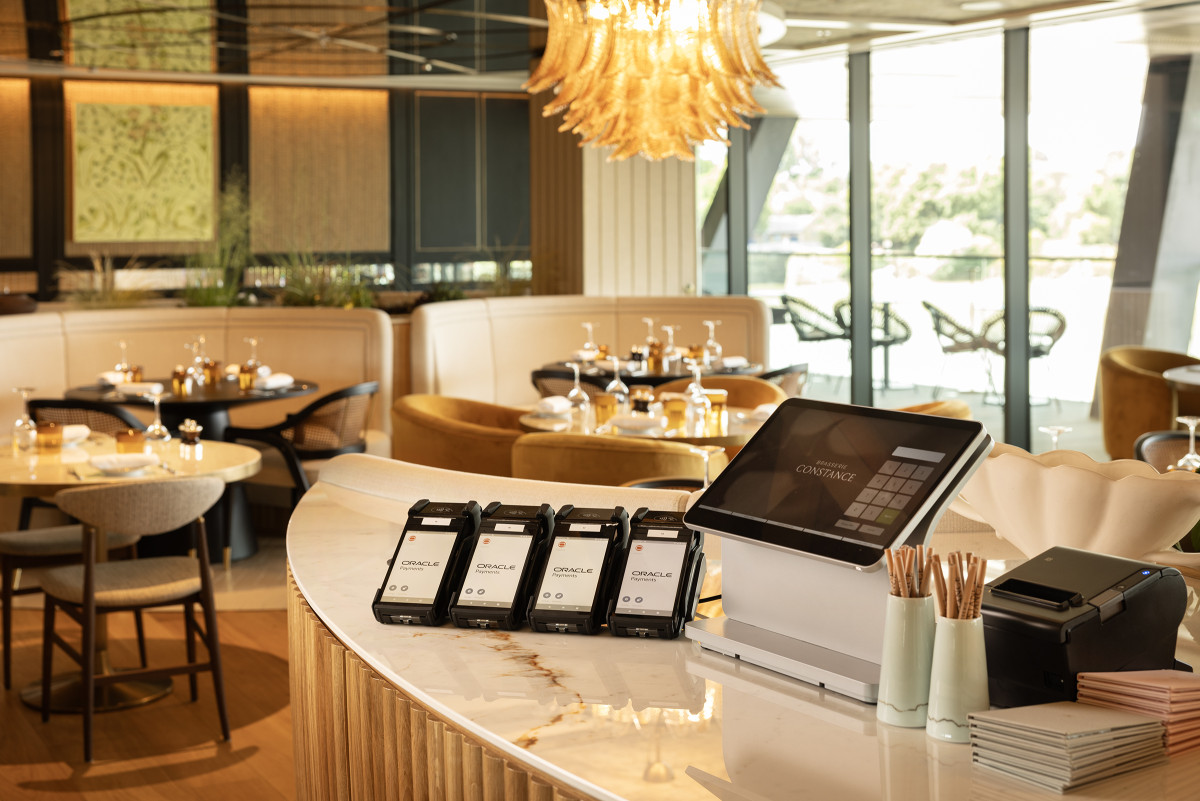
Fulham FC has implemented a new point of sale (POS) and payments system across Craven Cottage and the adjacent Fulham Pier development, aiming to reduce queue times, streamline operations and respond more quickly to in-the-moment demands.
The deployment covers both matchday food and beverage outlets and a growing range of hospitality offerings including fine dining, events and hotel services.
The system, delivered in partnership with Oracle, is designed to support multiple configurations across different parts of the venue. Speaking to Payment Expert, Bekki Hill, Director of Technology at Fulham FC, said this adaptability was essential.
“We’ve got multiple different business units — hotel, spa, fine dining, conferencing — and each of them flips not only between matchday and non-matchday, but has a different offering on each level even on a matchday,” she said.
One of the primary benefits has been the ability to switch pricing, menus and transaction flows between these units with minimal effort. “We’ve perfected it so it is literally a click of a button, and it flips five different floors into five different modes,” Hill said.
Managing time-sensitive transactions
The new system has also addressed longstanding challenges around matchday service speed. With tight half-time windows and high customer volumes, the club has used data and interface changes to improve processing times at tills.
“The goal is to get that product through as fast as you can. We’ve put features in place like one-touch buttons for the most popular items, so staff can get orders through the till more quickly,” Hill explained.
She added that the club has been able to reduce the number of staff required per terminal, helping manage operational costs while maintaining service levels.
Flexible pricing and real-time decision-making
The system also enables real-time control of timed promotions, such as pre-kickoff drink discounts. In the past, Hill said, these would have had to end at fixed times regardless of how many fans were still waiting to be served.
“We’ve had to make decisions like ending cheap pints 15 minutes before kickoff, but with queues still forming, we want to honour the customers. Now it’s quick to change that timeout,” she noted. “The solution has allowed us to adapt our pricing to keep customers happy.”
Expanding use of financial and operational data
The club is also using the payments platform to track a wider range of KPIs than before. These include speed of service, average basket value, and potential fraud indicators.
“We’re able to look at whether a specific kiosk isn’t performing as quickly as others,” said Hill. “That could be down to staffing or the individual terminal, but the data helps us make that call.”
She added that the increased data flow is helping the business improve its approach to forecasting and inventory control, particularly around stock ordering. This includes decisions on how many reusable cups to purchase, depending on customer behaviour and drink preferences, a step towards reducing single-use plastic in the venue.
Supporting non-matchday hospitality
Fulham’s investment in Fulham Pier, which includes fine dining and leisure offerings, required a system that could support different service models.
“On matchdays, it’s about speed; bulk service, same orders. But in fine dining, people want to customise their meals and have service brought to them. The tech has to come to the customer,” Hill said.
The club has configured its payments system accordingly, using different types of devices in different parts of the venue. Static tools are used in quick-service areas, while mobile ordering is supported in hospitality spaces.
Translating data into business use
While the technology team has welcomed the increased volume of data, Hill acknowledged that not every part of the business was ready to absorb it all at once.
“It can be overwhelming,” she said. “Our role is to make sure the data is actually usable, to say, what do you want to do with it, and then give people only what they need.”
She said this shift in approach has already improved internal decision-making. “Before, we were doing a lot of manual stock control. Now, the data does the work for us.”
As Fulham continues to operate as both a football club and a hospitality venue, the payments system is expected to play a core role in managing the shift between event types and customer needs.
While Hill was clear the implementation is not about tech for tech’s sake, she noted that pace of change was a factor: “If you sit on it for the next year, it’s moved forward. Tech is just moving way too fast,” she said.