HSBC has strengthened its digital money strategy with tokenised deposits on blockchain infrastructure and a planned Hong Kong stablecoin launch.
HSBC, via its Global Payments Solutions business, has completed a pilot testing how its tokenised deposits can be issued, transferred and settled on the Canton Network, a blockchain made for regulated financial institutions.
It is the first time the bank’s tokenised deposits have been used on a public blockchain, with the bank also testing how they settle against other digital assets across applications built on the Canton Network.
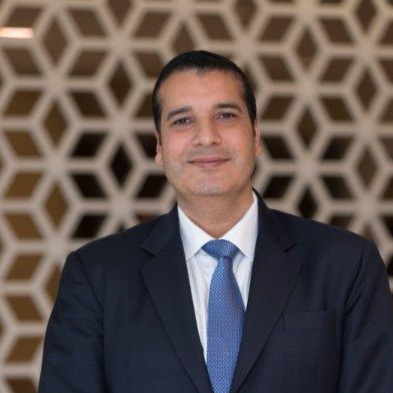
Manish Kohli, Head of Global Payments Solutions at HSBC, said the work shows how tokenisation is evolving within banking infrastructure and the systems required to support it.
“Our focus is on building secure, interoperable capabilities that enable clients to move money more efficiently across different environments, while maintaining the trust and regulatory standards expected of a global bank,” he said.
In addition to the pilot, HSBC has also confirmed it has been granted a stablecoin issuer licence by the Hong Kong Monetary Authority, with plans to launch a Hong Kong dollar-denominated stablecoin in the second half of 2026.
Stablecoins for consumer use
The stablecoin will be aimed at everyday payments and will be built into HSBC’s existing retail platforms, including the PayMe app and HSBC HK mobile banking app.
It will initially be used for peer-to-peer transfers, payments to merchants and subscriptions to tokenised investments.
A feature of the launch is merchant payments, a use case which has so far lagged behind business-to-business adoption in the stablecoin market. While B2B transactions still account for the majority of stablecoin activity globally, consumer and retail usage is much smaller.
According to McKinsey & Company, B2B flows make up around 60% of total stablecoin payment volume, equivalent to roughly $226bn annually by early 2026, with consumer-facing payments still developing.
However, adoption patterns differ across regions. In parts of Asia, stablecoins are already closer to mainstream payment use, helped by digital wallets and more integrated mobile payment ecosystems.
HSBC said the PayMe app already serves more than 3.3 million users, while the HSBC HK app has seen a 20% increase in active users following a recent update.
The bank said the initiative will allow customers to “participate confidently in the future of digital finance” by embedding stablecoins into how its apps are used to pay and invest.
“Today’s news aligns with Hong Kong’s ambition to become a global digital asset hub,” said Maggie Ng, CEO Hong Kong at HSBC.
The rise of tokenised deposits
In addition to the retail stablecoin push, HSBC is also focusing on how tokenised money could work between financial institutions and within capital markets.
The bank’s pilot on the Canton Network tested how tokenised deposits could move across external blockchain infrastructure and settle at the same time as other digital assets. This “atomic settlement” removes delays between cash and asset transfers, reducing the need for verifying trades after settlement.
While still in a testing phase, the structure is seen as a building block for institutional markets where assets, cash and collateral may need to move at the same time across different systems.
HSBC already offers tokenised deposits to corporate clients, allowing them to convert fiat balances into blockchain-based representations backed 1:1 by cash. These can be transferred instantly and are available in multiple currencies, including USD, GBP, EUR, HKD and SGD.
Want to hear more stories like this? Check out the new SBC Media YouTube Channel, the new home of all things multimedia at SBC, where our team deep-dives into the biggest stories from across the sports betting, iGaming, affiliate and payments industries.