Inside Mastercard and Deutsche Bank’s push to make pay-by-bank essential
Ask a European shopper how they pay online and you’ll still hear the familiar line-up: cards, digital wallets, sometimes bank transfers. Pay by Bank – the open banking-enabled account-to-account (A2A) option at checkout – is often there, but rarely the default. For many merchants and consumers, it remains an interesting alternative rather than a primary rail.
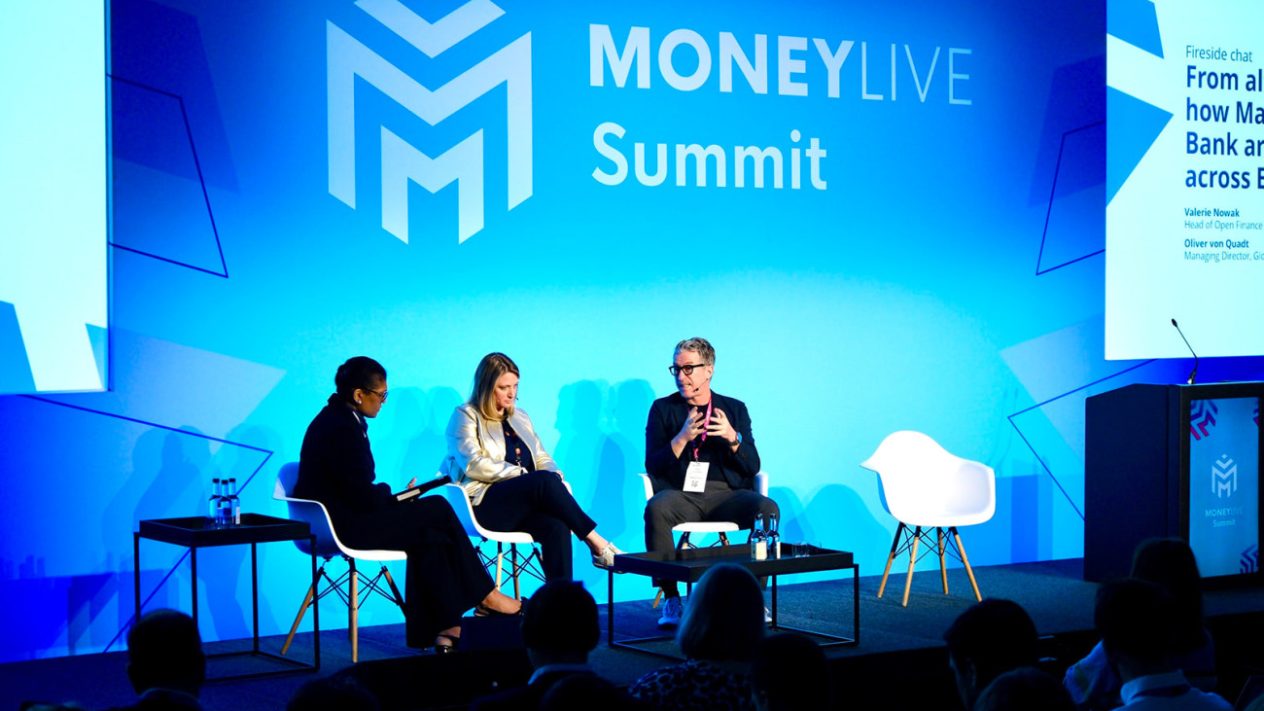
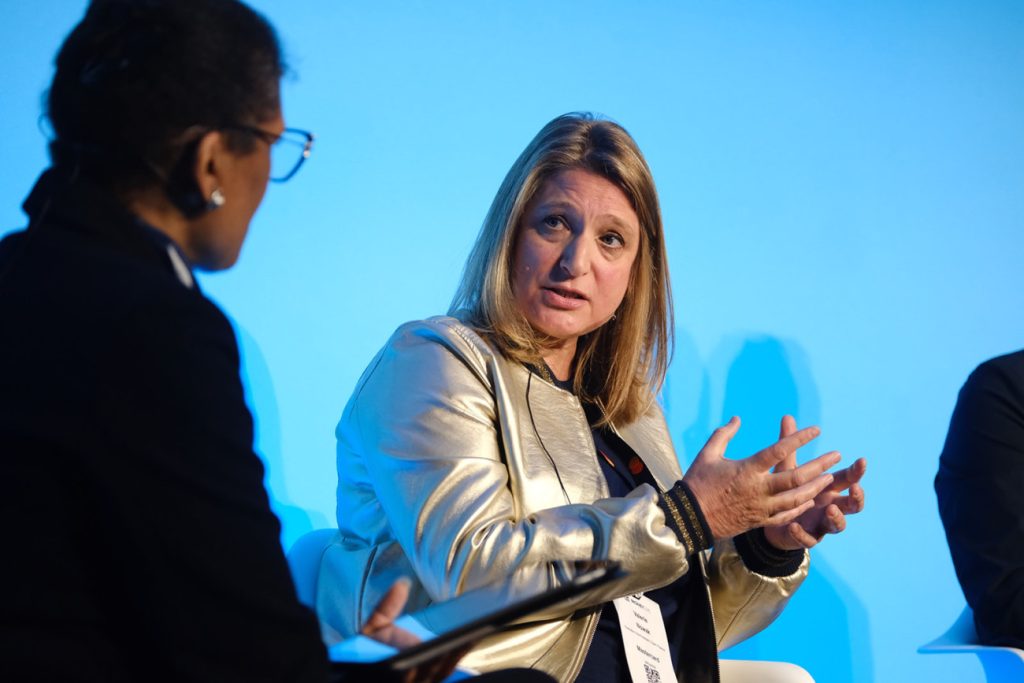
On stage at MoneyLive 2026 today (March 9), Mastercard’s Valerie Nowak, Head of Open Finance APEMEA, and Oliver von Quadt, Global Head of Merchant Solutions at Deutsche Bank, set out to challenge that status quo.
In a fireside chat titled “From alternative to essential: how Mastercard and Deutsche Bank are scaling Pay by Bank across Europe”, the pair argued that the conditions are finally coming together to turn pay-by-bank into an enterprise‑grade payment option for some of Europe’s most demanding use cases.
From interesting solution to scalable proposition
The conversation opened with the central question: what needs to happen to move from an “interesting solution” to something scalable across fragmented European markets?
Nowak pointed first to the regulatory evolution in Europe, particularly around strong customer authentication (SCA) and pre-transaction protection:
“An example would be strong customer authentication. This is [a] super important element that needs to be addressed, because when it comes to [account‑to‑account] payment, there is no chargeback, so all the protection comes before the transaction” she said.
“We need to make sure that we keep these high standards [but] make it simple, to make it more streamlined, for instance, then you do more exemptions.”
The implication is that in a chargeback‑light or chargeback‑free environment, risk and compliance shift decisively to the front of the journey. That places new weight on SCA design, customer education and UX, and on how regulators evolve rules to preserve both security and conversion.
At the same time, Nowak underlined pay-by-bank cannot scale on regulation alone. It needs infrastructure and orchestration that look and feel like a mature scheme. She described Mastercard’s goal as applying “the same discipline [and] the same resilience and security” that exist in its card business to Pay by Bank, preserving “the freedom between security and convenience”.
Beyond “another button” at checkout
One of the strongest themes of the session was that pay-by-bank must stop being treated as “just another button” on the checkout page.
“If the method is sold in isolation, it has to be part of a broader story,” Nowak argued. That broader story is grounded in merchant economics and operational efficiency.
As Nowak pointed out, merchants are “looking at the bottom line, cost down and [being] much more efficient from an operating point of view” , and account‑to‑account payments promise exactly that: a way to strip out some of the fees and frictions embedded in traditional rails. Just as important, she argued, is predictability.
Because funds are “settled immediately”, pay-by-bank brings “a lot of value, especially for use cases with high‑ranking [high‑value] transactions” and gives merchants far greater visibility over cash flow. That financial clarity is reinforced on the technology side by a simpler integration model.
Nowak highlighted the role of a single API for open banking and pay-by-bank, which allows merchants to “implement once, and… quickly scale in the different markets, consistently”, turning what might otherwise be a patchwork of local solutions into a coherent, scalable proposition.
Where Pay by Bank fits best: the “sweet spot” use cases
Von Quadt brought the merchant lens into sharp focus by identifying the “sweet spots” where pay-by-bank is already competitive – and, in some cases, superior – to existing methods.
He pointed to high‑value e‑commerce and premium goods, where the economics of interchange and chargebacks “bite hardest”, making account‑to‑account a more compelling proposition. He also highlighted ticketing and other high‑value commerce journeys, where instant settlement and reduced dispute risk are particularly attractive.
Beyond consumer-facing use cases, von Quadt said B2B flows remain riddled with “classic, paper‑heavy” processes that Pay by Bank can help streamline, from reconciliation through to liquidity management. There is also a strong fit for built‑to‑order and personalised goods – items configured to an individual customer and often non‑returnable by nature, where traditional consumer-style chargeback rules can sit awkwardly against the merchant’s risk profile and margins.
Quadt also described scenarios where Pay by Bank functions as a fallback rail:
Situations “where an initial attempt to pay with a different payment [method] fails, you can still continue with [Pay by Bank]”
Education on both sides: merchants and consumers
Even where the use cases are compelling, adoption is far from automatic. Von Quadt described a twin-track education challenge, starting with merchants themselves. Not every merchant “fully understands what the utility of this payment method is, when to use it, [and] when not to use it”, he admitted.
On the other side of the transaction, he stressed the need to build client and consumer comfort. End users “need to be comfortable with [it]. They need to understand what it is. It has to have an easy UI, [be] transparent, and they need to have trust.”
Open banking’s very name underscores that challenge; as von Quadt later observed, the framework is inherently more open and less centrally controlled than traditional schemes, which is precisely what enables innovation, but also what makes it harder to explain and, initially, to trust.
“It’s called open banking, right? It means there is a framework that is obviously not as closed and controlled as many others that we know, but it comes with its own [benefits]… that is a reason why it’s harder and harder to understand,” he said.
Trust, brands and the open-banking paradox
Trust, perhaps more than any other factor, emerged as the non‑negotiable ingredient for pay-by-bank’s success. “Without trust, the business case is [without] the foundation,” Nowak said bluntly. She framed Mastercard’s pay-by-bank strategy as an “extension of [its] mission” in cards, effectively porting decades of risk management, scheme rules, and brand equity into the open‑banking context.
From a consumer perspective, that means building journeys that feel “very familiar” and “embedded in convenience”, while still meeting uncompromising security standards. Consent management in open banking, she argued, has to be crystal clear, and education must sit alongside UX if providers are to “win the consumers”.

On the merchant and institutional side, the Mastercard–Deutsche Bank partnership is designed to double down on that same trust equation. Deutsche Bank’s corporate clients already assume that anything routed through the bank has been thoroughly “vetted and tested”, while Mastercard’s brand acts as a visible signal to the wider ecosystem that the product is serious, governed and here for the long term. As von Quadt put it, the collaboration “just doubles down on this” trust framework, combining banking credibility with network‑level assurance.
When the conversation turned to the future shape of the market, Nowak resisted any temptation to declare pay-by-bank the inevitable winner. “I don’t have a crystal ball… I don’t think it’s going to take off [as the only solution]. I think it’s going to coexist, definitely, and it’s going to address different [movements], different types of transactions, different use cases that are going to be relevant for the merchants and for the consumers”, she said.
Over time, Nowak suggested, richer data linkages between payments and value‑added services could further enhance the proposition, improving both security and personalisation across the value chain. Von Quadt, meanwhile, hinted this evolution is already underway.
Several “big, well‑known brands” are either live or in the process of being onboarded, he said, even if he could not name them on stage. The main task now, in his view, is letting awareness “drizzle” through the market until pay-by-bank is seen as a natural choice in its target use cases.