European banks are close to breaking into euro stablecoins just as new data shows crypto-native payment rails gaining more traction.
BBVA has joined a European banking consortium developing a shared euro‑pegged stablecoin, as new data shows retail stablecoin payments have shot up over the past year.
BBVA became the latest member of Qivalis on February 4, a bank‑led venture building a regulated, MiCA‑compliant euro stablecoin designed to support cross border payments and settlement of tokenised financial assets.
The group already includes BNP Paribas, ING, UniCredit, CaixaBank, Danske Bank and DZ Bank, as well as others.
“Collaboration between banks is key to create common standards that support the evolution of the future banking model,” said Alicia Pertusa, Head of Partnerships and Innovation at BBVA CIB, adding the bank’s experience in digital assets would support Qivalis’ development.
While this shows European banks are getting serious about stablecoins, it appears they may be late to the party. New data from payments firm Orbital shows stablecoins are quickly becoming everyday payment instruments.
In the company’s Q4 Stablecoin Retail Payments Index, the number of retail‑sized stablecoin transactions rose from 314 million in January to 3.2 billion in December 2025, representing an increase of more than 10x.
From speculation to settlement
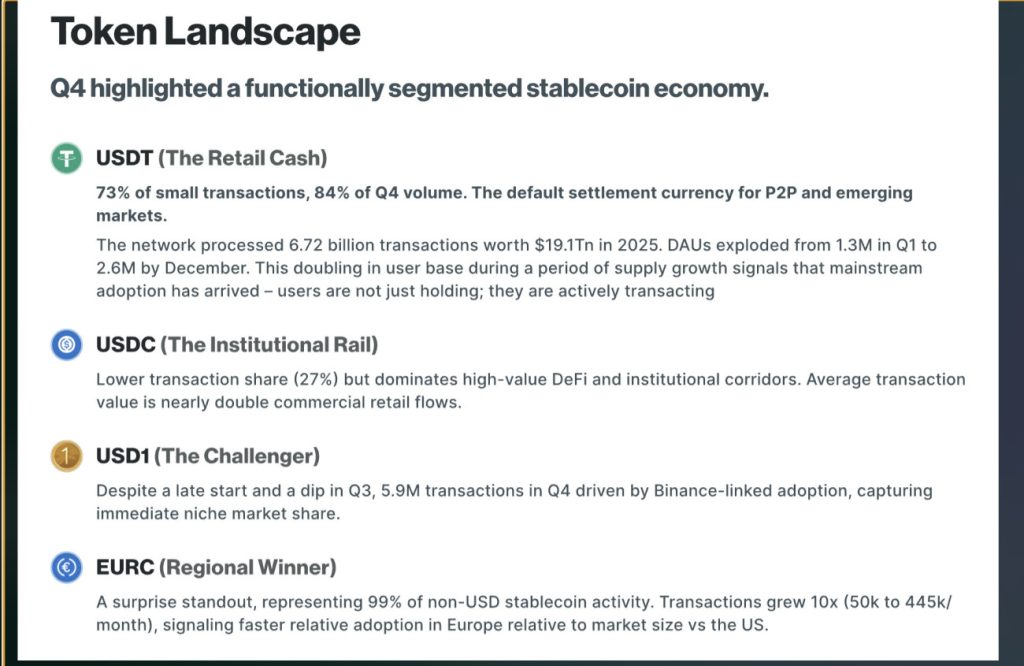
Orbital’s report suggests stablecoins are starting to resemble parallel payment networks. While overall stablecoin supply growth slowed to just 1.3% in December 2025, transaction volumes increased more than 105% across the year, meaning each dollar of supply supported more payments activity.
USDT accounted for 73% of retail‑sized transactions under $10,000, driven by usage in emerging markets and low‑cost blockchain rails such as Tron and BNB Smart Chain. USDC, meanwhile, dominated higher‑value transactions, suggesting a more institutional role.
Orbital also found around two‑thirds of consumer‑to‑merchant stablecoin payments now originate from exchange‑linked accounts rather than self‑hosted wallets, highlighting how exchanges are in effect becoming payment gateways.
This trend is particularly common in markets facing capital controls or currency instability. Algeria, Bolivia and Venezuela all stood out due to high stablecoin premiums which supports the idea of stablecoins being used as substitutes for local currency.
BBVA joins race for payments relevance
While Qivalis may not be targeting everyday retail payments, European banks see an opportunity to offer regulated, trusted alternatives to existing crypto-native stablecoins.
Circle’s euro-backed EURC already dominates non-dollar stablecoin activity, powered by corporate treasury flows, cross-border payouts, and tokenised asset settlement, the same areas Qivalis aims to serve.
“Having BBVA join the banking consortium marks an important step forward,” said Jan-Oliver Sell, CEO of Qivalis. “With their addition, our network now brings together twelve European banks committed to building a secure, MiCAR-compliant euro stablecoin framework.”
In December 2025, the consortium emphasised regulatory clarity, financial stability and European values, which could be key to making up for lost time.
Howard Davies, former Chair of the UK Financial Services Authority and RBS, who serves as Chairman of the supervisory board, explained: “This infrastructure is essential if Europe wants to compete globally in the digital economy while preserving its economic independence.
“We’re not just building payment rails; we’re making sure data protection, financial stability and regulatory compliance are built into the next stage of digital money.”