At a City & Financial Global event, senior figures from Cifas and Wirex Ltd said social‑media‑driven scams, AI‑enabled identity fraud and rising mule activity are overwhelming existing defences — and urged governments to coordinate internationally.
Fraud has reached a scale that the UK “cannot win” without coordinated global action, industry leaders warned at a City & Financial Global event on January 29, as social media‑driven scams, AI‑enabled identity fraud, and rising money‑mule activity continue to overwhelm existing defences.
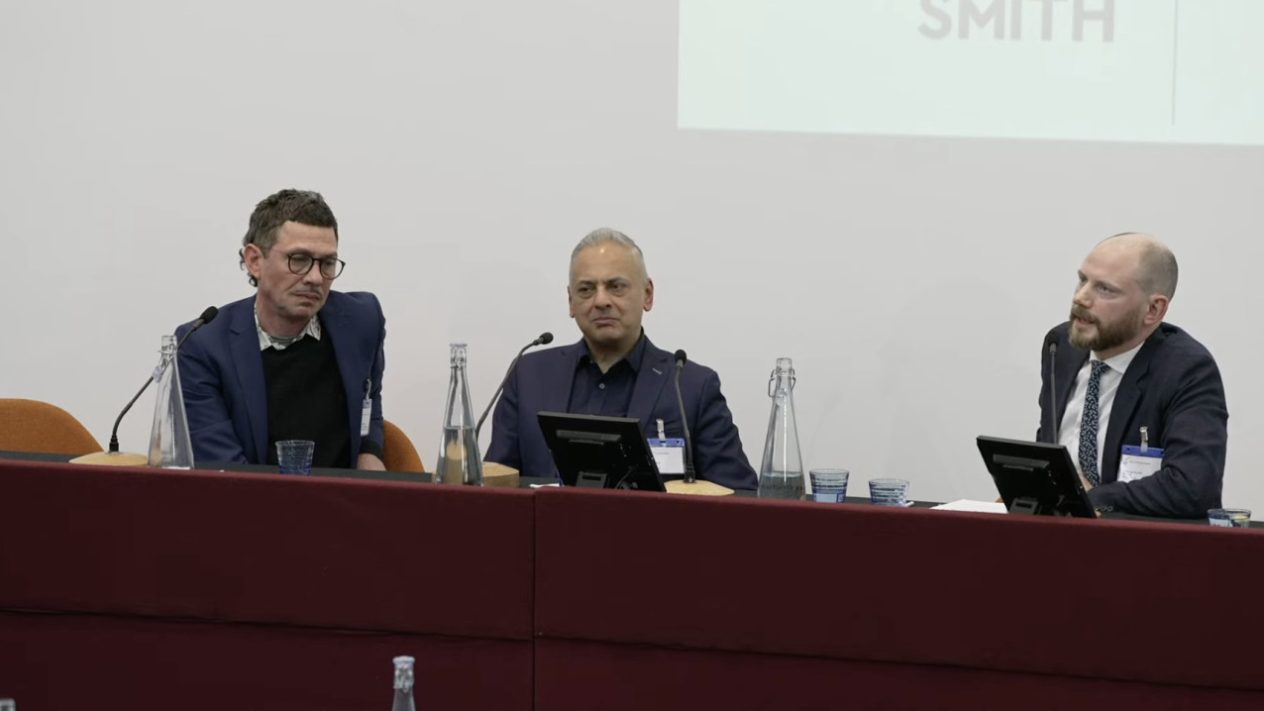
Speaking on a panel on fraud, money laundering and financial crime, Chetan Shah, CEO of Wirex Ltd, said the industry was now facing an “unwinnable war” unless governments, platforms and financial institutions align internationally. “It’s the war on drugs,” he says. “We’re never going to win this at the current state.”
The panel opened with a stark statistic: around 75% of online fraud now originates on a single social media platform. Shah added that fake and scam ads generated an estimated £16bn in 2024 alone – equivalent to 10% of Meta’s profits.
Simon Miller, Director of Strategy, Policy and Communications at Cifas, said the shift to online services during the pandemic had created a “pervasive, endemic problem” that fraudsters continue to exploit. “Fraud is 43% of all crime,” he notes. “Scams only work because they catch us at a vulnerable moment – and social media gives fraudsters that moment at scale.”
APP fraud attempts rising despite reimbursement scheme
While reimbursement rules have reduced the number of consumers left out of pocket, both panellists warned that the underlying criminal activity has not declined.
“The attempts are not going down,” Shah said. “Fraudsters are now encouraging victims to proceed because they know they’ll be reimbursed. That behaviour spreads quickly.”
He added that the original proposals risked removing too much consumer accountability: “We are adults. We’re expected to undertake a level of due diligence. The pendulum swung too far.”
Shah described a surge in AI‑generated identity documents, some so convincing that they evade traditional checks. “We’re deploying AI on top of their AI to catch their AI,” he says. “Some of it still slips through because it’s so good.”
At the other end of the spectrum, AI tools are enabling inexperienced individuals to attempt fraud for the first time. Shah cited a case where a fraudster used a photo taken from the side of a shampoo bottle as a driving‑licence headshot. “They’re atrocious at it but the tools make them think they can try.”
Miller warned that fraud‑as‑a‑service products are normalising criminal behaviour. Cifas research shows up to 48% of surveyed individuals either have committed fraud or know someone who has. “There’s an extraordinary normalisation of fraudulent behaviour,” he said.
Money‑mule activity ‘queueing up’ on social platforms
Both speakers highlighted the rapid rise in mule recruitment, particularly among young people.
Shah says Wirex Ltd now identifies potential mules with more than 80% accuracy before they transact, using behavioural analytics, IP data and location patterns such as university campuses. “People are literally queueing up to become money mules because they see it as easy money and a low‑consequence crime,” he said.
Miller added that the ease of recruitment, often via Instagram, is driving industrial‑scale laundering operations.
Miller says the UK’s fragmented enforcement landscape had historically lacked clear direction, with “43 police forces, 19 government departments and countless regulators” involved in fraud. The appointment of a dedicated fraud minister is a positive step, he says, but data‑sharing remains “absurdly” difficult even when both parties want to collaborate.
Shah warns against further regulatory burdens on smaller EMIs and fintechs. “We’ve got plenty of regulation. The question is whether it’s being deployed in the right way — and whether the right people are being regulated.”
Global coordination remains the missing piece
Looking ahead, Miller pointed to the UN’s first global fraud summit in Vienna as a sign of progress, but warned that geopolitical tensions — including reduced US engagement and China’s stance — risk undermining cooperation.
He highlighted the rise of scam farms in Southeast Asia and West Africa, describing them as “quasi‑corporations” generating revenues large enough to destabilise regions and enslave workers. “We’re only going to get action on that if we have a really robust global framework,” he said.
Shah agreed, adding that the human cost of financial crime is often overlooked. “It’s not just oligarchs buying half of West London,” he said. “It’s children, people in poverty, people being exploited. Until we confront that, not much is going to change.”