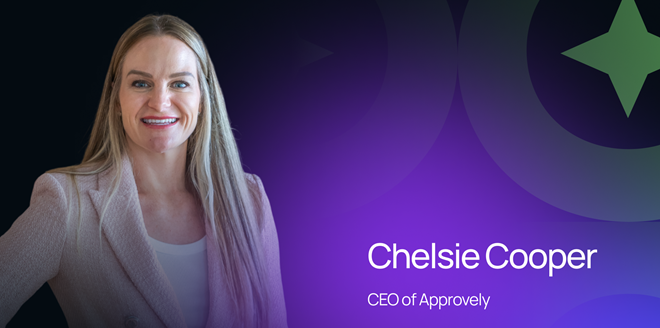
The data is clear: chargebacks from legitimate players now cost operators 4x more than stolen cards, says Approvely CEO, Chelsie Cooper. Writing for Payment Expert, she explains how the shift to behaviour-driven, indemnified AI eliminates this risk.
Online gaming operators have spent years balancing the same impossible trade-off: Increase acceptance rates, and risk goes up. Tighten controls, and good players get declined.
This tension has shaped the economics of deposits for more than a decade, and it hasn’t been solved by traditional fraud tools.
Going into 2026, that equation is starting to change. A growing number of operators are turning to AI-driven fraud indemnification, a model designed specifically for gaming environments with heavy transaction velocity, high-value players, and long player lifecycles. Early adopters report higher acceptance, fewer disputes, and no financial exposure when approved transactions later turn into chargebacks.
“By 2026, the global shift in fraud defense is moving from static identity checks to continuous behavioral biometrics. This proactive approach is no longer optional; it’s a necessity for regulatory compliance and financial resilience.” — Industry Analyst, Payments & Risk Infrastructure
The real threat: behavioral fraud, not stolen cards
Operators say the most damaging losses today rarely come from stolen-card activity. Instead, the costliest patterns are player-driven behaviors that legacy systems struggle to identify:
- Bonus abuse through promo farming, multi-accounting, or payout manipulation.
- Friendly fraud, often from players disputing after losing or after months of gameplay.
- Long-tail disputes where players engage over four to five months and then dispute everything.
These players typically pass every traditional checkpoint: KYC, device checks, and scoring, before shifting into behaviour that results in significant financial impact. The issue isn’t identity. It’s behaviour.
Why legacy tools fall short
Traditional systems rely on AVS, CVV, device ID, velocity controls, and one-time risk scoring. They excel at identifying bad cards, but they fail to track the behavioral signals that drive modern gaming losses.
Operators point to missing visibility in areas such as:
- Session behavior and gameplay patterns.
- Bonus usage and wagering ratios.
- Multi-account linkages.
- Payout timing.
- Lifecycle shifts.
- Dispute likelihood.
This gap explains why operators still face unpredictable dispute spikes even with established fraud solutions.
VAMP raises the stakes for 2026
Visa’s VAMP thresholds have added new pressure. Under current monitoring rules:
- Friendly fraud counts the same as stolen-card fraud.
- Long-tail disputes carry the same penalties.
- Bonus abuse that turns into chargebacks can trigger VAMP flags.
- Card-testing attempts are tracked more aggressively.
For operators with extended player lifecycles, a single dispute wave, even from legitimate players, can push ratios into monitoring.
How AI indemnification changes the model
AI indemnification models evaluate the player, not just the transaction.
They analyse:
- Device behaviour.
- Deposit cadence.
- Gameplay shifts.
- Bonus activity.
- Account linkages.
- Session-to-session changes.
The AI continuously scores the player throughout their lifecycle. If a transaction is approved, the provider carries the financial liability. If risk increases, the transaction is stopped before funds move.
Operators adopting this model report higher acceptance from legitimate players, reduced friction, and more predictable margins, without absorbing fraud exposure or dispute-related losses.
The bottom line
The operators best positioned for 2026 will be those who shift from identity-based fraud tools to behaviour-driven, fully indemnified models built for gaming.
With disputes increasingly tied to player behavior and VAMP thresholds tightening, AI indemnification offers a path to growth conversion without taking on additional risk.
For the first time, operators no longer have to choose between higher acceptance and safer traffic.
AI makes both possible.