Payment Expert’s ID Check: Payments Professionals offers insight from industry leaders and experts on how they got their start in the financial industry, from their early years in education, to how they have been able to climb the corporate ladder.
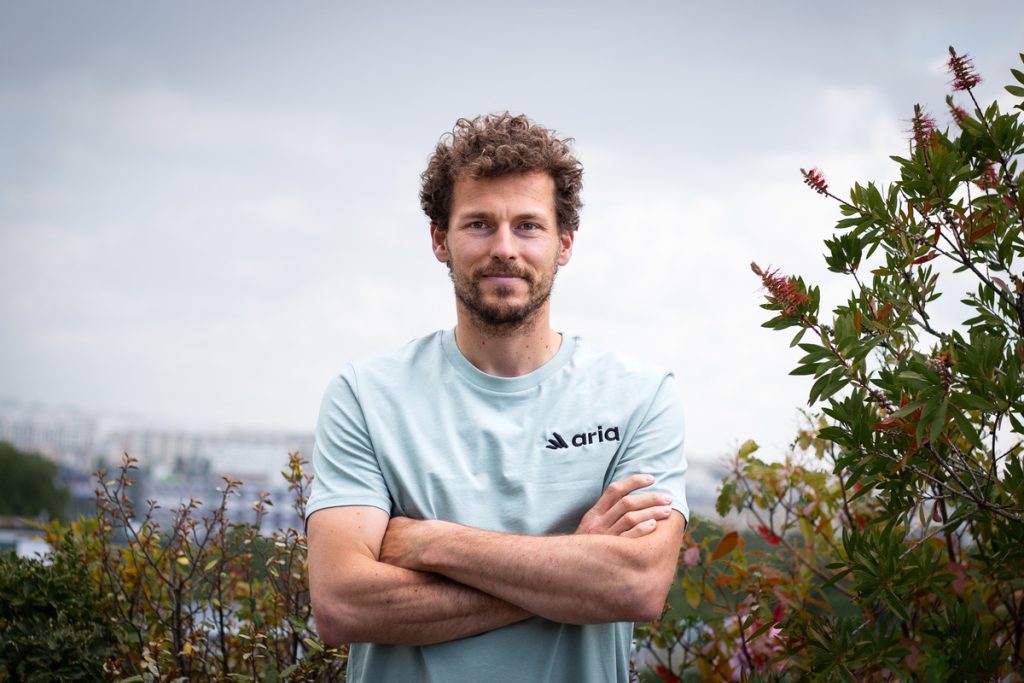
This week, Clément Carrier, CEO and Co-Founder at Aria, reveals how he discovered the ‘importance of communication, conviction and negotiation’ during his time in-and-out of the payments industry.
Where did you go to university and what did you study? What impact did this have on your current journey?
I studied at the École Normale Supérieure, where I focused on economics, econometrics, mathematics, and finance, and at ENSAE, where I specialised in applied mathematics, machine learning, and data science.
Those years taught me how to break down complex problems and think clearly under pressure. But more than that, they shaped how I approach my company.
The finance side also gave me a practical understanding of how businesses actually work, the accounting, the cash flow, and the decisions that keep things moving. Economics showed me the bigger picture: how interest rates shift, how policy changes ripple through markets, and why timing matters as much as the idea itself.
The data science piece stuck with me the most. It’s not just about the technical skills. It’s about staying curious, testing assumptions, and letting the numbers guide you when instinct falls short. That mindset shows up in how we built Aria: we listen to what our customers need, look at what the data tells us, and move quickly when we spot an opportunity.
Were you part of any sports clubs or societies at university, and has this influenced your educational and professional development?
At university, I was involved in several activities outside of the classroom. I worked with the junior enterprise, which was a student-run consulting organisation where we took on real projects for real companies. This felt more valuable than any case study as it allowed students to apply their academic knowledge in practical settings and gain hands-on experience with real clients.
I also sat on a literary prize jury and played rugby. While I no longer play rugby, I’ve continued to channel that same energy into trail running and other endurance sports.
Looking back, I wouldn’t say these experiences directly shaped my career, but they definitely contributed to my curiosity and openness to new challenges. I also think a lot about serendipity, how the unexpected moments, the conversations you weren’t supposed to have, the detours you didn’t plan for, often matter more than the path you carefully mapped out.
What was the first job you had in the industry, and are there any lessons from this you still draw on?
My first role was at the Caisse des Dépôts et Consignations, a French Government agency (similar to the British Business Bank, as you have in the UK), where I ran the Data Lab and was the technical right-hand man to the Group Chief Data Officer.
It was an incredible learning experience. I was young and managing teams earlier than most, so I learned how to bridge technical expertise with human, strategic, and organisational aspects. I discovered the importance of communication, conviction, and negotiation. Those lessons show up constantly now, albeit in a very different context.
Who was your biggest role model – inside or outside of your industry – who continues to inspire you in your current career?
I’ve always been inspired by visionary leaders, whether in tech or more traditional industries, who know where they’re going, have a clear vision, stay true to that, and can get others to believe in it too.
Outside my field, I’ve also been drawn to athletes and individuals who chase extraordinary goals that most people say are unrealistic. The name that immediately comes to mind is Kílian Jornet, the Spanish ultramarathon runner and ski mountaineer who is already a legend at the age of 37. While he’s best known for winning the Mont Blanc ultramarathon multiple times, his recent achievement of challenging himself to ascend and link up all of the USA’s Fourteeners (72 peaks in total above 14K feet) is inspiring.
Jornet’s incredible resilience and strength to push his body beyond its limits are qualities I aspire to emulate. There’s a discipline there, a willingness to be uncomfortable for a long time before seeing results. I see my own life as an attempt to achieve ambitious things, whether in business or sports. I admire those who set a high bar and then put in the work to accomplish the extraordinary.
When was your first big break in the industry? Why was this such a significant moment for you?
My first big break came when I founded Aria in 2019.
I knew nothing about the payments or B2B financing world when we first started, so it was a real challenge, a crash course in learning by doing.
What truly motivated me to build Aria in the first place was the problem itself. Most small businesses fail because they run out of cash. Not because their idea was bad or they didn’t work hard enough, but because they just couldn’t get paid on time. That felt fixable to me. Ever since, we’ve been set on solving the massive problem of financial exclusion among SMEs, small businesses, and freelancers.
Was there a moment you faced in the industry that really challenged you? How did you overcome this?
One of the toughest challenges came when scaling Aria in the B2B payments and financing space.
This industry involves deep complexity, financial risk management, compliance, regulation, and technology all at once. When providing financing, you’re exposed to 100% of the risk while earning only a few percentage points in return. In other words, if something goes wrong, you can lose up to fifty times what you made. That changes how you think about everything, making the business inherently sensitive and demanding in terms of control and execution.
There’s no real trick to it. You stay disciplined. You build careful processes. And you don’t chase growth at the expense of getting the fundamentals right. Once we hit a certain volume, the economics started to work in our favour. But getting there meant saying no to things that looked good in the short term.