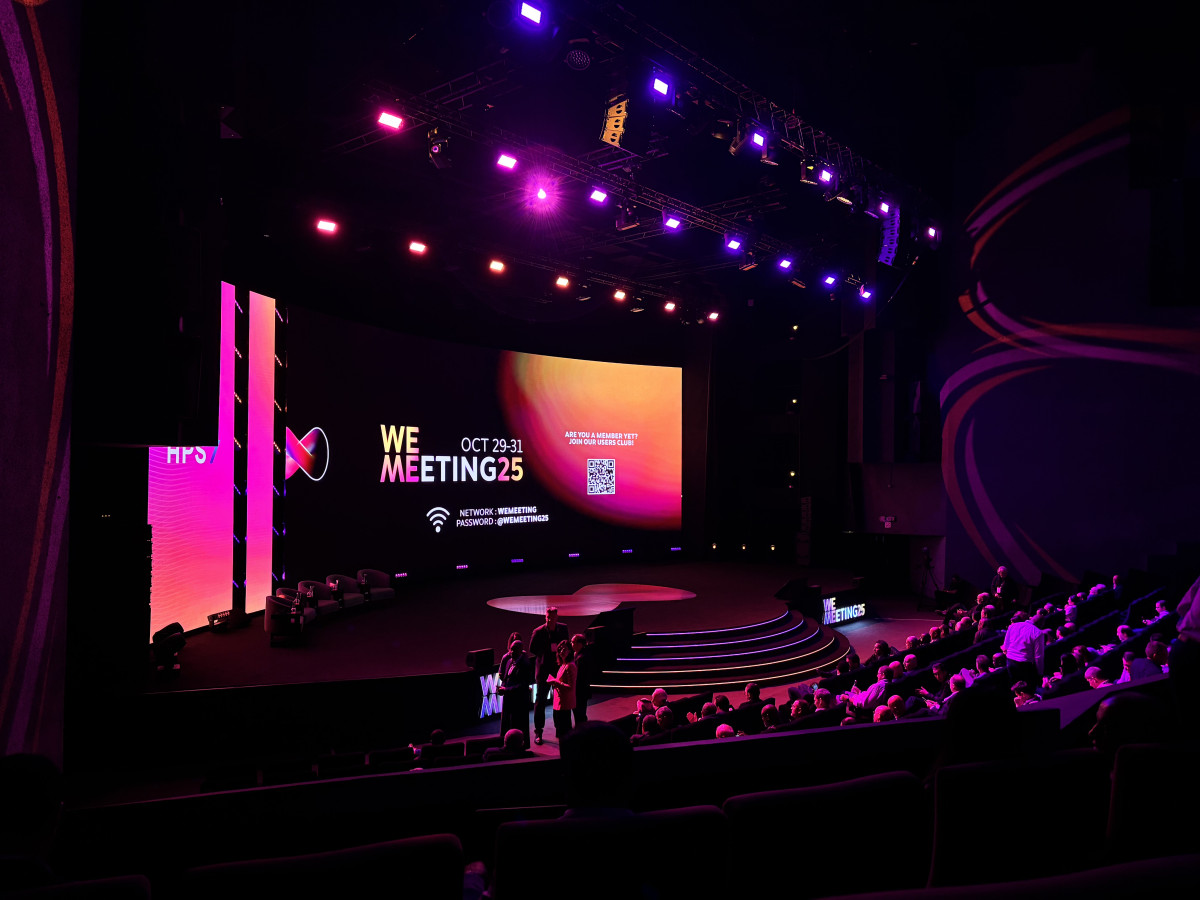
At #WEMEETING25 (hosted by HPS), executives from OCBC, National Bank of Canada and Sagicor Bank (Barbados) Limited argued that customer-first design, cloud-native builds and pragmatic “micro-personalisation” will separate payments leaders from followers, with regulators seen as partners rather than obstacles.
Customer journeys, not shiny tools, should set the roadmap for “next-gen” payment builds. That was the consistent refrain from bank and vendor leaders at WEMEETING25’s NextGen Payments: Unlocking Innovation Pathway session, who warned that too many programmes still start with the stack and work backwards.
As one panellist put it, “Then you design the experience around them. And only then do you define the processes […] the last step should be, what are your capabilities? What technology are you using?”
Moderated by Sophia Furber, the discussion prioritised what customers actually experience: embedded payments that “work anytime, anywhere,” backed by resilience and trust.
“Customers want the payments to work anytime, anywhere. And that’s where resilience and trust is the most important,” said Jean-François Dorval, framing reliability and security as the competitive baseline rather than a differentiator.
Sagicor Bank’s chief executive George Thomas offered the clearest case study in doing more with less by starting from a clean slate. Describing the group’s digital build, he said: “I’m at the end point of transformation. 100% digital, 100% in the cloud, 100% API-enabled. We use machine learning… to work with people without ever seeing them in person.”
The greenfield model, he added, was enabled by early, hands-on engagement from supervisors: “We did not have to deal with preconceived notions. We worked directly with the regulator,” which let the team “cut right through” outdated assumptions and deliver faster.
Thomas also challenged hype around “personalisation” for its own sake, arguing that what matters is targeted fixes to real frictions in local markets. “It’s not about technology… It’s about using the tech where appropriate, and listening, and continuously listening to the client,” he said.
In Sagicor’s home region, merchant economics have trumped novelty: “Our merchants in Barbados… are crying because the fees went from $0.10 a transaction to $1,” Thomas noted, using the example to argue for data-led “micro-personalisation” that solves practical pain points rather than chasing gimmicks.
That emphasis on outcomes over tools threaded through the hour. The panel cautioned against the industry habit of beginning with a systems decision and only later thinking about processes and user impact—an approach that “just… doesn’t work,” one participant said.
Furber underlined that “digitalisation and transformation is also to do with culture and management as well as the tech,” a point which resonated with executives dealing with entrenched operating models.
Still, legacy doesn’t have to be a four-letter word. Owais Iqbal urged banks to “honour the work of the generations… who have come before us,” and build on that foundation while diverging where it helps the customer.
In practice, panellists said, that means stitching data end-to-end—across onboarding, cards, CRM and insight layers—so that decline messages become useful, context-aware interventions instead of generic dead-ends, and so that risk controls feel invisible to the user until they need to be visible.
The session also recast regulators as accelerants. Thomas’s account of co-designing with supervisors, rather than treating compliance as a late-stage gate, won broad agreement on stage, with the group arguing that early engagement can de-risk deployment windows and keep innovation “inside the lines” without diluting ambition.