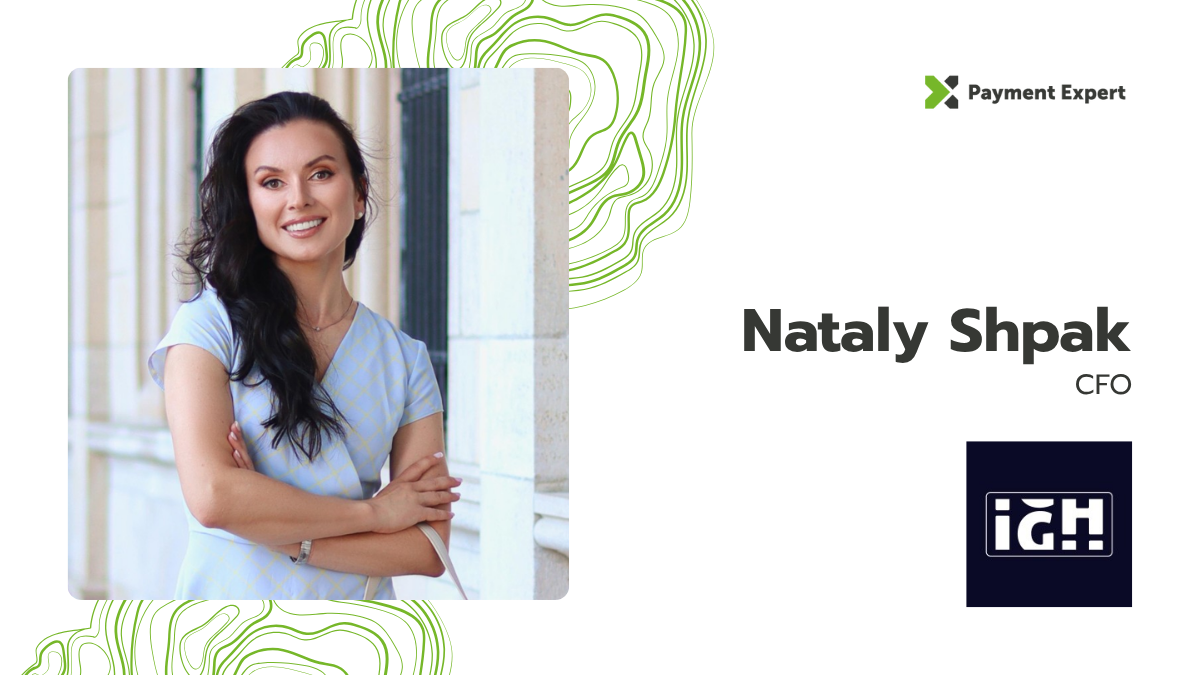
IGaming House CFO Nataly Shpak on payments innovation, operational complexity and the need for regulatory acceleration.
As open banking and decentralised finance (DeFi) continue to mature, their impact on digital-first industries like iGaming is beginning to cut beneath the surface.
For Nataly Shpak, Chief Financial Officer at IGaming House (iGH), these innovations are not just technical upgrades but fundamental shifts in how finance is managed and measured across borders.
“Open banking facilitates seamless, real-time payment processing, which is crucial in the iGaming industry where speed and reliability directly impact customer experience and retention,” Shpak explains.
The operational advantages extend beyond just payments. Shpak points to better reconciliation, enhanced automation, and improved cash flow management as signs that open banking is reshaping the digital business model from the inside out.
“It enables better reconciliation, automation of financial processes, and increased transparency, all of which contribute to more agile and scalable operations,” she says.
But alongside the opportunities, there is increasing complexity. Open banking may offer stronger financial controls, yet it also demands new layers of oversight, especially in treasury and risk management. “Integrating open banking also introduces additional complexity, such as the need to adapt existing systems, manage multiple data sources, and ensure compliance with varying regulatory requirements,” Shpak says.
For CFOs, the trade-off is one worth managing. “The advantages outweigh the challenges when organizations invest in the right technology infrastructure and governance frameworks,” she says.
A diversification of payment rails
In a sector still heavily reliant on credit cards, Shpak sees open banking and alternative rails gaining serious traction. “These innovations offer greater flexibility, faster transaction times, and often lower costs, which are increasingly important to modern consumers,” she says.
While she acknowledges that traditional credit cards will remain relevant for certain transactions, especially those requiring global acceptance, the shift toward digital wallets, bank transfers, and fintech-powered solutions is underway. “I see a diversification of payment methods, with traditional credit card integration evolving alongside, and eventually giving way to, a more multifaceted payments landscape.”
Decentralisation’s double edge
Shpak sees decentralisation as both an opportunity and a risk — particularly from a finance perspective. “It empowers consumers by providing greater control over their assets, increasing transparency, and reducing intermediaries, which can lead to lower costs and faster transactions,” she notes.
But she also flags challenges around fraud, hacking, and regulatory uncertainty. “Decentralization can pose challenges in terms of security, with increased exposure to fraud, hacking, or malicious attacks on less regulated platforms.”
The balancing act, she says, lies in combining innovation with accountability. “The key is to strike a balance—leveraging the benefits of decentralization while implementing robust security measures, clear regulatory frameworks, and consumer protections.”
Looking ahead, Shpak sees DeFi playing a complementary, rather than disruptive, role in mainstream payments. “DeFi has the potential to become a viable supplemental infrastructure—providing alternative payment rails alongside traditional methods—rather than replacing them entirely,” she says.
Trust, education and the path to adoption
Despite the pace of development, Shpak believes both consumers and businesses remain hesitant about the open and decentralised future. “Many today are cautious about the security, regulation, and stability of decentralised systems, largely due to concerns about fraud, scams, and lack of clear regulatory frameworks,” she says.
The road to widespread adoption, in her view, requires trust and education in equal measure. “Bridging the trust and knowledge gap remains critical for broader adoption. It’s a gradual process that requires collaboration among technology providers, regulators, and users alike.”
That misunderstanding extends to the concept of open banking itself.
“One of the most misunderstood aspects of open banking is the perceived risk versus the actual level of security it offers,” Shpak explains.
“Many assume that opening access to financial data inherently increases vulnerability, but in practice, robust security protocols, strong authentication methods, and regulatory standards significantly mitigate these risks.”
Policymakers must pick up the pace
On the regulatory front, Shpak acknowledges progress, but argues that policymakers are still playing catch-up.
“Given the rapid pace of technological advancements and market adoption, in many cases, regulation is still evolving and sometimes lags behind industry developments,” she says.
She calls for more agile frameworks and greater collaboration across the ecosystem.
“A collaborative effort between regulators, industry players, and technology providers is essential to accelerate this process and create a supportive environment that balances innovation with prudent oversight.”
Challenging old thinking
Ahead of her panel at SBC Summit Lisbon, Shpak plans to challenge assumptions about how payments should work. “I aim to share insights on how emerging technologies like open banking and decentralization are reshaping the payments landscape, highlighting both opportunities and challenges,” she says.
Her call to action for payments professionals is to adapt, learn, and lean in. “Staying informed and connected is essential to navigate the rapidly evolving payments environment and to seize future growth opportunities,” she says.
For Shpak, leadership in this new financial ecosystem is no longer about chasing every trend but about building the infrastructure, literacy and trust needed to make transformation sustainable.
SBC Summit will take place from 16–18 September at the Feira Internacional de Lisboa and MEO Arena, bringing together 30,000 industry stakeholders for an unmissable three-day experience.
Looking to attend? Here’s how:
- Secure your place with a VIP Event Pass – Enjoy full access to all conference sessions, the exhibition floor, exclusive networking events, and complimentary food and drink throughout the summit.
- Bringing the team? Take advantage of our Group Pass Discount — purchase three or more VIP Event Passes and pay just €400 per ticket (saving €200 off the standard price).
- Operator or affiliate? You may be eligible for a complimentary VIP Event Pass, which includes full access to the exhibition, conference, and exclusive networking events. Apply now to reserve your spot.
Expo+ Pass: Gain access to the full exhibition floor and all conference sessions across the three days. This does not include access to our exclusive VIP evening networking events.