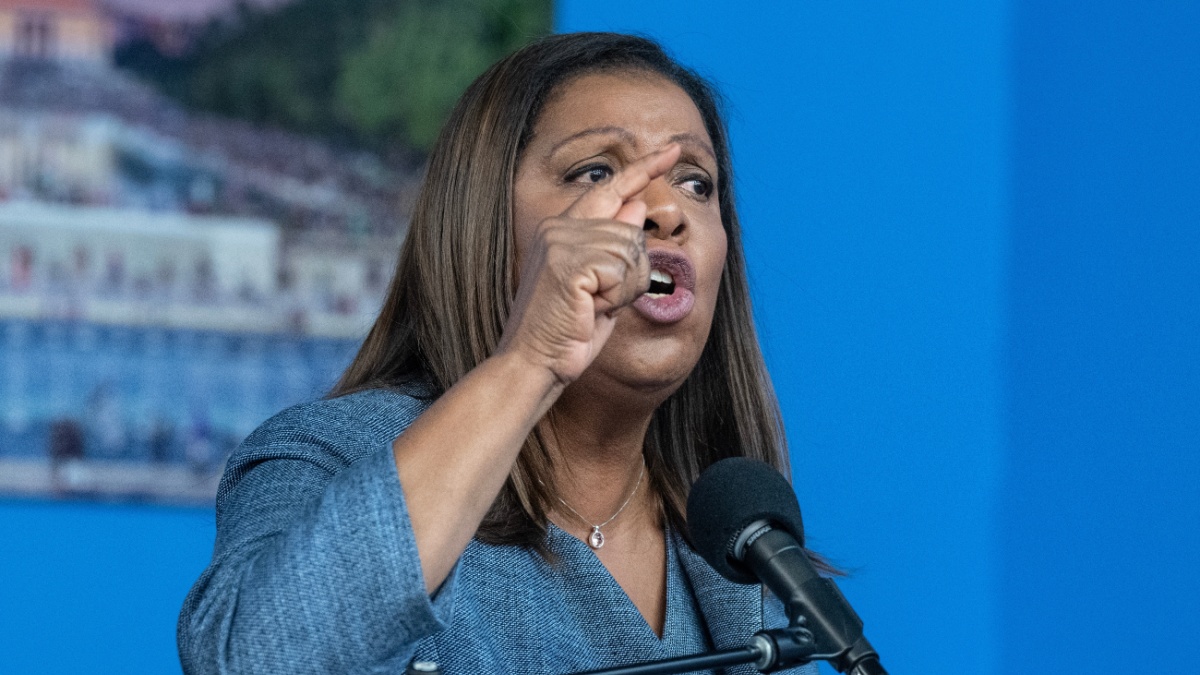
Zelle accuses New York Attorney General Letitia James of pursuing the company for political gain.
Zelle parent company Early Warning Services isn’t backing down after a New York judge refused to throw out the state’s fraud lawsuit against its peer-to-peer (P2P) payment company.
Justice Phaedra Perry-Bond of a Manhattan state court ruled on 20 July that New York Attorney General Letitia James had done enough to allow her case against Early Warning Services to progress.
James alleges that Zelle knowingly launched the platform without adequate fraud protections, putting speed to market and consumer adoption ahead of safety, a decision she claimed has cost consumers more than $1bn.
According to Perry-Bond, James’ complaint sufficiently argues that Early Warning Services pushed the platform out despite pushback from its own banking partners over safety concerns.
Early Warning Services is jointly owned by seven major US banks, including JPMorgan Chase, Bank of America, Wells Fargo, Truist, PNC, US Bank and Capital One.
The judge also noted Zelle’s collection of fees on transactions later flagged as fraudulent, something Zelle has acknowledged. This raised questions over whether the company tolerated the activity taking place on its network.
James’ case also takes issue with how Zelle marketed its products to the public, arguing that language promising “peace of mind” and security “backed by the banks” gave consumers a false sense of protection.
Context to the Zelle case
James originally filed her case in 2025, alleging Early Warning Services ran a platform “highly susceptible to fraud” despite advertising it as safe.
The case followed a separate lawsuit from the Consumer Financial Protection Bureau (CFPB) against the company and three of its bank owners, which accused the institutions of failing to operate an effective anti-fraud system and refusing to reimburse scam victims.
The CFPB case was dropped in March 2025 amid a wider pullback in the regulator’s oversight activity, leaving James’ state-level case as the main legal threat to Zelle’s practices.
In response to the scrutiny, Early Warning Services has repeatedly highlighted its own figures to defend the platform, stating that fraud and scams account for just 0.02% of total Zelle transactions.
Zelle has compared the rate to everyday risks, claiming consumers are more likely to get food poisoning or be injured by a toilet than fall victim to Zelle fraud.
Early Warning Services has also credited its decades of work with law enforcement and federal agencies for keeping fraud numbers low, describing itself as “the most powerful financial crime-fighting company you’ve never heard of”.

James’ recent win against Cash App
James is making quite a name for herself when it comes to taking P2P companies to court.
Weeks before the Early Warning Services ruling, Block, the parent company of Cash App, agreed to pay $45m to settle a separate case led by the attorney general, which was backed by 45 other states.
The investigation found Block failed to provide the fraud protections it promised users, in some cases falling short of legal requirements, as well as weaknesses in its account controls and customer support that allowed scams to spread across the platform.
As part of the settlement, Block must introduce 24-hour customer support, properly investigate fraud complaints and reimburse victims of unauthorised transactions.
Zelle isn’t planning on backing down, however, and intends to appeal the decision.
“Reports of fraud and scams committed by bad actors against Zelle users have always been exceptionally low,” said a Zelle spokesperson.
“The attorney general is targeting our company for political gain by recycling claims that courts across the country have rejected as meritless. The attorney general’s claims are not supported by either the facts or the law.”