
Former Uber Payments executive Tristan Kirchner will lead ClearBank Europe as the cloud-native clearing bank opens a French branch and signals deeper ambitions across the EU payments market.
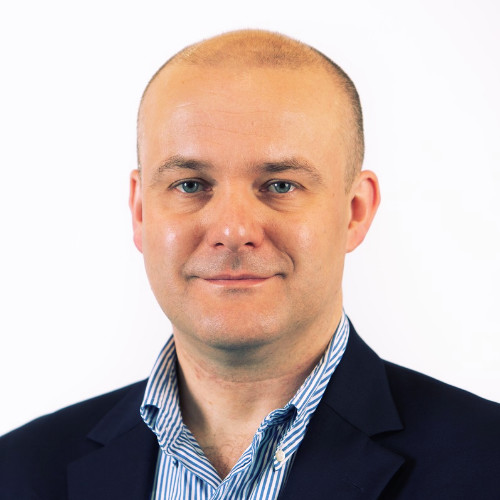
ClearBank has stepped up its European expansion with the appointment of Tristan Kirchner as CEO of ClearBank Europe N.V. and the launch of a new branch in France, marking what the firm describes as the next phase of its continental growth.
Kirchner, formerly a senior leader at Uber Payments and previously at Barclays and Visa, will be based in Amsterdam and oversee the bank’s EU operations and strategy, according to a statement released today (19 February). He will work alongside Group CEO Mark Fairless and Maurice Oostendorp, Chair of ClearBank Europe’s Supervisory Board.
The changing of the guard comes as ClearBank Europe, authorised by the European Central Bank and supervised by De Nederlandsche Bank, continues to scale following receipt of its EU banking licence.
The firm says it has passported into 20 countries and now serves more than 35 clients across the bloc.
From licence to scale
ClearBank’s European business was initially framed as a regulatory milestone. This week’s CEO appointment signals a transition from licence-holder to scaling infrastructure provider.
At Uber, Kirchner’s payments leadership meant navigating cross-border flows, multi-currency treasury operations, and regulatory fragmentation across European markets. At Visa, the focus would have centred on network economics, scheme scaling, and compliance across jurisdictions.
This combination aligns with ClearBank’s positioning as a cloud-native clearing and embedded banking provider serving fintechs, EMIs and financial institutions seeking direct access to real-time payment rails.
Fairless said: “With Tristan’s appointment as CEO of our European Bank and the opening of our French branch, we’re accelerating our mission to modernise payments across the continent.”
He added Kirchner’s “track record in driving growth and navigating complex payments ecosystems makes him the ideal leader to propel ClearBank Europe’s next chapter”.
Why France matters
The launch of a French branch represents ClearBank’s first physical expansion within the EU since securing its Amsterdam-based licence.
France is one of Europe’s largest payment markets and home to a rapidly growing fintech ecosystem. Establishing a local presence allows ClearBank to work directly with domestic fintechs and electronic money institutions, rather than relying solely on passporting arrangements.
Oostendorp described the European payments market as presenting a “substantial opportunity for banks built specifically for scale, speed and regulatory resilience”.
He said ClearBank had moved “quickly from licence to meaningful traction across multiple markets”, adding that expansion into financial hubs such as France would help the bank “capture this opportunity” and “scale a pan-European platform designed for the future of payments”.
The French branch will offer ClearBank’s API-driven platform to support real-time clearing and agency banking models, responding to what the firm says is growing demand for cloud-native infrastructure.
Stablecoins enter the frame
Kirchner’s appointment also coincides with ClearBank’s stated intention to support stablecoin activity through its partnership with Circle.
Kirchner said: “With an EU banking licence and strong early traction with more than 30 clients across multiple European markets, the foundations are in place for significant, sustained expansion.”
He added that he looked forward to helping bring “real-time payments to more clients and their customers throughout Europe, complemented by innovative services, such as stablecoins launching through our partnership with Circle.”
The reference to stablecoins places ClearBank’s EU push within the wider context of Europe’s implementation of the Markets in Crypto-Assets Regulation (MiCA) and growing institutional interest in regulated digital asset settlement.
Alongside the leadership change, ClearBank is introducing a regionally focused sales organisation operating across three hubs: Northern Europe, Eastern Europe, and Southern and Western Europe.
The structure suggests a more granular go-to-market approach, recognising differing regulatory regimes, payment behaviours and fintech maturity levels across the bloc.