Marcus says years of financial optimisation weakened PayPal’s product conviction, leaving the company exposed as competition intensified across checkout, wallets and new payment rails.
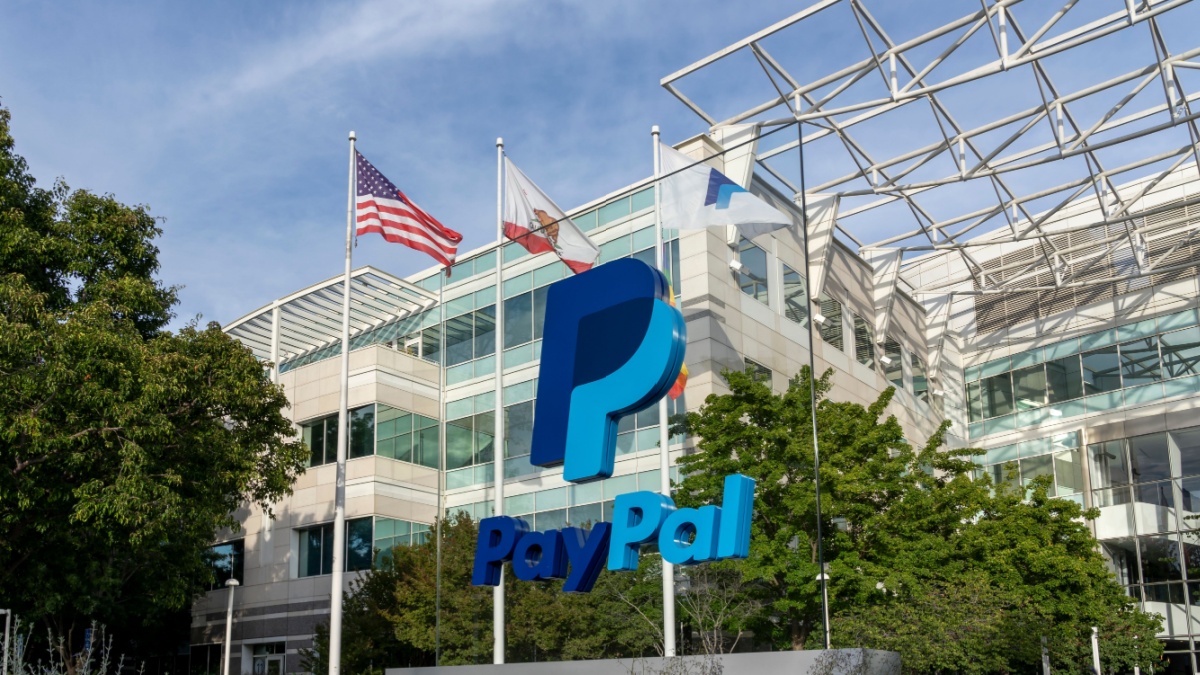
Former PayPal chief executive David Marcus has delivered a rare and pointed public assessment of the payments group’s strategic direction, arguing that years of financial optimisation eroded the product-led culture that once gave the company its competitive edge.
Marcus’ comments, published more than a decade after his departure, follow yesterday’s (February 3) board decision to remove Alex Chriss as CEO and appoint Enrique Lores in his place. Marcus described the leadership change as the latest chapter in a longer pattern of decisions that prioritised predictability over platform ambition.
“I left PayPal in 2014 because I was deeply frustrated,” Marcus wrote in a post on X, reflecting on a period in which the company had rebuilt its engineering base, accelerated product delivery, and acquired Braintree and Venmo. At that point, he said, PayPal had regained momentum and “its soul” after years of internal stagnation.
That trajectory changed, in Marcus’ view, after the company’s eventual spin-off from eBay and the appointment of Dan Schulman as CEO. While he credited former COO Bill Ready with sustaining growth at Venmo and driving total payment volume higher, Marcus argued that PayPal gradually shifted from being product-led to being financially led.
According to Marcus, the consequences of that shift became clearer over time. PayPal, he said, optimised for payment volume rather than margin and differentiation, leaning into unbranded checkout where it had less leverage. At the same time, he argued, the company ceded strategic ground to partners and rivals, pointing to the impact of its commercial arrangements with Visa, which limited PayPal’s ability to steer users towards bank-funded transactions.
Marcus also cited the loss of eBay transaction volume and the gradual erosion of checkout share among PayPal’s most profitable customers, as alternatives such as Apple Pay gained traction.
A mixed product roadmap
Beyond core payments, Marcus was critical of PayPal’s approach to adjacent products. In lending, he said, offerings such as Working Capital were designed to minimise losses rather than act as a platform differentiator. In buy now, pay later, he argued that PayPal failed to leverage its scale and trust advantage to build a consumer finance platform, allowing rivals including Klarna, Affirm, and Afterpay to build stronger consumer relationships and brand identities.
He applied similar criticism to PayPal’s more recent moves into new rails and digital assets, saying initiatives such as PYUSD were technically sound but lacked a clear transactional reason to exist. Without deeper integration into core payment flows, Marcus argued, these products struggled to generate organic demand or reshape PayPal’s economics.
Marcus said the board’s 2023 decision to hire Chriss, an Intuit veteran, reflected a recognition that product conviction needed to be restored. However, he suggested Chriss’ background in software rather than payments, combined with the departure of experienced payments executives, weakened institutional knowledge at a critical moment.

The appointment of Lores, formerly CEO of HP and a PayPal board member for five years, drew particular scepticism. “On paper at least, he’s a hardware executive,” Marcus wrote, questioning the fit for a global payments company navigating rapid structural change.
While Marcus acknowledged the trade-offs involved in running a public company, he framed PayPal’s challenges as the result of repeated strategic choices rather than inevitability. “Short and medium-term predictability beat long-term vision and ambition,” he said, arguing that incentive design ultimately favoured financial optimisation over platform risk.
For Marcus, the result is a company that “had every advantage” but lost its product edge as the payments market was being reshaped around it. “That’s the part that’s hardest to watch,” he concluded, “for a company I care so deeply about.”
PayPal has not publicly responded to Marcus’ comments.
Financial performance underscores strategic headwinds
PayPal’s latest results illustrate steady scale but also the pressures central to Marcus’ criticism of strategic trade-offs.
In 2024, the company reported full-year net revenues of roughly $31.8 billion, with total payment volume (TPV) reaching $1.68 trillion, up about 10% year-on-year. For the year, PayPal processed roughly 26.3 billion transactions and ended with around 434 million active accounts. It also returned about $6 billion to shareholders through share repurchases and generated substantial free cash flow.
Across 2025, growth proved more modest. Quarterly results showed net revenues growing in the low single digits in several periods – for example, roughly 5% in Q2 and modest gains in early quarters – with total payment volume increases generally in the 5–8% range. Branded checkout growth, a key profitability driver, slowed markedly by late 2025 and into early 2026, with quarterly growth reported at roughly 1% in the final quarter.
Profitability metrics have remained positive but uneven. Transaction margin dollars, representing the core profit PayPal earns from processing activity, grew over parts of 2025, but margins were under pressure from evolving mix and investment in experience upgrades.
Most recently, Q4 2025 delivered revenue of about $8.7 billion, below some analyst expectations, and adjusted earnings per share of about $1.23, while branded growth remained weak. The company also signalled a flat to slightly lower profit outlook for 2026, reflecting softening retail spending and broader macroeconomic headwinds.
Taken together, these figures show a large, still profitable business that has maintained its core network scale – with TPV and revenue generally growing year-on-year – but with slowing high-margin branded checkout expansion and modest top-line acceleration. That backdrop, in the view of many investors and industry observers, highlights the tension between near-term financial optimisation and reinvigorating product differentiation that Marcus described.