
Senior industry figures say the PSR’s regulatory approach failed to deliver infrastructure change.
Senior figures from across the UK payments ecosystem have openly acknowledged that the regulatory framework overseen by the Payment Systems Regulator (PSR) failed to deliver the infrastructure change the industry needed, as responsibility for payments oversight moves into the Financial Conduct Authority.
Speaking at City & Financial Global’s Payment Regulation Conference, panellists agreed the consolidation of the PSR into the FCA reflects more than administrative reform, amounting instead to a recognition that the previous regulatory model was not delivering outcomes at pace.
Justin Jacobs, Chief Policy and Engagement Officer at Pay.UK, was blunt in his assessment of the rationale behind the merger. “The previous structures and systems clearly didn’t work in the way that we wanted,” he said. “Otherwise we wouldn’t be making the changes.”
Jacobs stresses the failure was not one of intent or capability, noting that “nobody’s against promoting innovation, competition and interests of services”, nor was it a reflection on individuals involved in the PSR’s work. Instead, he points to a mismatch between regulatory philosophy and delivery.
“If that had worked, there wouldn’t be consolidation going on,” he says
A shift in regulatory philosophy
According to Jacobs, the consolidation is already beginning to reshape how infrastructure change is expected to happen in practice. Under the PSR, he argues, there was a tendency for expectations to be placed on central bodies rather than on market participants themselves.
“There was a tendency sometimes for the PSR to set expectations on us and Pay.UK to change the market,” he says. “Whereas I think generally regulation works best where it starts at the participants that need to make the change, and then actually the central organisation like us exists to help the market do that.”
He adds this approach aligns more closely with how infrastructure reform operates in other jurisdictions, where outcomes are set by regulators but delivery responsibility sits squarely with industry.
The comments mark a notable public reframing of the PSR’s legacy, particularly given the regulator’s central role in initiatives ranging from open banking to authorised push payment reimbursement.
Regulatory burden and delivery fatigue
Jacobs also highlights the operational strain created by what he described as overly prescriptive regulatory engagement, questioning whether the previous framework struck the right balance between oversight and proportionality.
“In 2024 mobilisation had about 400 meetings,” he says. “My view is that’s probably more than you expect to see in an outcomes-based, proportionate regulatory environment.”
He argues that constant regulatory change windows have left limited capacity for genuine innovation, with firms forced to prioritise compliance delivery over end-user outcomes. “Every single change window in participants in the industry is used for regulatory change,” Jacobs said, asking how much space that leaves for “genuine innovation focused on end users”.
Existing rails, not just new ones
While the panel largely welcomed the consolidation into the FCA, there was scepticism about the idea that UK payments reform should focus primarily on building entirely new infrastructure.
Simon Eacott, Head of Payments at NatWest, cautions against overlooking the strengths of the existing system. “The UK has got a well-embedded payment system on the retail side,” he says. “It’s very card centric, but it hasn’t necessarily stopped innovation.”
Eacott argues reform should involve parallel investment: maintaining and enhancing existing rails while developing new capabilities where there is a clear use case.
“We’ve got to continue in parallel to do appropriate investment, not just in resilience, but in terms of utilising what’s already there,” he says.
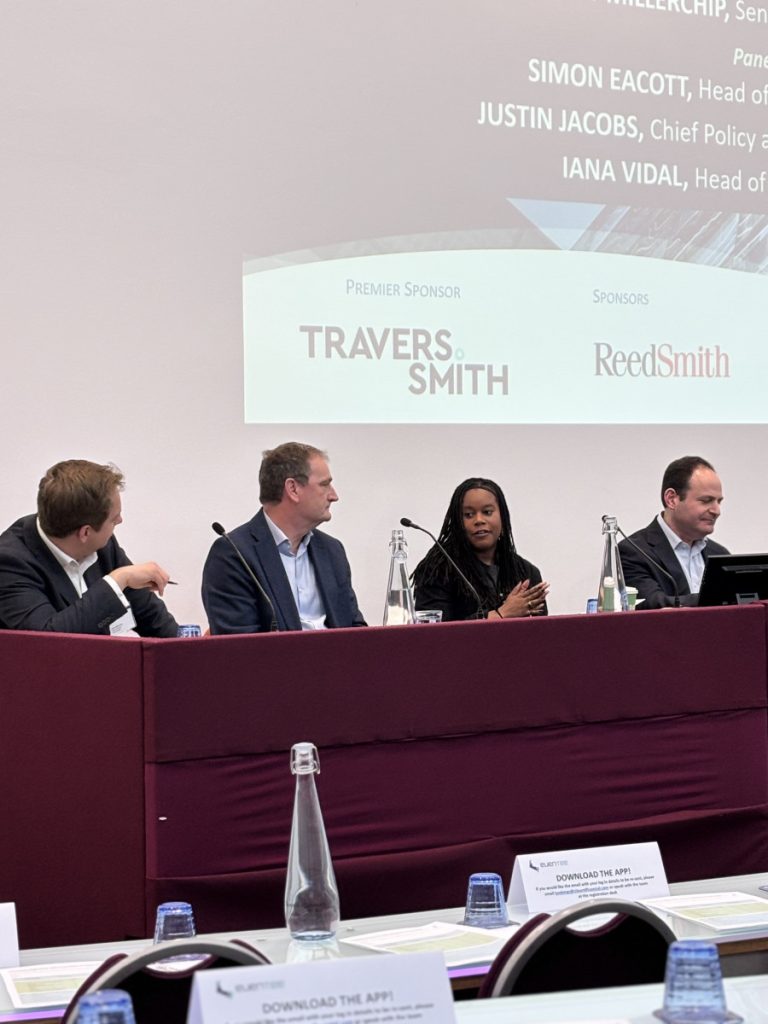
Simon Eacott, Head of Payments, NatWest Bank;
Iana Vidal, Head of UK Public Policy, Block; Justin Jacobs, Chief Policy and Engagement Officer, Pay.UK
Risk of falling behind
From a fintech perspective, Iana Vidal, Head of UK Public Policy at Block, warns the pace of infrastructure reform risks lagging the wider market.
She says payments policy discussions remain fragmented across banking, crypto assets and stablecoin regulation, raising the risk that the UK delivers solutions after global standards have already shifted.
“My worry is that by the time we’re actually building the thing… the world already has moved on,” Vidal says. While welcoming the conditions now in place for reform, she stresses the need for faster progress and clearer prioritisation.
Delivery, sequencing and commercial reality
As the discussion moved to the Payments Vision Delivery Committee and its model for infrastructure design and delivery, panellists broadly welcomed the clearer articulation of outcomes, but repeatedly returned to the issue of sequencing.
Jacobs says that while having a “North Star” is important, there remains a risk of attempting to deliver too much at once. “Everybody wants all the things that’s out there, but we can’t have them all tomorrow,” he says, calling for clearer sequencing and trade-offs.
He also highlights the absence of a settled commercial funding model for central infrastructure, drawing comparisons with the challenges faced in open banking.
“That commercial model is absolutely key here,” Jacobs says, noting the difficulty of sustaining delivery without clear incentives across the value chain.
A reset moment for UK payments regulation
Taken together, the discussion suggested cautious optimism about the direction of travel under the FCA, but little appetite for repeating the mistakes of the past.
As Jacobs put it, the lesson from the PSR era is not that regulation was unnecessary, but that delivery needs to be outcomes-led, proportionate and coordinated across the system.
Whether the FCA-led model succeeds where the PSR struggled will ultimately depend on whether that philosophical shift translates into faster, more commercially viable infrastructure change.