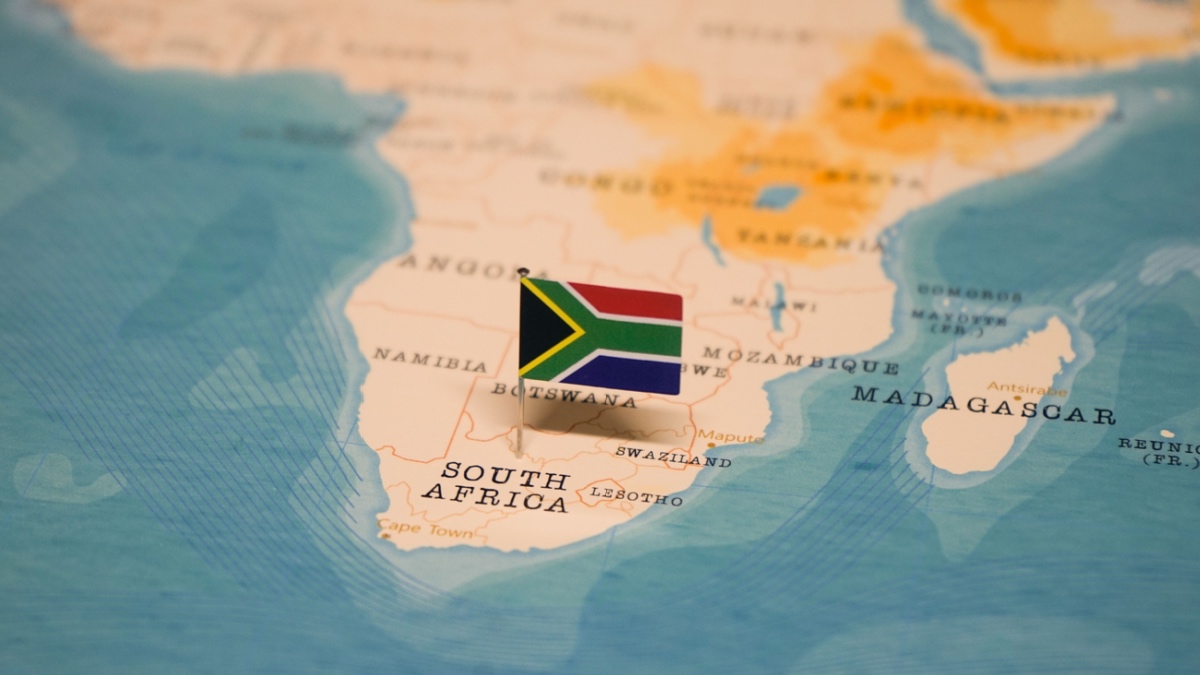
Wise enters South Africa just weeks after the fintech highlighted the country as the lowest-performing G20 nation on cross-border payment transparency and access.
Wise has secured its first licence in Africa after receiving conditional approval from the South African Reserve Bank (SARB).
The approval, confirmed today (December 1), grants Wise permission to operate as a Category 2 Authorised Dealer in Foreign Exchange with Limited Authority (ADLA), allowing the company to begin offering outbound transfers for personal customers in South Africa.
South Africa has the largest economy across the continent and one of its most advanced financial services hubs, with significant cross-border payment activity driven by migrant workers, international students and globalised trade.
In a statement, Wise said the authorisation will allow it to meet growing demand for faster, more transparent and cost-effective international payment options.
“South Africans are among the most digitally savvy consumers on the continent, yet many still face high costs, poor price transparency, and slow, inconvenient processes when sending money abroad,” said Nadia Costanzo, Director of Banking and Expansion LatAm & MEA at Wise.
“Our first regulatory approval in Africa marks a significant step forward in our mission to give South Africans access to a faster, cheaper, and more transparent way to send money abroad – and we’re grateful for the Reserve Bank’s collaboration and support throughout the process. We look forward to actively engaging with SARB as it continues to modernise and develop its regulatory framework to fuel financial innovation.”
Mastercard and Paymentology have also been expanding their presence in the market, announcing a deeper partnership to support South African fintechs with card-issuing infrastructure.
UK-based payment companies are also looking to enter South Africa, with Wise’s move following Revolut. The neobank applied earlier this year to establish a bank in the country and appointed veteran banker Gaby Magomola as chairman of its local business in September.
UK Prime Minister Keir Starmer has taken note of the growing presence of British fintechs in the region, commenting on Wise’s milestone.
“Wise’s expansion into South Africa not only strengthens ties with one of Africa’s most dynamic economies but also showcases British excellence in building solutions that make life better for people and business worldwide, both at home and abroad,” said Starmer.
“This is yet another example of a thriving UK business expanding internationally, that success is good for British jobs, good for growth and good for business.”
Aligned with G20 priorities
In a release seen by Payment Expert, Wise said its move into South Africa aligns with the G20’s roadmap for improving cross-border payments.
Launched in 2020, the G20 initiative aims to tackle challenges in cross-border payments, including high costs, long transaction times, limited transparency and restricted access for non-bank providers.
However, progress on the roadmap was recently criticised for falling short of expectations. In October 2025, the Financial Stability Board (FSB) acknowledged key milestones are unlikely to be met by the 2027 target.
Former FSB Chair Klaas Knot said while some improvements have occurred, overall advancements remain limited.
“It is unlikely that satisfactory improvements at the global level will be achieved in line with the 2027 Roadmap timetable,” he wrote in his valedictory letter, citing only marginal gains in the latest 2025 KPIs.
Wise’s own report, published alongside the FSB’s annual update, examined country-level progress on two central goals of price transparency and direct access to payment systems for non-banks.
The report found most G20 countries have made only small improvements. India, for example, improved its price transparency score from 1 to 3 (out of 5) in 2025, but direct access remains unchanged at 3.
Saudi Arabia saw no change, with a score of 1 for direct access and 2 for price transparency. South Africa scored 3 out of 5 in direct access in both years and 1 out of five in transparency.