A leaked OBR forcast, new gambling taxes, and a classic tax and spend budget
16:30 – Red Book closes for the day
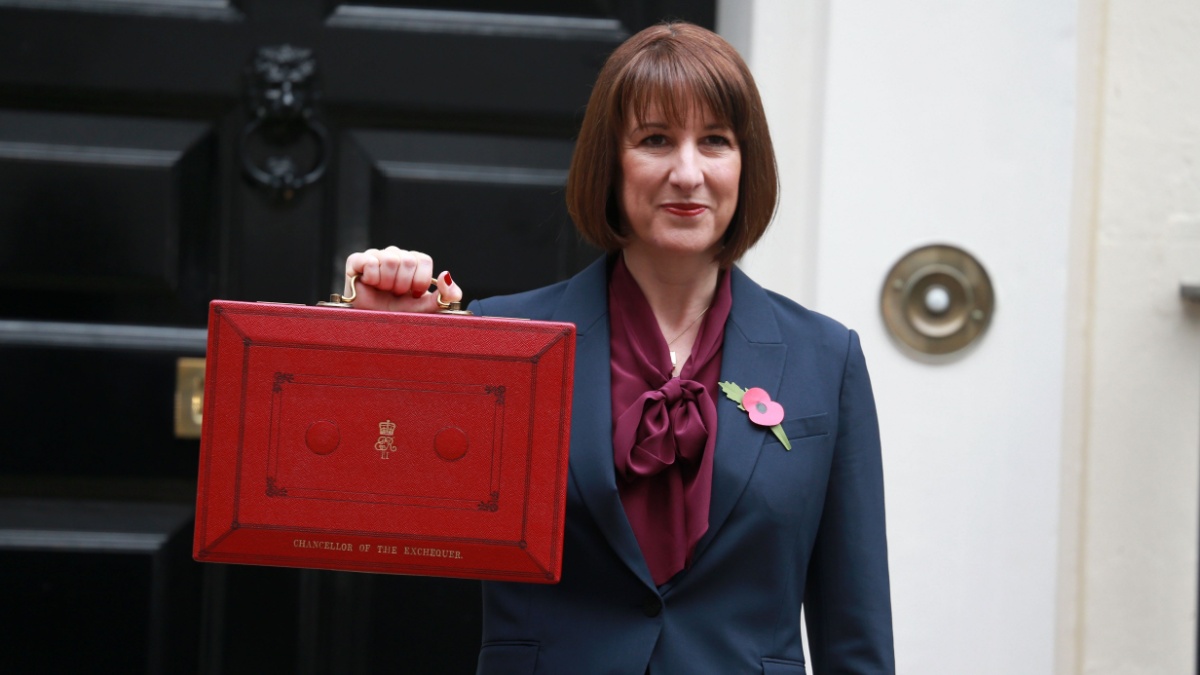
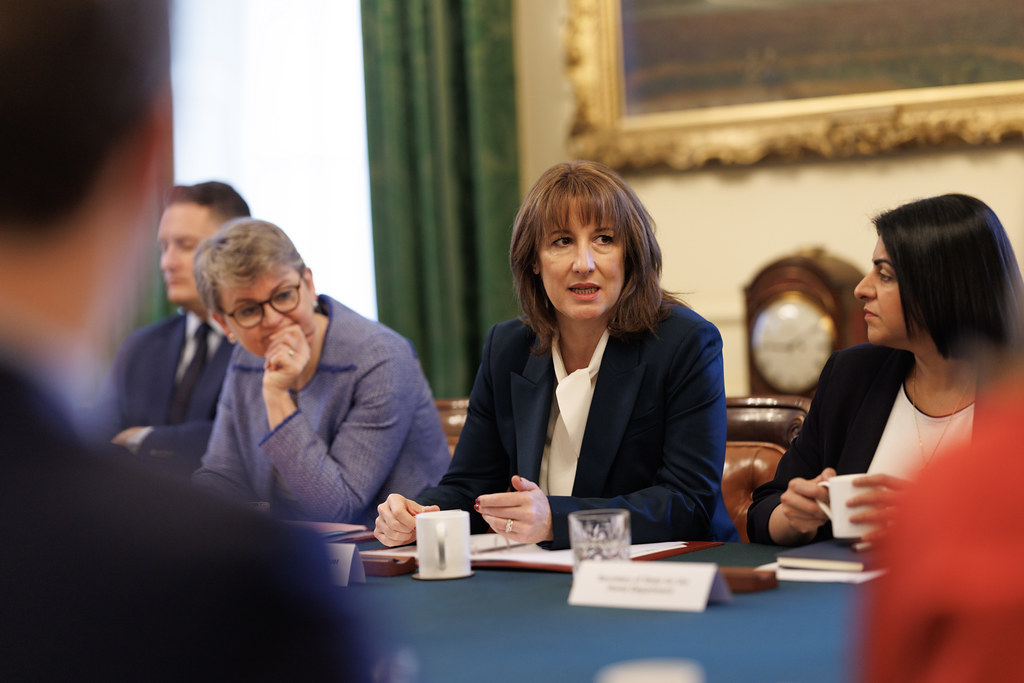
As the dust settles on Rachel Reeves’ second Autumn Budget, the Red Book scorecard shows over 80 separate tax and spending measures announced today, spanning welfare reform, cost-of-living support and a wide-ranging shake-up of gambling, property, savings and motoring taxes.
According to the OBR, the package amounts to a small net fiscal tightening over the forecast period. By 2029–30, new tax measures are raising around £26bn a year, helping to push total public sector receipts £38.3bn higher than in March’s forecast. On the other side of the ledger, new spending commitments add roughly £11bn to borrowing in 2029–30, largely through welfare changes. The net effect is that government decisions cut borrowing by about £15bn in 2029–30 and £18bn in 2030–31, an average tightening of roughly £2bn a year.
For Payment Expert’s audience, the key takeaway is how that consolidation is being done. Around three-quarters of the medium-term improvement in the public finances comes from higher taxes rather than cuts, with a particular focus on remote gambling, wealth and property, platform VAT.
15:20 – SME’s let down by Reeves’ latest Budget
Despite claiming to make the UK ‘the best place in the world to start up, scale up and stay’, Derek Ryan, Managing Director at Bibby Financial Services says Reeves has let down SMEs in today’s Autumn Budget.
He notes the lack of targeted support will be a huge disappointment to the UK’s small and medium enterprises who are eager to invest in their companies.
“Today’s silence on specific SME support is hugely disappointing. With 44% of SMEs having delayed investment decisions until after the Budget, the absence of meaningful and targeted measures today will further hold back capital expenditure.
“This Budget offered little to ease the pressures SMEs are facing day in, day out. Inflation and rising operating costs remain the most pressing challenge for two-thirds of SMEs, and without intervention to ease this burden, the Government risks stalling their ability to invest in jobs, innovation, and growth.
“SMEs are the beating heart of the UK economy, and today they needed a signal of confidence. Instead, while this Budget stopped short of harming SMEs, it also stopped short of helping them. For a Government that promised to champion small business growth in its Plan for Change, this is a missed opportunity.”
15:05 – Horseracing exempt from tax rises
The Chancellor confirmed remote betting on British horseracing will be exempt from tax rises and remain at 15%. The British Horseracing Authority (BHA) says a rise in taxation on online horserace betting would have had catastrophic implications for an industry.
BHA Acting Chief Executive Brant Dunshea said:

“Today’s welcome outcome demonstrates that the Chancellor has listened to our concerns and rightly recognised that racing is a unique national asset – culturally, socially and economically – and we welcome this support.
“Betting on racing is an integral part of the enjoyment of our sport, and maintaining the rate of horserace betting duties is an important step by the Government to help preserve revenue streams and protect the 85,000 jobs supported by the racing across the country.
“Racing has been part of the British way of life for hundreds of years. It binds our communities together in shared experience, it brings joy to millions. It puts the country on the world stage. It is right that the Government has understood this and acted accordingly.
“At the same time, we recognise that the increase in general taxation on the betting industry may have trickle-down effects on racing. We will work with our partners in the betting industry to understand the implications of this, and how we can work together to ensure that British horseracing continues to thrive.”
14:35 – FinTech sector welcomes support for UK entrepreneurs
James Neville, CEO of Yaspa, a fintech specialising in payments and identity solutions, has welcomed the government’s support for British startups indicated in Chancellor Rachel Reeves’s Budget today.
“Today’s Budget sends a clear and important message to the UK’s entrepreneurs like myself. The government is signalling loud and clear that if you build here, Britain will back you.
“As a British‑founded business, Yaspa welcomes this commitment and is proud to be part of a community that drives innovation, creates jobs, and grows the economy.
“We are excited to continue to grow and expand, and we look forward to engaging actively in the discussions the government has launched. Support like this will help unlock long‑term investment, give UK start‑ups the chance to scale, and ensure businesses like ours can hire, innovate, and invest in the future of Britain.”
14:10 – Keep an eye on AML supervision
Combing through the full Budget documents which have been published, for payments and fintech firms directly in scope of AML supervision, there is a meaningful increase in the Economic Crime Levy.
The large band is split into two and the levy is set at 0.1% of UK revenue at the bottom of each band, with charges of £10,200, £36,000, £500,000 and £1m respectively. That will bite bigger banks, PSPs and crypto firms over the £10.2m revenue threshold.
There is also a broader fraud and enforcement push around HMRC that will matter to acquirers, PSPs and POS vendors, especially in card-present/high-street environments:
- A dedicated small business evasion and enforcement team plus 350 additional HMRC criminal investigators focused on serious fraud and evasion on the high street.
- Much higher rewards for informants on high-value tax fraud, up to 30% of tax recovered where over £1.5m.
- New powers against promoters of marketed tax avoidance, and enhanced sanctions for tax advisers facilitating non-compliance.
- A specific call for evidence in early 2026 on software standards for the Electronic and Mobile Point of Sale sector to clamp down on electronic sales suppression. That is directly relevant for POS providers and potentially for payment facilitators and ISVs.
13:40 – What the gambling industry feared most has come to pass
Conor Porter at iGaming Expert, Payment Expert’s sister publication, has broken down in full what the Chancellor’s latest budget means for the iGaming and gambling industry.
Highlights include:
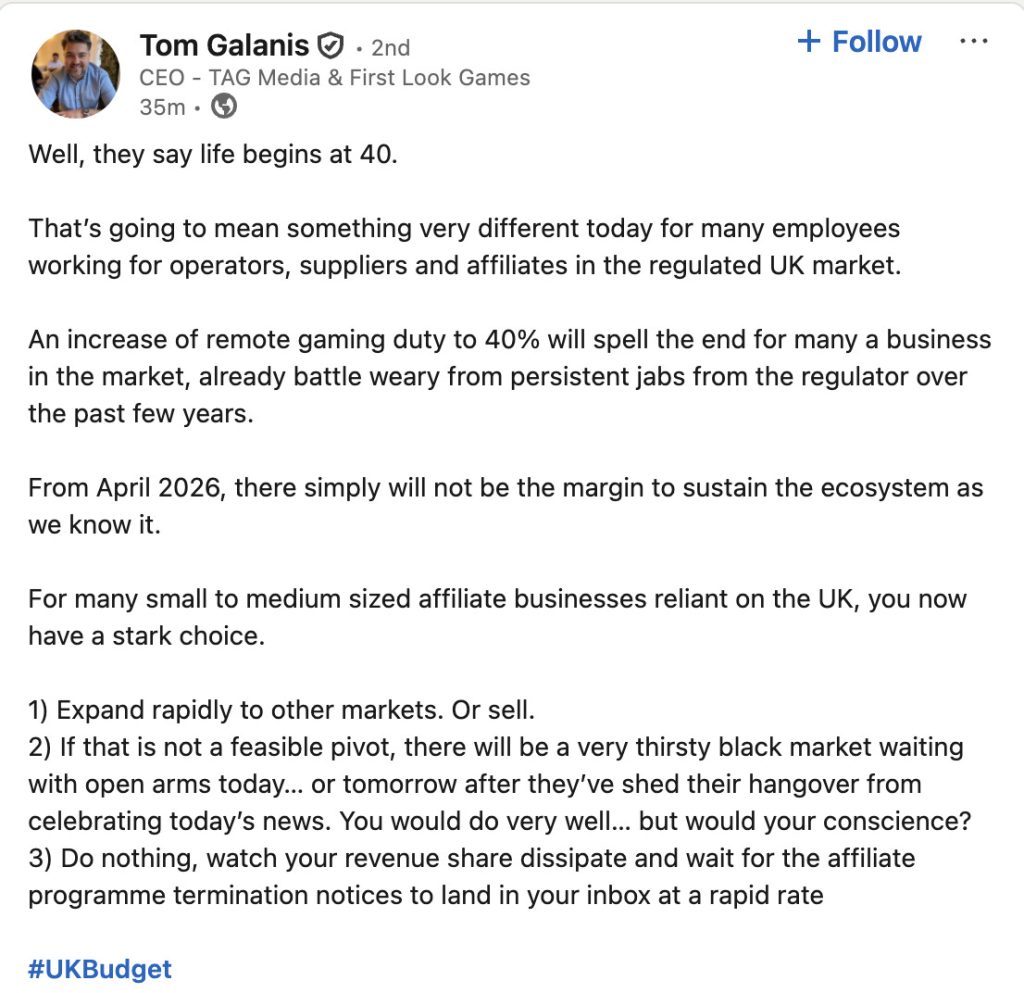
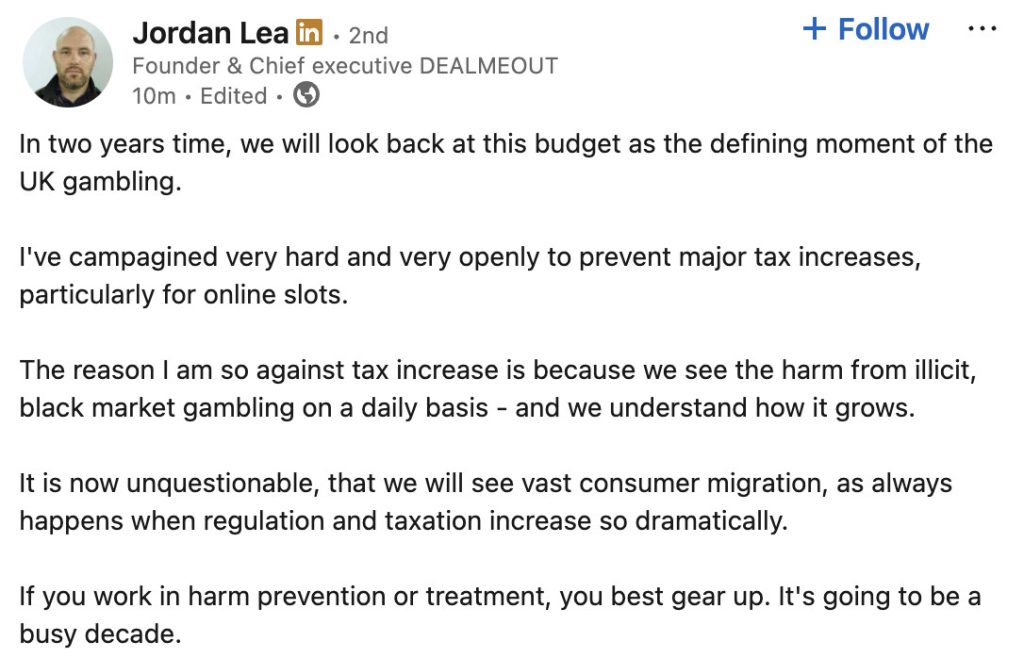
- remote gaming duty will rise from 21% to 40%
- the abolition of bingo duty from its current 10%
- a new general betting duty rate for remote betting will be introduced from April 2027 at 25%, excluding self-service betting terminals, spread betting, pool bets and horse racing.
- a freeze in casino gaming duty bands in 2026-27 has also been announced, with usual RPI uprating thereafter.
- the government is aiming to raise £1.1bn through gambling tax by 2029-30, according to the OBR estimates.
13:10 – Gambling industry at a loss for words

12:40: ‘Truly astonishing’ and a ‘major security breach’
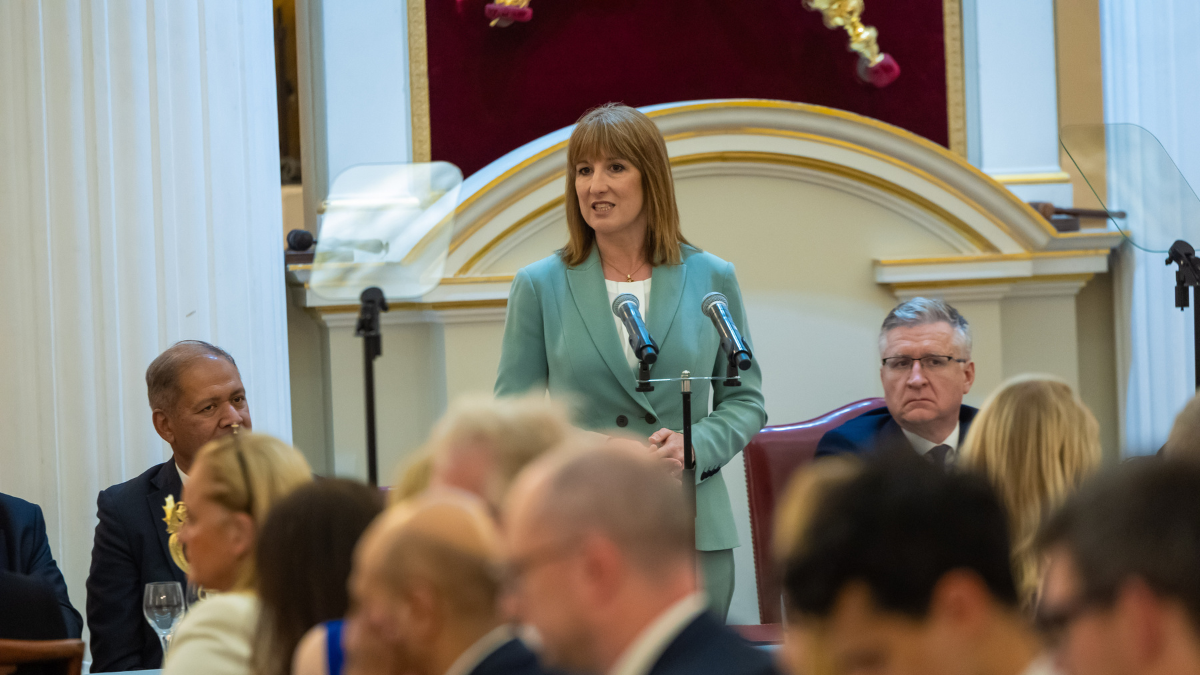
As Reeves delivers her speech to parliament, amid jeers from the opposition, reactions to the OBR leak have started to trickle in.
Kenny MacAulay, CEO of accounting software platform Acting Office said:
“It’s truly astonishing that such a market sensitive document could find its way online via official channels in advance of the Chancellor’s speech. Basic compliance requirements should be in place to prevent this from happening, and a complete review is required about how and why such a major breach would take place.”
Graeme Stewart, head of public sector at Check Point said:
“Accidentally publishing a market sensitive report online in its entirety before the Chancellor has even delivered her statement is a major security breach which warrants a full investigation. This incident should underline the risks associated with sloppy document management, which could lead to hackers and fraudsters exploiting data leaks to play the markets. There are no excuses for such incidents to occur, and the government needs to initiate a complete rethink of its publication strategy.”
12:25 – Statement from the OBR
The OBR have taken accountability of the early release of their report, claiming it was the result of “technical error”.
“A link to our Economic and fiscal outlook document went live on our website too early this morning. It has been removed. We apologise for this technical error and have initiated an investigation into how this happened. We will be reporting to our Oversight Board, the Treasury, and the Commons Treasury Committee on how this happened, and we will make sure this does not happen again. Our Economic and fiscal outlook and supporting documents will be released when the Chancellor has finished her speech.”
12:20: A classic tax and spend budget
The OBR expects real consumption to grow only about 1% a year in 2025–26, picking up to around 1.75% by 2029 as households run down savings to keep spending despite weak income growth. Consumption is a smaller share of GDP than previously thought, but still rises slightly over the forecast, which helps VAT receipts because consumer spending carries a relatively high effective tax rate.
For issuers, acquirers and PSPs this points to a slow, grind-higher environment for card and digital payment volumes rather than a strong rebound, and a continued reliance on savings buffers and credit to sustain spend.
This Budget also delivers the third-largest medium-term tax increase since the OBR was created, largely via freezes to personal tax thresholds, tweaks to capital and property taxes, and a cluster of “smaller” measures rather than headline rate hikes.
Within that, gambling duty reform is one of the named revenue raisers in the scorecard, adding around £0.8–£1.2bn a year by the end of the forecast. That is a clear pressure point for betting and gaming operators, who will have even stronger incentives to squeeze costs elsewhere, including payments, fraud and chargeback losses.
12:05 – OBR report released by accident
Media are reporting the OBR’s report was published by accident which might throw a spanner in the works for Reeve’s later this afternoon. Here’s a tight breakdown with some hard numbers:
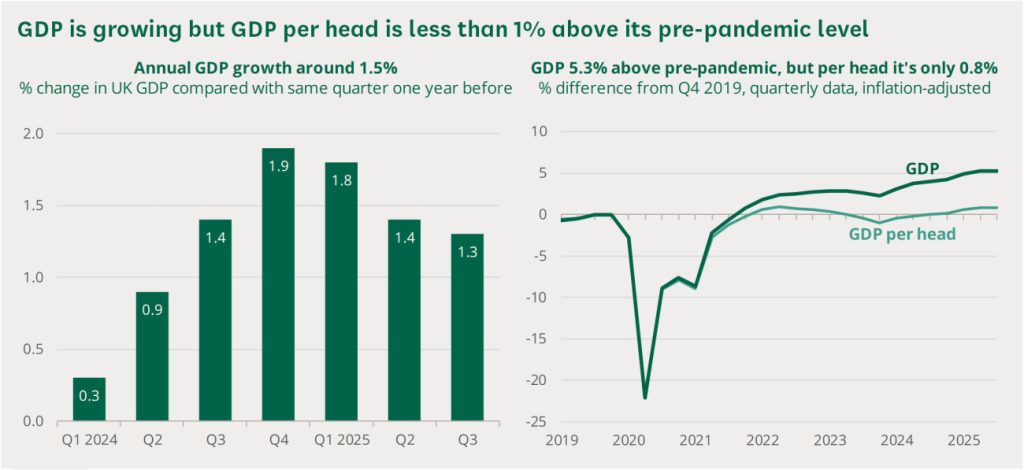
- Growth and productivity -The OBR has cut its underlying productivity assumption, with trend productivity growth now rising to 1.0% by 2030, around 0.3 percentage points lower than in March. Real GDP growth is forecast at 1.5% in 2025, 1.4% in 2026, then 1.5% a year through to 2029.
- Inflation and unemployment – CPI inflation is expected to average 3.5% in 2025, drop to 2.5% in 2026, and return to the 2% target from 2027 onwards. Unemployment is forecast to be 4.8% in 2025, 4.9% in 2026, easing to 4.2% by 2029.
- Household incomes and consumption – Real household disposable income per person starts growing again but only slowly, with consumption growth averaging around 1% a year in 2025–26 and about 1.75% by 2029, helped by households running down savings after the cost-of-living squeeze.
- Borrowing path – Public sector net borrowing is 4.5% of GDP (£138bn) in 2025–26, then falls by roughly ½ percentage point of GDP a year to 1.9% of GDP (£67bn) by 2030–31. About two-thirds of that improvement comes from higher tax receipts (notably frozen income tax thresholds and capital taxes), and one-third from lower spending as one-off schemes roll off and departments are squeezed.
- Debt levels – Public sector net debt is forecast to rise from 95.0% of GDP in 2025–26 to 97.0% in 2028–29, before dipping to 96.1% in 2030–31 as a one-off Bank of England loan repayment comes through. Debt excluding the Bank of England climbs from 91.3% to 95.3% of GDP over the forecast. Even if the rules are met, debt still stabilises at around 96% of GDP, roughly twice the advanced-economy average.
- Fiscal rules and headroom – The Chancellor is judged to meet her main fiscal mandate – balancing the current budget in 2029–30 – with £22bn of headroom (0.6% of GDP), up from £10bn in March. The OBR puts the probability of hitting the mandate at 59%, the highest since before the pandemic, but notes that the margin is still small compared with typical forecast errors.
- Shape of the policy package – Taken together, policy decisions amount to a small average tightening of £2bn a year (0.04% of GDP), but this is front-loaded loosening and back-loaded tightening: an average £7.5bn a year extra borrowing in the next two years, offset by an average £12.8bn a year tightening in the final two years of the forecast.
12:00 – OBR publishes outlook early
The OBR has published its Economic and fiscal outlook ahead of Rachel Reeves’ Autumn Budget, cutting its assumption for medium-term productivity growth and effectively lowering the UK’s long-run economic “speed limit”.
Even so, it now estimates the Chancellor has around £22bn of headroom against her main fiscal rule, with roughly a six-in-ten chance of meeting it. The watchdog also expects real household incomes to start rising again over the forecast period, but only gradually after the recent cost-of-living squeeze.
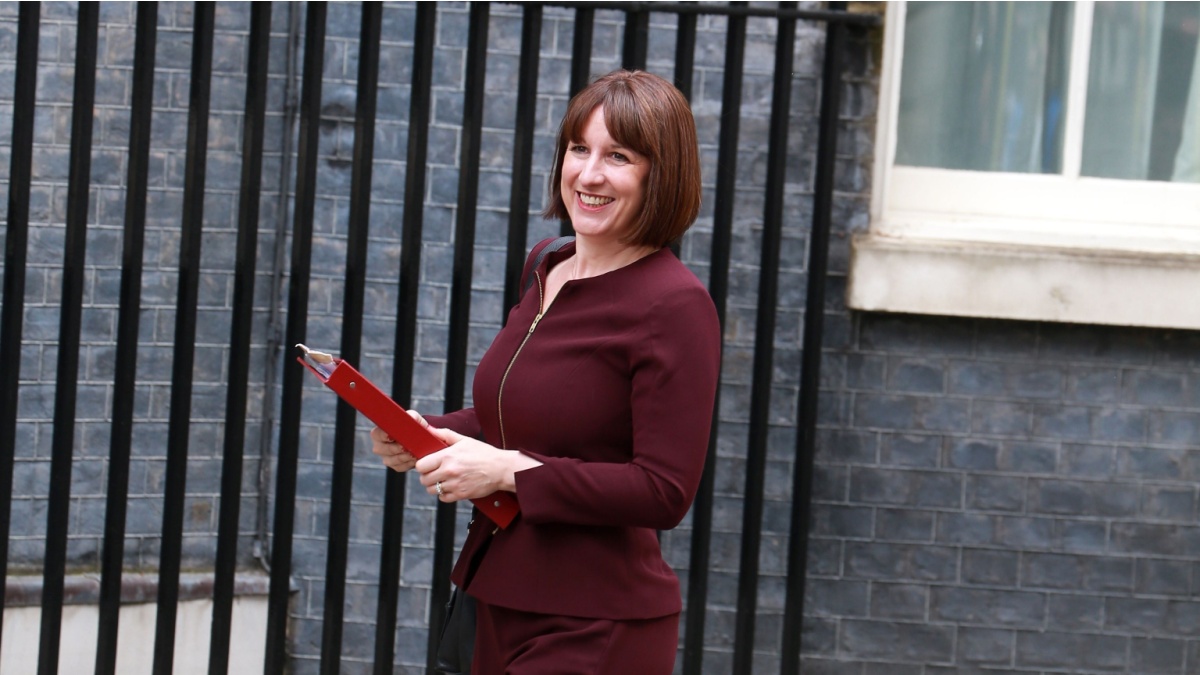
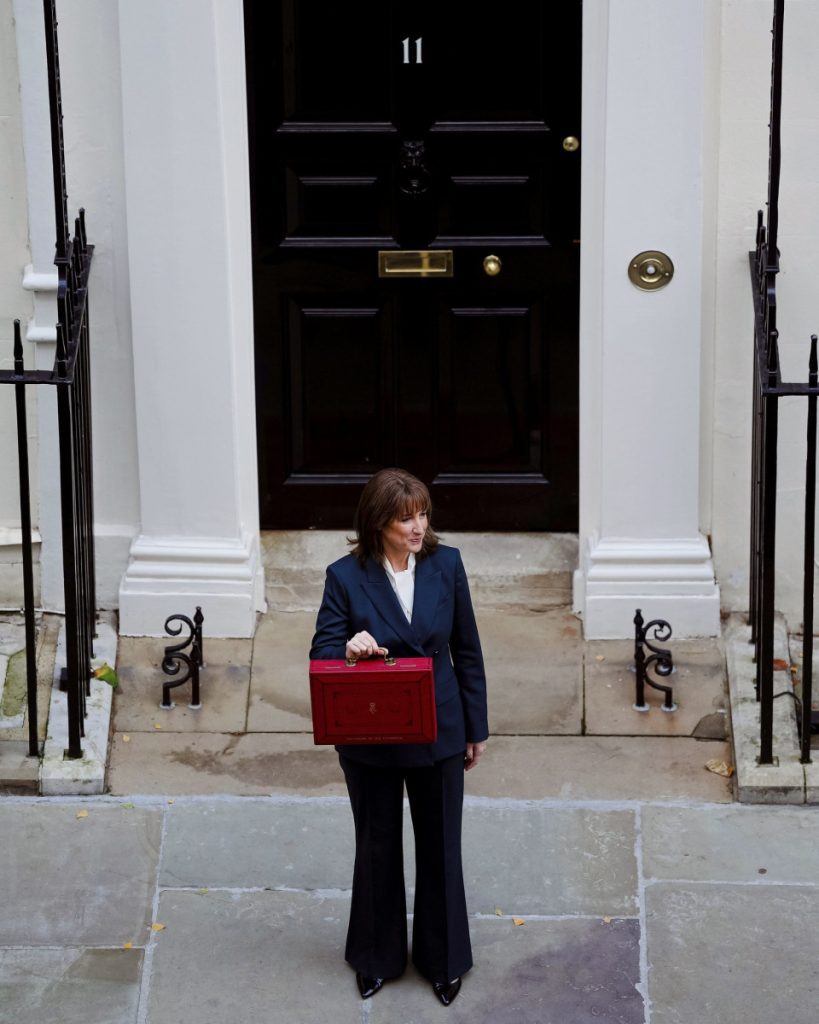
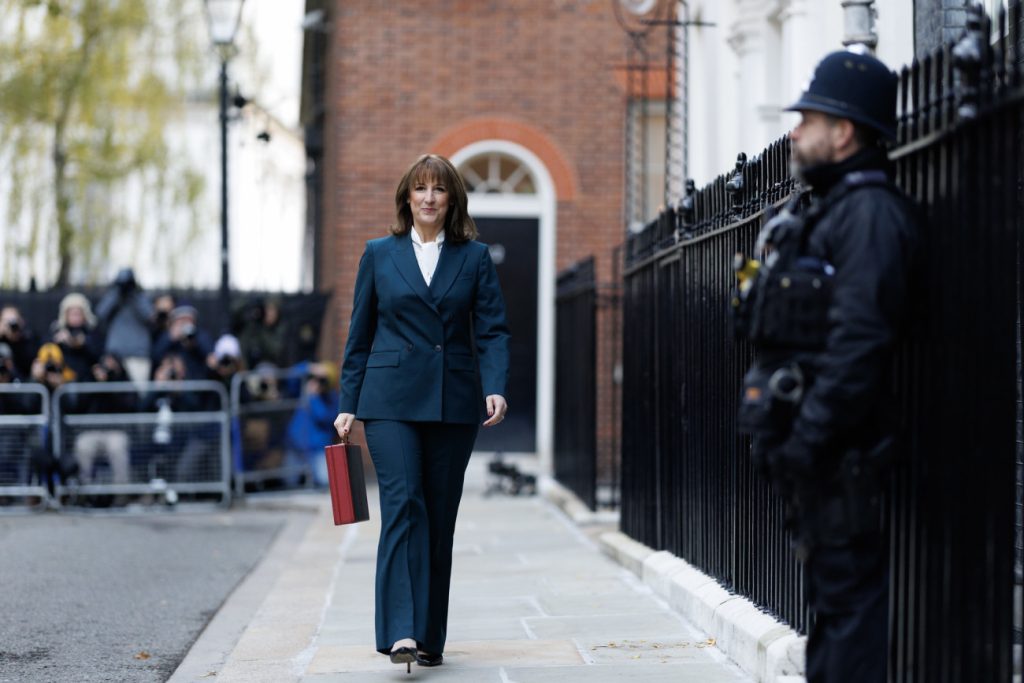
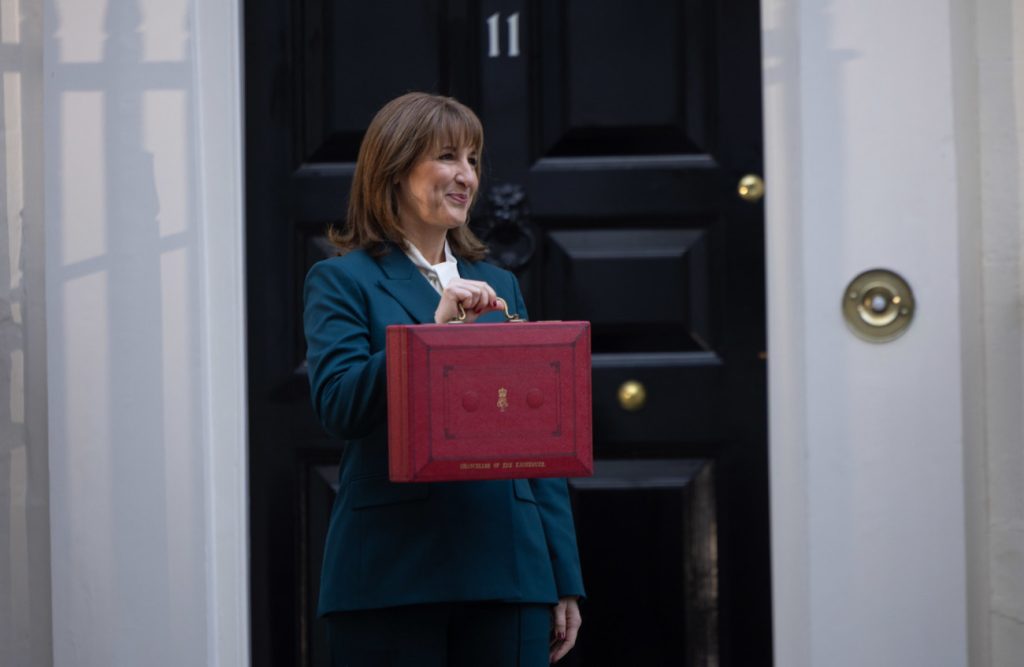
11:30 – Reeves leaves Number 11 for Parliament
11:15 – RSM UK highlights financial services risks
Hugh Fairclough, Partner and Head of Financial Services at RSM UK, says the Autumn Budget could be one of the most consequential in recent years, as the Chancellor faces a £30-£40bn fiscal gap and the challenge of restoring market confidence without triggering volatility.
“Bond and swap markets will be watching closely, as their reactions influence borrowing costs and pricing across the financial services sector,” he notes.
Fairclough warns higher taxes or freezes on income tax thresholds could reduce disposable incomes, dampening demand for mortgages and personal loans. Lenders may respond by tightening credit standards or repricing loans, creating affordability pressures for borrowers. Lower household incomes could also curb bank deposit growth.
He adds potential changes to Cash ISA limits, dividend tax and capital gains tax could redirect savings into investment products, while long term insurance uptake and pension planning may be affected as households focus on short-term liquidity.
“We’re hopeful that lessons have been learned from the infamous mini budget,” Fairclough concludes. “Financial institutions should prepare for potential shifts in consumer demand and pricing strategies following the Chancellor’s announcements.”
10:15 – Businesses on ‘high alert‘
Scott Dawson, CEO at DECTA UK has shared his thoughts on the ‘drastic reforms’ that are needed come this afternoon’s statement announcement.

“The UK has had a run of budgets that merely tweak existing systems to raise a penny here and penny there. We’re undoubtedly in an economic downturn and could be looking down the barrel of a market crash, so what we need this November are drastic reforms.”
“Many businesses will be on high alert for increased costs, lower investment and the likelihood of becoming more dependent on private capital. This will not only risk those businesses already established but could easily discourage entrepreneurs that are thinking of setting up shop. In turn this could hinder the country’s ability to generate more revenue than is spent on services, and could ensure that the next world-beating UK business like Revolut or Monzo simply won’t happen.”
“With that in mind, what we need now is consistency and a viable plan for major change. A difficult economy and tough solutions are far easier to manage when the strategy is clear and dependable.”
“That might mean a balance of massive investment alongside streamlining of regulations (while still being smart about those we need), or it may be some as-yet untried economic approach that will allow businesses to start creating good-paying jobs again. Whatever it is, it will need to be radical, clear and consistent.”
08:50 – Budget must “bring down barriers between ideas and investment”
Anant Patel, CEO of Judopay, has warned while an Income Tax rise to fund social spending is widely expected, the government must not overlook the “huge opportunity” in FinTech to drive growth and reduce long-term fiscal pressures. Patel notes UK FinTech firms attracted $7.2bn in investment in H1 2025, down only 5% on last year but far below the levels seen earlier in the decade.
Patel notes FinTech investment is falling even as the wider finance industry employs 1.1 million people and 69% of firms planned to hire in 2025.
“So, do we want corporate tax cuts? Deregulation? No, what the industry needs right now is targeted interventions to bring down barriers between ideas and investment. That could mean startup incubators, but it could also mean looking around the world to see what is working in countries where FinTech investment is thriving,” said Patel
“The FinTech industry is the ideal place to start building a better economy,” he said.
08:20: Analyst expectations
Over the course of the week, business and political journalists have been making their predicitions on what Reeves will pull out of the infamous red suitcase.
Key among them is Steven Swinford, of the The Times:
08:15: Payment Expert will be watching
Editor Rachael Kennedy has written a short analysis on what the team will be watching today:
08:05: What we know so far
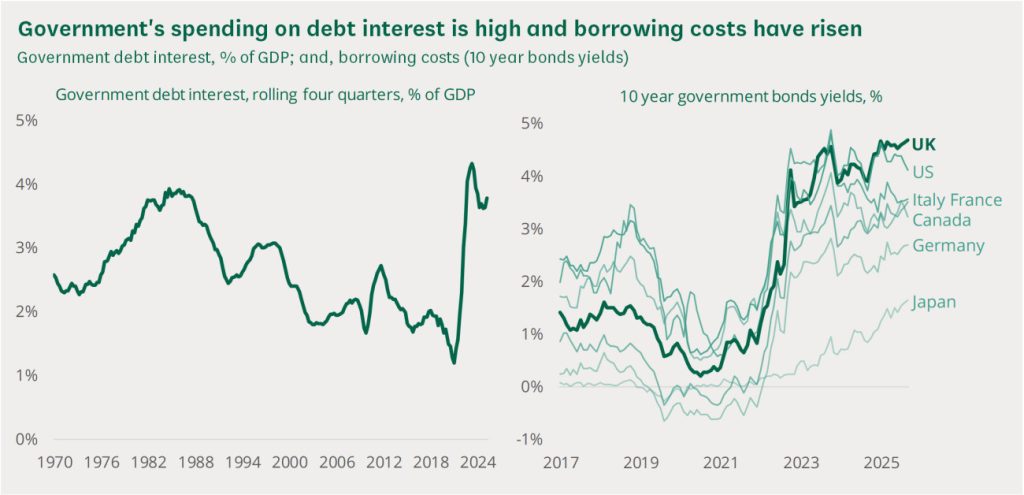
Ahead of the Budget, the UK government released a ‘Background Briefing‘, setting out the current economic and fiscal situation.
The OBR is expected to downgrade the UK’s long-term growth “speed limit,” meaning lower forecasts for GDP and tax revenues just as inflation has picked back up to 3.6% and debt stands at around 95% of GDP.
With borrowing still about 5% of GDP and debt interest now taking £1 in every £12 of public spending, the small “headroom” against Reeves’ fiscal rules has likely disappeared.
Bound by Labour’s pledges not to raise the main rates of Income Tax, National Insurance or VAT, the Chancellor is widely expected to lean on smaller tax rises and tight future spending plans, including possible welfare savings, to convince markets she can stabilise the public finances.
08:00: Kicking things off
Good morning from the Payment Expert Team. We will be bringing you live updates on the UK’s 2025 Autumn Budget Statement today (November 26).
Chancellor Rachel Reeves is due to begin her Budget statement to the House of Commons at approximately 12:30pm GMT. After the Chancellor finishes, the Office for Budget Responsibility (OBR) will publish its updated economic and fiscal outlook.
Roughly 15 minutes after the Chancellor stops speaking, budget documents are released.