Klarna has ambitions to become an all-in-one financial service, but is it BNPL origins holding this ambition back?
Klarna reported wider losses in its second quarter 2025 results, driven primarily by higher provisions for credit losses as the company scales its longer term Fair Financing loans.
The Swedish fintech posted an operating loss of $46m (vs. $25m in 2024), and a net loss of $53m (vs 18m), on revenue of $823m for Q2 2025.
While losses widened, Klarna’s provisions for credit losses rose to 0.56% of GMV (from 0.42% year on year), even as realised losses improved to 0.45% (from 0.48%). Klarna attributes the increase to ‘mix effects’ – fair financing expanded from 5% to 8% of GMV, and the US share rising from 18% to 20%.
Klarna’s accounting treatment means provisions are booked upfront while revenues are recognised over the life of the loan; this can temporarily depress margins as longer term products scale. Klarna’s management reiterated that as fair financing volumes mature, this timing effect should lessen.
“The detailed reader will notice that in absolute terms ‘provision for credit losses’ are growing. This is expected as we increase provisions in line with building a profitable Fair Financing portfolio,” said Sebastian Siematkowski, CEO of Klarna.
“Let me explain: When Klarna issues Fair Financing loans that are paid back over a few months, we immediately set aside a small amount of money (so called provision for credit losses), for the unlikely event that the consumer does not pay us back.
“At the same time we book the associated revenues for these Fair Financing loans over the life of the loan. Simply put, we provision upfront, but book revenue over time. This is standard for any financing business. With Fair Financing growing 108% YoY it’s natural to see a corresponding increase in provisions.”
What is fair financing?
Fair Financing is Klarna’s longer-term monthly financing product (6–36 months) that can carry interest (APR typically ranges from 0% up to ~33.99%) and requires greater upfront provisioning.
It is separate to its Pay in 4 and Pay in 30 are interest-free Pay Later options.
Will BNPL hamper Klarna’s fintech ambitions?
Klarna’s growth is currently being led by the US market where GMV rose 37% year over year in Q2’25.
The company also began rolling out “OnePay Later powered by Klarna” at Walmart, which is slated to become Walmart’s exclusive term-financing option once deployment is complete.
Over the past twelve months, Klarna’s active consumer base expanded by 26 million to reach 111 million, and its merchant network deepened as the company added 202,000 partners to total 790,000, clarifying that the figure represents additions to an existing base rather than a jump “from 202k to 790k.”
The Klarna Card continues to gather steam: transactions on the card increased 42% year over year and now account for more than 10% of all transactions on the platform. In the US, a five-million-person waitlist is in testing ahead of a wider release.
On distribution, Klarna is prepping broader payment-service-provider integrations with Nexi, Worldpay, and J.P. Morgan Payments, while the Walmart deployment is specific to OnePay Later.
And in the UK, Klarna’s newly granted FCA electronic-money-institution authorisation paves the way for features like Klarna Balance and cashback to roll out later in 2025, underscoring its push beyond BNPL into a fuller financial-services offering.
This will see the rollout of the Klarna Balance and Klarna Account to UK users, stamping down the company’s ambitions to become a fully-fledged financial institution focused on diversifying its financial service offerings.
Will losses slow down US IPO interest?
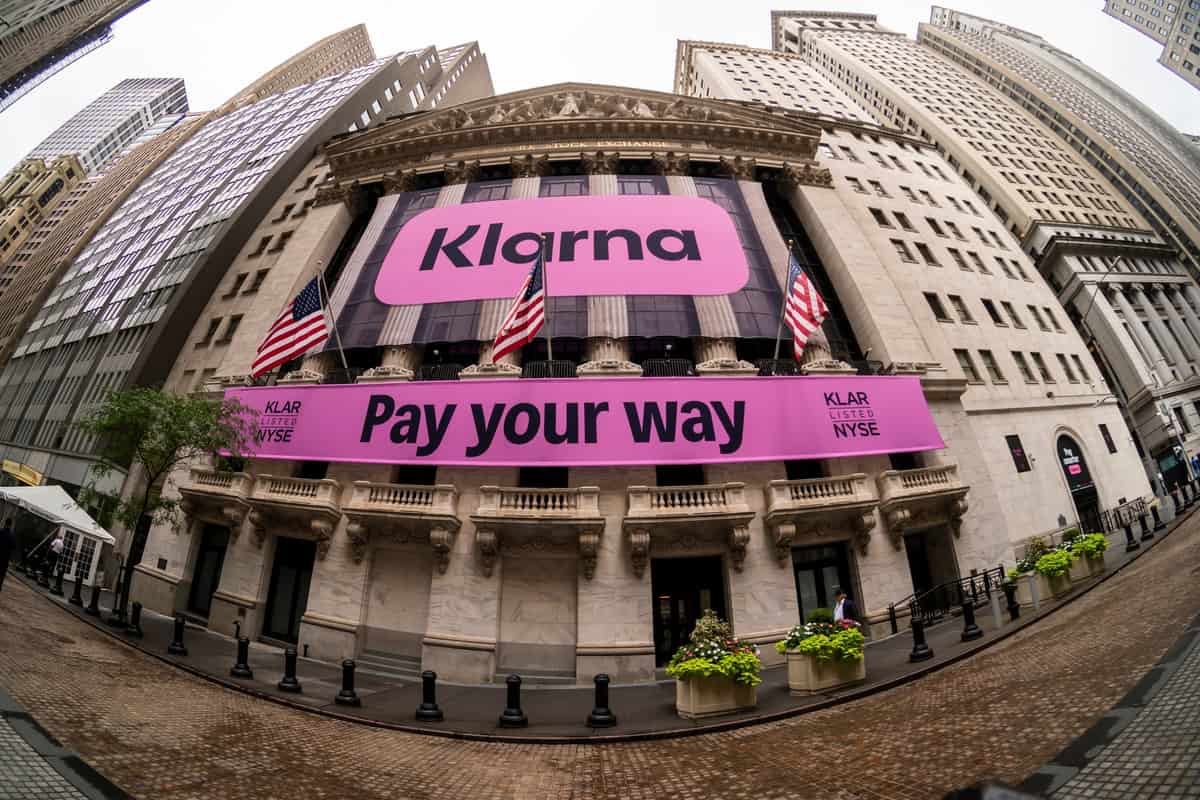
Klarna has placed great emphasis on its expansion across the US market, where it may soon be listed on one of its stock exchanges.
Reports in recent weeks suggest Klarna has revived plans to launch a public listing in the US after previously halting its initial plans due to macroeconomic market conditions relating to President Donald Trump imposing tariffs upon various countries.
With credit losses widening, there is still optimism from large retailers such as eBay who have onboarded Klarna’s suite of payment services. It remains to be seen whether investors believe the Swedish fintech will optimise its performance in the following quarters to come.