The Swedish fintech platform is evolving into a fully-fledged bank, now eyeing a bank licence in the US to not only become a regulated bank in the US, but also recover from the
Klarna has applied for a US banking licence in a bid to move beyond standard buy-now-pay-later (BNPL) services into a fully-fledged global bank.
The Swedish fintech company has submitted a national charter banking application with the US Federal Deposit Insurance Corporation (FDIC) and the Utah Department of Financial Institutions.
If approved, Klarna Bank USA would be established as an owned subsidiary of Klarna Inc. It will be based in Utah and insured by the FDIC, with its own independent board, governance, and internal controls.
A bank charter licence would enable Klarna to offer payments, savings, credit and merchant services to its clients and customers across the US. Klarna intends to create an in-house operations team designed for the US market.
Gary Harding will be the President and CEO of Klarna Bank USA after being selected to run the US subsidiary.
He joins after serving as the CEO and Chairman of Milestone Bank, having also spent time in roles such as the President and CEO of Prime Alliance Bank, with extensive experience in the US banking industry.
Klarna has operated in the US since 2019 via partnering banks to offer its BNPL services. The company has provided upwards of $91bn in credit to US consumers and has had over 30 million users annually who use their services.
Sebastian Siemiatkowski, Co-Founder and CEO of Klarna, said: “Banking is built on trust.
“We’ve seen firsthand the appetite for a fairer, more transparent approach in the US, and our own banking license is the natural next step, giving customers tools to borrow responsibly and build financial confidence, while bringing greater competition, innovation, and choice to consumers and merchants alike.”
Building on US momentum?
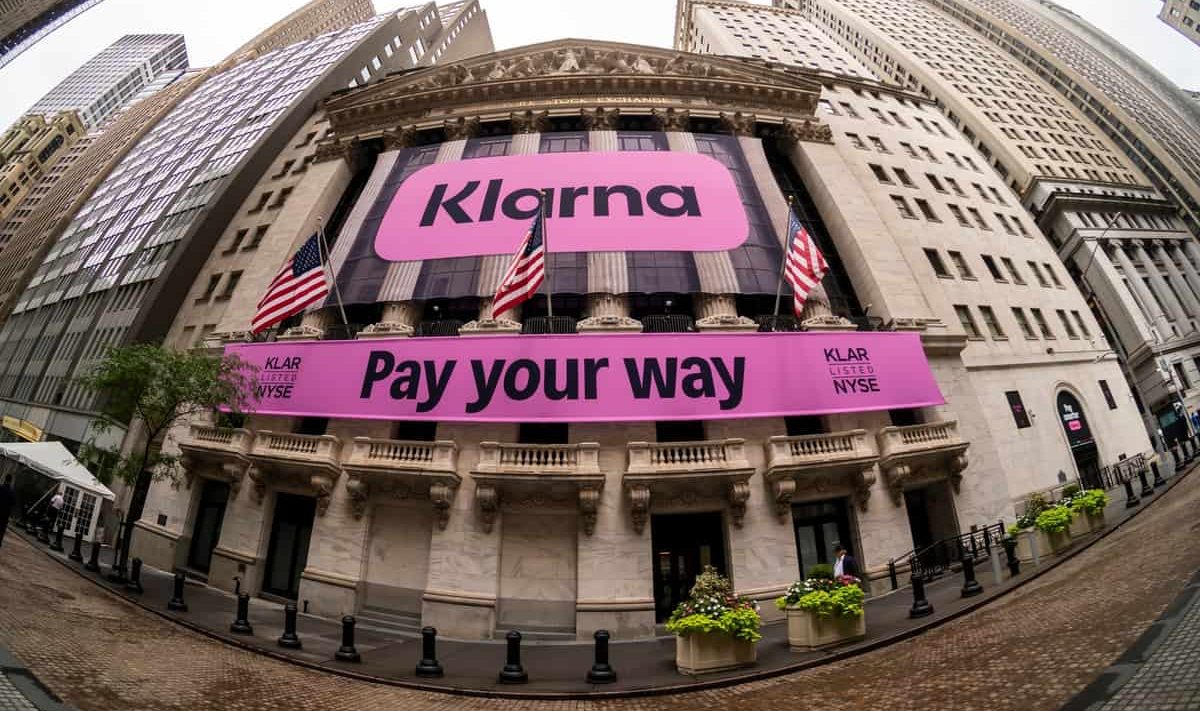
The bank licence application follows Klarna breaking even on the New York Stock Exchange since its initial public offering (IPO) launched in September 2025.
Klarna generated $1m of net income in Q1’ 2026, recovering from a $99m net loss the same period the year prior. It is also an improvement from the $273m loss from the full-year of 2025 as shares dropped by 25% in February 2026.
Despite this, the company generated a record $1bn in revenue as it continued to expand its Klarna debit card, testing its capabilities to perform peer-to-peer transactions, as well as releasing a native stablecoin designed for the new digital economy.
Klarna’s opening share price in September was $52, above the company’s projections between $35-$37 as stock closed at $48.82.
However, a focus on developing core banking products, a rise in consumer credit losses and the $273m loss in 2025, resulted in Klarna’s valuation dropping from $15bn to between $5bn-$7bn.
If its charter bank licence application is successful, this could potentially renew new confidence within investors of regulatory security and spur on new capital for Klarna.