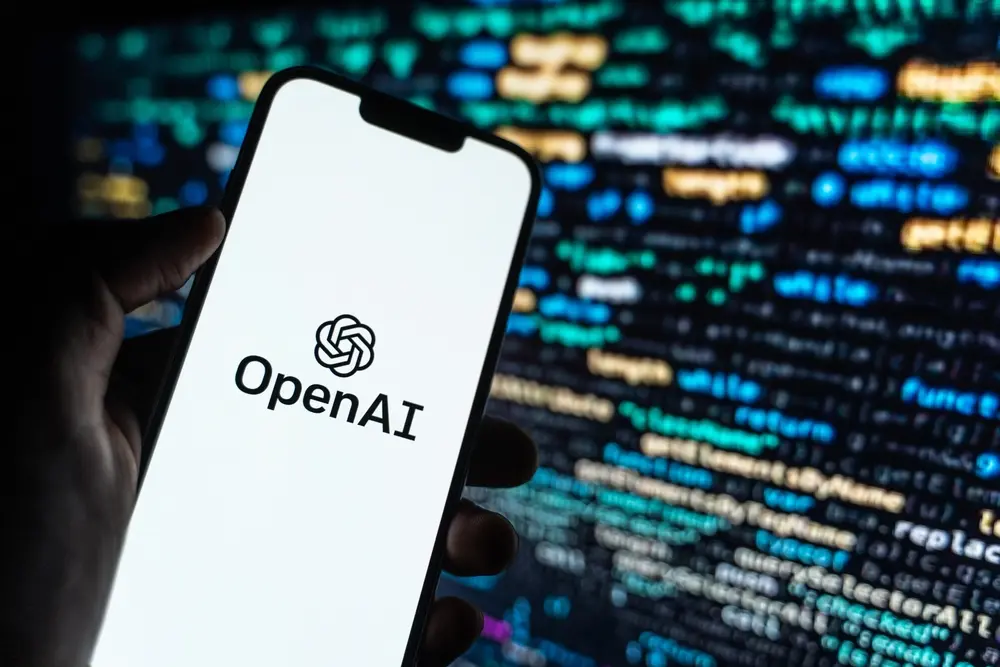
Santander is embracing the move to become an “AI-native” bank by partnering with OpenAI to reshape its infrastructure for banking services and transactions.
On August 12 in a blog post by Ricardo Martín Manjón, Chief Data and AI Officer of Santander, who announced that Spain’s largest bank will adopt OpenAI’s data intelligence, leveraging its insights to process every banking decision and interaction in a new data driven approach.
Santander revealed it will be embedding AI in all businesses across product management, credit, marketing, service, operations and other areas in its bid to become an AI-native bank.
AI adoption is marked as one of the bank’s three key pillars, with the others including AI as a growth lever to drive and develop relationships with other Big Tech firms such as Microsoft, and use AI to grow global platforms and partnering startups.
OpenAI will support Santander’s AI transformation by enrolling ChatGPT to 15,000 employees across teams in Europe and the Americas – North and South America – which the bank states is one of the “fastest deployments of its kind”.
AI enhancements carry a strategic significance in South America, where Santander has launched its digital banking service Openbank Chile and Colombia.
Aiming to reach 30,000 employees by the end of the year, Santander intends for ChatGPT to be used across 15% of its workforce in a bid to utilise the AI app to shift its working culture by accelerating decision making and boost productivity.
These AI tools will be available for Santander bankers and service agents to enable them to perform copilots with real-time strategy suggestions, personalise the customer banking journey, and use AI agents to automate back office processes.
“We’re reimagining Santander’s operations, grounding every decision in clean, trusted data, automating customer interactions and infusing every workflow with intelligence,” said Martín Manjón.
“Santander has used AI for years in areas like fraud detection and customer service. These efforts have delivered real value and today, they form the foundation on which we’re building our new strategy. By scaling generative and agentic AI, we’re not just optimising processes, we’re redefining what banking can be.”
Banks back AI to catch-up with Fintechs
For years fintechs have been viewed to hold the upper hand against banks when it comes to developing new age payment innovations that have shifted consumer habits against heritage banks such as Santander.
However, traditional banks have leaned on the surge in sophisticated AI, particularly generative AI, in order to modernise their banking infrastructures, gain deeper data insights and support the customer experience through personalised functions.
NatWest became the first UK bank to partner with OpenAI in March 2025 and Sam Altman’s generative AI company has begun striking similar deals with other banks, with the most recent being Santander.
Santander revealed its AI copilots support more than 40% of contact center interactions with customers, using speech analytics to process more than 10 million voice calls per year by auto filling CRM systems to improve its customer service.
The bank assured it is “not chasing the hype” around AI, using it as a roadmap to modernise its data infrastructure and accelerate customer service.