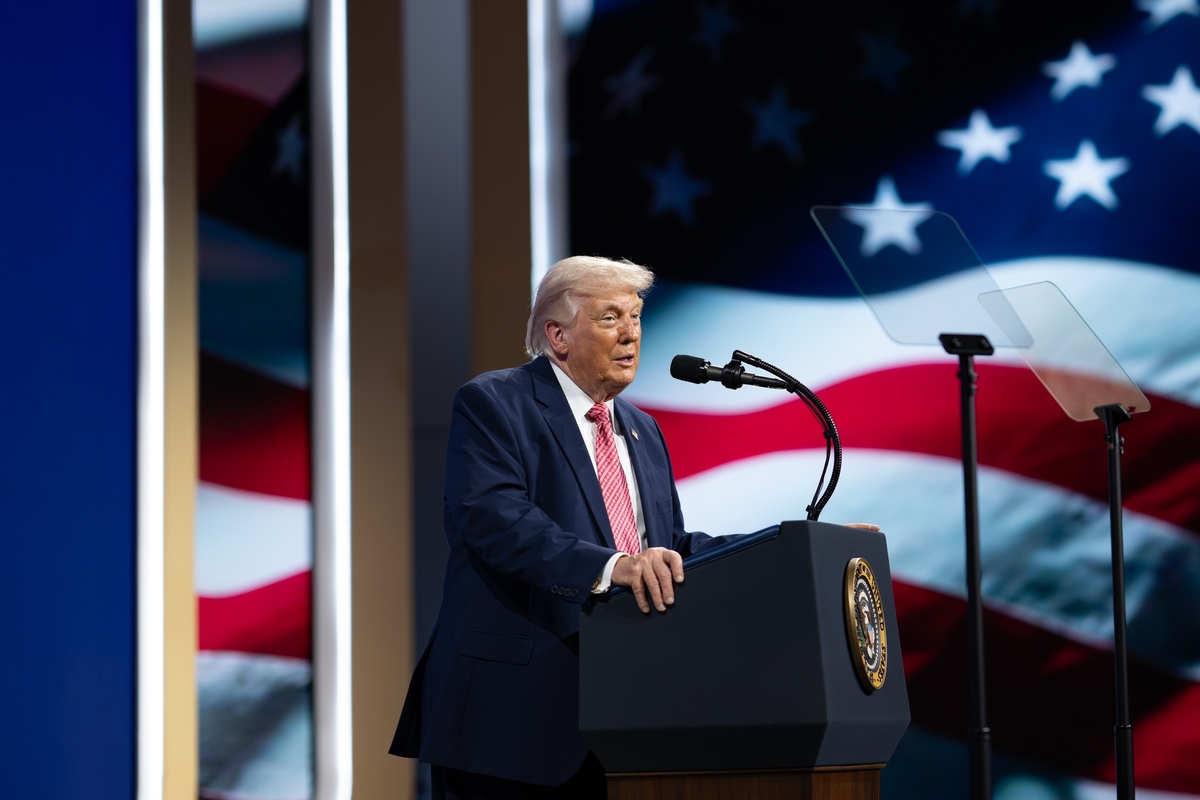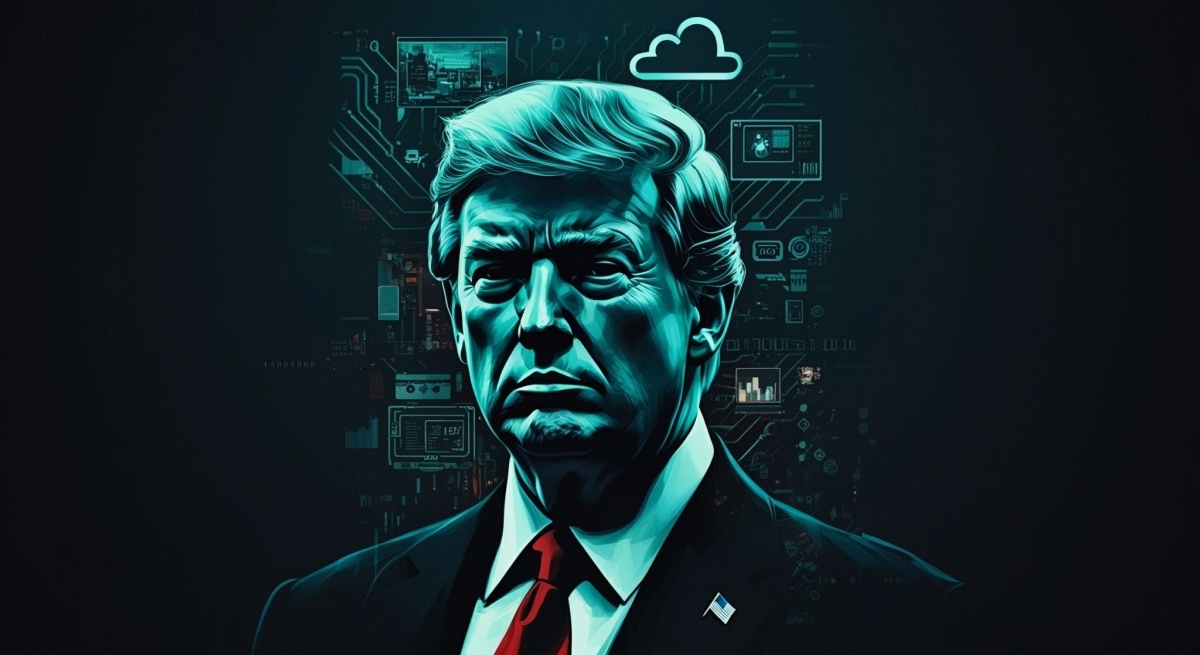
The new Donald Trump administration has not hesitated when it comes to outlining its views and policies on best practices to handle AI.
The turn of 2025 has seen various global leaders demonstrate how they intend to govern and execute AI development, whether that’s Sir Keir Starmer siding with Trump on the innovation aspect, or the European Union (EU) already implementing a regulatory framework.
With the technology still in its relative infancy in terms of the scope of its capabilities, there appears to be no right or wrong answer when it pertains to leaning more towards innovation, or more towards regulation.
However, this debate has already caused tension between global leaders. Trump has made it clear the US will heavily invest and heavily innovate, and unsurprising to many, did not sign a declaration at the AI Action Summit in Paris last February, which states that AI must be “open, inclusive, transparent, ethical, safe, secure and trustworthy”.
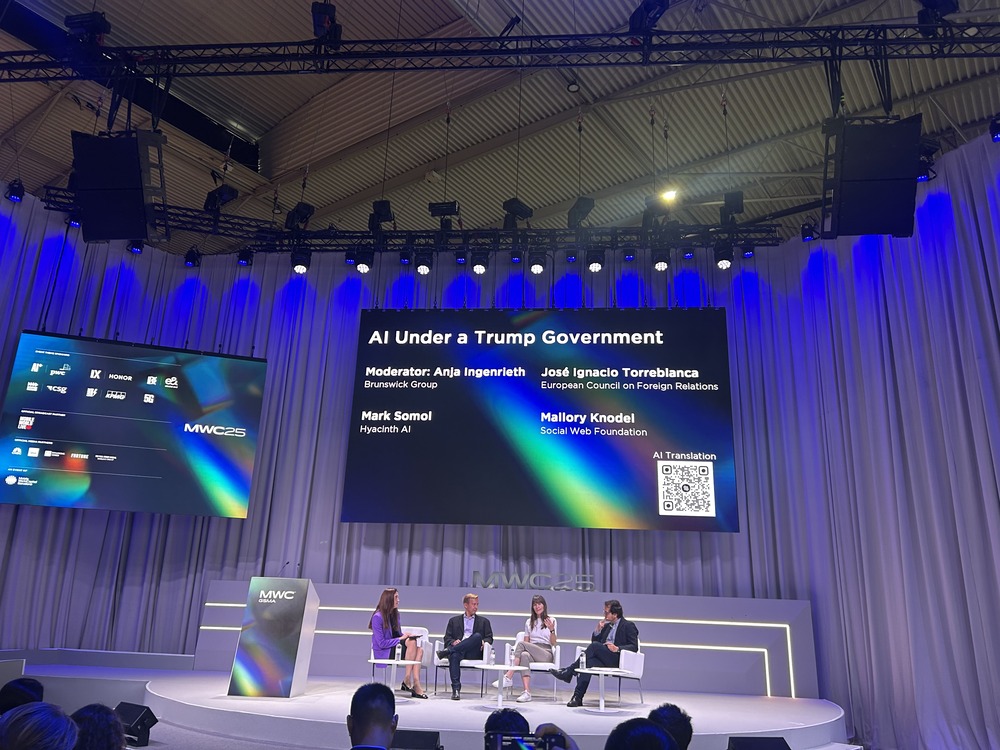
Mark Somol, a self-admitted capitalist and CEO of Hyacinth AI – a US-based AI startup – revealed at a Mobile World Capital (MWC) panel why Trump putting America first is so far only benefitting the Big Tech companies.
He said: “There’s no question that this Trump administration is focused on money and power and as a result, the benefits will mostly go initially to the Big Tech companies. You can see this already with the recent announcement of Stargate, with Apple’s announcement of investing $500bn into AI.
“But the good news for other businesses in the US is that there are lots of secondary benefits. Innovation in AI will benefit not just companies like my own in terms of owning solutions for other businesses. I guess the question is, is this going to be good for the rest of the world?”
EU AI Act & China’s Deepseek venture
To answer Somol’s question, it is fair to say that the rest of the world reacted in a big way.
Only a matter of days since the US placed a ban on China-imported AI chips, the Deepseek AI model was launched and sent shockwaves across the world, hitting the US stock market and had investors questioning how Deepseek was a lot less cheaper to make.
“Deepseek shocked the world, certainly shocked a lot of companies in the US,” said Somol.
“But that’s a good thing. We need competition for (AI) to get better. You can argue with how much Deepseek spent on training, and I would argue against the numbers we see in the press.
“However, Deepseek created a couple of serious innovations that I think a lot of US companies are going to copy, and that will bring innovation to the US, as long as we have standards to.”
Applying standards and regulation has certainly been the EU’s priority when it comes to AI governance. The EU AI Act came into force this year in a bid to ensure that AI is being responsible and to give customers and users the utmost protection.
Head of the Madrid Office for the European Council of Foreign Affairs, Jose Ignacio Torreblanca, gave his views on how the EU AI Act places Europe as a destination for responsible AI and questions whether the US will cooperate with entities like the EU.
He said: “For us, in terms of transatlantic cooperation, the trade technology council delivered different philosophies in the EU AI Act from the US with maybe more of an emphasis on human rights and whereas the US is focused on the uses of the technology, but you can still see parallel lines where they can both exist in the future.
“I think there are going to be lots of people to not be cut off from this technology because of geopolitics and sometimes because of the hegemonic powers of having these technologies.
“I don’t see the US trying to pull in countries from the global south into these technology diffusions and I don’t see an AI for all approach in this Trump administration.”
The topic of innovation vs. overregulation when it comes to AI governance is an ongoing debate that will not slow down anytime soon.
US Vice-President JD Vance spoke at the recent Paris AI Action Summit, warning Europe that its regulations around AI “could strangle” innovation and development and potentially be left behind.

Does the world need the US’s support?
As we already know from the declaration of commitment at the Paris AI Action Summit, not only did the US not sign the declaration, but also the UK too.
There now appears to be fragmentation when it comes to AI governance best practices. Will regulation stifle innovation and lead to less investment, or will rapid innovation of an increasingly accelerating technology cause more harm than good?
Mallory Knodel, Executive Director of the Social Web Foundation, who has worked on standardising internet protocols in the past, said she is now worried about this fragmentation between some of the world’s most powerful nations.
She explained: “You must interoperate if you want to be connected to the rest of the internet, and that’s by speaking in internet protocols.
“An important part of the EU AI Act and for various groups is to standardise, harmonise different parts of AI so that there can be a common approach. I think we’ve seen over and over again that AI is being developed in silos. Part of that is I guess the competitive edge.
“But we’ve missed these incentives. All we really have is good faith cooperation to try and govern, especially when it comes to these harms, accountability, transparency across many different kinds of data sets and applications.
“I do worry now, because without the incentive to actually interoperate and standardise certain parts of the technology, and then an unwillingness from the political side to cooperate that can benefit most people, I don’t know where we go from here.”