Stablecoin transaction volumes have overtaken Visa and Mastercard, speakers identified at the Payment Expert Summit at SBC Americas.
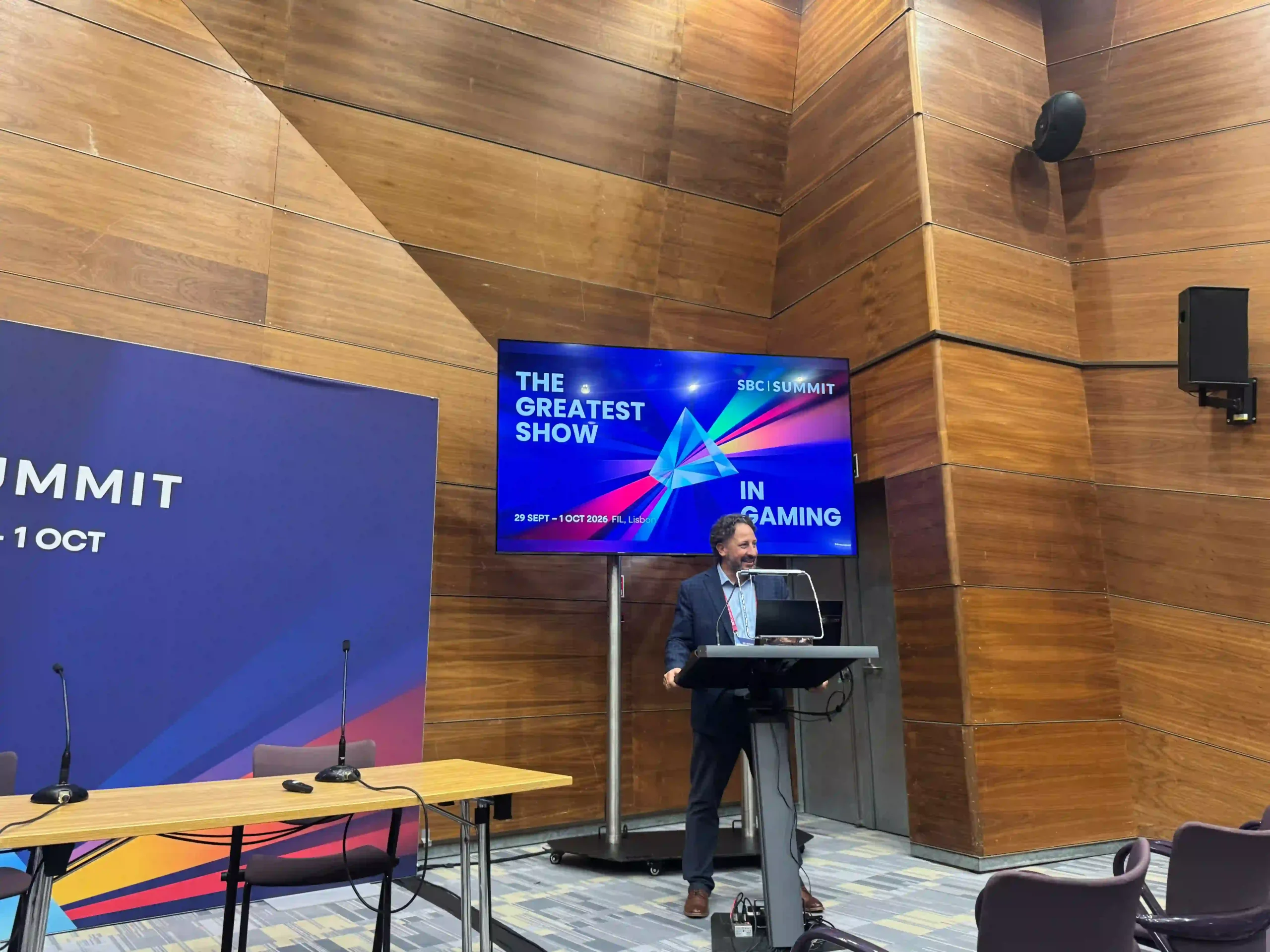
Speaking at SBC Americas 2026, Wayne Chen, Founder and CEO of Eukapay, said that operators risk falling behind if they continue to treat crypto as a fringe payment method, stating that the wheels are already in motion, as proven by processing volume.

“Stablecoins have already surpassed Visa and Mastercard transaction processing volume,” he said. “So if you’re not using stablecoins today, you gotta wake up.”
According to Morph, in 2025 stablecoins processed $33trn in financial transactions, surpassing Visa and Mastercard’s combined $25.5trn.
Chen said the appeal for operators is lower fees, instant settlement and “zero chargeback risk”, compared to card rails built in the 70s and 80s. He referenced the rise of crypto‑native casinos such as Stake and BC.Game, noting that “in the last 12 months they raked in about $45bn in deposits”.
He argued that stablecoins are now entering a phase of consolidation and standardisation similar to the evolution of card networks, with major players such as Fiserv and Stripe embracing the movement.
“Fiserv is creating their own stablecoin. Stripe has their own blockchain called Tempo,” he said, adding that adoption in the future will likely be invisible to users, embedded into the payment stack like mobile devices today.
Regulation, over‑compliance and the education problem
Despite the progress, speakers said that regulation is still an issue for adoption, particularly in Europe, where the cost of meeting MiCA requirements is already pushing firms out of the market.
“When we look at MiCA… you’re seeing companies bow out of Europe now in terms of being able to pay for all the costs and maintain their compliance program,” Chen said. “When you overregulate, that also creates this disincentive.”
Europe’s framework is commonly compared to a big rule book, featuring much stricter guardrails than US proposals.
Bitget, for instance, didn’t attain the required Crypto‑Asset Service Provider (CASP) authorisation, making it illegal for the exchange to continue serving EU citizens. Bybit has also run into issues and was forced to scale back its services for users across the region due to compliance roadblocks.
It has also had an impact on stablecoins, with Tether (USDT), the largest stablecoin in the world, refusing to comply with MiCA because it believes the reserve rules create systemic banking risks.
Taking the discussion back to gambling operators, Michelle Martin, Chairwoman and CEO of ComplianceAid, said the challenge is compounded by the uneven maturity of AML programmes.
She emphasised that many firms still lack the foundational business risk assessment required to build an effective compliance framework.

“If you’re telling me I have a compliance officer and I have policies and procedures but you’ve never done a business risk programme, you don’t have an effective programme,” she said. “What exactly are you safeguarding against?”
Martin explained that technology is embedded across the AML lifecycle, from digital identity verification to transaction monitoring. AI, she said, is already reducing false positives.
While regulation can potentially be lobbied and influenced, as suggested by the UK’s recent change in the capital reserve requirement for non-systematic stablecoin issuers from 2% to 1%, both speakers agreed that one obstacle they can address is education.
“Education definitely is probably the number one challenge to adoption,” Chen said. “There are still people who don’t know how to buy crypto.”
He argued that operators must assess markets not just by regulatory clarity but by user familiarity. “They gotta think about where or what countries do people have accessibility to buy crypto and have the education and knowledge to do that,” he said.
LATAM and emerging markets lead stablecoin adoption
While Europe grapples with compliance and the US waits for clarity, emerging markets are wasting no time in getting their hands dirty with stablecoins.
“Latin America is a hotbed for crypto… up to 20% adoption,” Chen said, pointing to Argentina, Colombia and Mexico as examples of markets where users are using stablecoins for everyday payments and settlements.
Emerging markets have consistently been reported to use stablecoins more than traditional ones for several reasons. One, as Martin mentioned, is that many of these countries rely heavily on cash, creating conditions where alternative rails can leapfrog traditional banking.
There are also those, like in the Philippines, that have been quick to use stablecoins to send money abroad and avoid traditional fees. However, it isn’t that straightforward.
Speaking to Payment Expert earlier this year, Shantnoo Saxsena, Founder and CEO of Encryptus, said the promise of blockchain fails when it meets the friction of local market pricing and accessibility.
“The cost to acquire a stablecoin in India, if the dollar is at 95 to a rupee, stablecoin is at 98 or 99,” Saxsena explained. “If you’re a business, think common sense. Why would you go and acquire a stablecoin in an emerging market when you can actually acquire dollars at a lower price?”
In closing, moderator Lizeth Acelas, Associate at Sora Law, asked whether stablecoins could replace traditional financial rails.
Chen said the numbers show progress, but a full takeover is highly unlikely. “Stablecoins have already surpassed Visa and Mastercard transaction processing volume,” he reiterated, but stressed that systems like ACH, Fedwire and FedNow are institutional rails that most likely are going to stay too.
He predicted a future where programmable money and government‑issued systems dance alongside each other. Martin agreed, noting that fiat will persist, especially in jurisdictions that remain “100% cash”.