What began as a strategic remittance consolidation play is now facing mounting criticism over competition, pricing power and the future shape of the US-Latin America money transfer market.
When Western Union announced plans to acquire Intermex last year, the deal was positioned as a way to strengthen its position in one of the world’s most competitive remittance corridors.
At the time, the proposed $500m acquisition was framed around scale, digital transformation and expanding access to immigrant communities across North America and Latin America. But as the transaction edges closer towards completion, the tone surrounding the deal has shifted.
Instead of focusing on cross-border payment innovation or retail expansion, attention has increasingly turned towards concerns the merger could reduce competition in a market already dominated by a small number of major remittance providers.
The criticism intensified this month after New York City Mayor Zohran Mamdani reportedly urged regulators to block the acquisition, arguing the combination of the two firms could ultimately harm consumers who rely on remittance services to send money abroad.
A deal built around Latin America remittances

Western Union first announced plans to acquire Intermex in August 2025 in an all-cash transaction valued at approximately $500m.
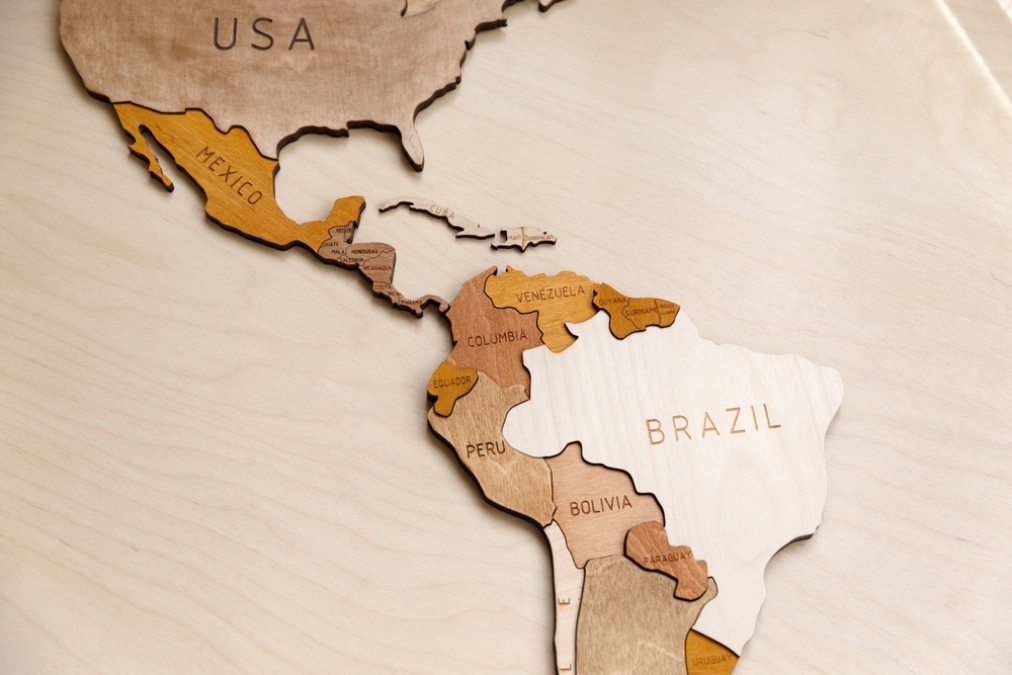
The deal would significantly strengthen Western Union’s position across US-to-Latin America remittance corridors, where Intermex has spent years building market share through a large retail agent network and a strong presence within Hispanic communities.
While Western Union remains one of the largest money transfer providers globally, Intermex carved out a position as a specialist in Latin American and Caribbean remittances, particularly cash-based transfers originating in the US.
At the time of the announcement, Western Union President and CEO Devin McGranahan said the acquisition would help “accelerate the transformation” of the company’s North American retail business.
The transaction also reflected broader pressures facing the remittance sector. Cross-border transfers have become increasingly competitive in recent years as traditional providers face growing pressure from fintech firms such as Wise, Remitly, PayPal/Xoom and Revolut, alongside newer blockchain and stablecoin-based payment platforms.
Competition concerns begin to grow
However, critics of the deal argue the transaction risks removing a key competitor from the market. According to reports from US media outlets, Mamdani warned regulators the merger could reduce consumer choice for migrant workers and families who depend on remittance services for cross-border transfers.
The concern centres on the fact that Western Union and Intermex compete directly across several high-volume remittance corridors into Latin America. Critics argue Intermex has increasingly acted as a challenger brand within those markets, offering competitive pricing and exchange rates against larger incumbents.
By absorbing Intermex into its business, opponents fear Western Union could gain greater pricing power in certain remittance routes, particularly within cash-based retail transfers where consumer choice may already be more limited.
The debate arrives at a sensitive time for the remittance sector more broadly. According to estimates from the Inter-American Development Bank, remittance flows into Latin America and the Caribbean reached record highs in recent years, with millions of households relying on cross-border transfers as an essential source of income.
At the same time, remittance pricing has remained under scrutiny globally, particularly in corridors serving lower-income consumers and migrant communities.
Western Union defends the acquisition
Western Union has rejected suggestions the deal would reduce competition. In a statement reported by the New York Post, a company spokesperson described the transaction as “pro-competitive” and said it would help protect retail and digital remittance access for immigrant communities, particularly customers who remain underbanked or reliant on in-person services.
In statements surrounding the transaction, the company also stressed the importance of maintaining retail access points and agent networks for communities that remain underbanked or reliant on cash-based services.
This remains a significant point within the wider debate around remittance modernisation. While digital wallets and account-to-account transfers continue to grow globally, large portions of the remittance market still rely on physical cash collection networks, particularly across parts of Latin America and the Caribbean.
Intermex’s retail footprint was widely viewed as one of the company’s most valuable assets within the acquisition.
A changing remittance landscape
The scrutiny surrounding the acquisition also reflects how quickly the competitive landscape around international payments has shifted.
Traditional money transfer operators are no longer only competing against each other. They are increasingly facing pressure from digital banks, fintech firms, embedded finance providers and crypto-linked payment infrastructure firms seeking to reduce transfer costs and settlement times.
Western Union itself has spent recent years attempting to reposition its business beyond traditional cash remittances, with increased focus on digital services, account-based transfers and broader fintech infrastructure capabilities.
Meanwhile, Intermex’s own financial performance had shown signs of pressure before the acquisition announcement. In it’s latest financial results, revenue fell to $121.9m from $144.310m y-o-y, as transaction volumes and foreign-exchange gains declined. Net income also dropped significantly to $0.511m, versus $7.769m.
The company highlighted its pending merger with Western Union, under which each Intermex share will be converted into $16.00 in cash at closing, subject to customary conditions
Regulators will now determine whether the proposed acquisition represents necessary consolidation within an evolving market, or whether it risks reducing competition in key remittance corridors relied upon by millions of consumers.