The peer-to-peer payment method and wallet BLIK has announced its plans to join the European Payment Interoperability Coalition to create a new European payment network that does not rely on either Visa or Mastercard.
Poland’s digital payment system BLIK has announced its intentions to join the European Payment Interoperability Coalition in a bid to make the payment method widely available across the region.
Led by the European Payments Alliance (EuroPA), the interoperability coalition promotes cross-collaboration among several localised digital payment methods.
Some of the European digital payments services already a part of EuroPA include Spain’s Bizum, Italy’s Bancomat, Portugal’s SIBS/MB Way, and Vipps MobilePay, which is active in Denmark, Finland, Norway and Sweden.
BLIK revealed it has become the first European payment solution to open talks on joining the pan-European project.
One of the primary objectives for the interoperability coalition is to allow BLIK users in Poland to send money to Bizum users in Spain, for example, and vice-versa. This would apply to private users and could be extended to in-store payments next year.
BLIK will work alongside other European digital payment methods to create a central interoperability infrastructure to support the expansion of these solutions.
Joining the interoperability coalition builds on BLIK’s letter of intent to join EuroPA in May 2025.
“The aim is to create a pan-European, interconnected payment network that works across several countries, currencies, and local providers,” said BLIK in a statement. “This work is already underway.”
Several European digital payment providers signed a Memorandum of Understanding to produce a feasibility phase to introduce the central interoperability framework to make the payment methods eligible across borders and using different currencies.
What can BLIK offer the rest of Europe?
Launched in 2015, BLIK facilitates peer-to-peer transactions in Poland and Slovakia, having been adopted by banks such as BNP Paribas, Revolut, and Santander.
The payment method has expanded in recent years to support contactless payments for NFC-enabled Android devices.
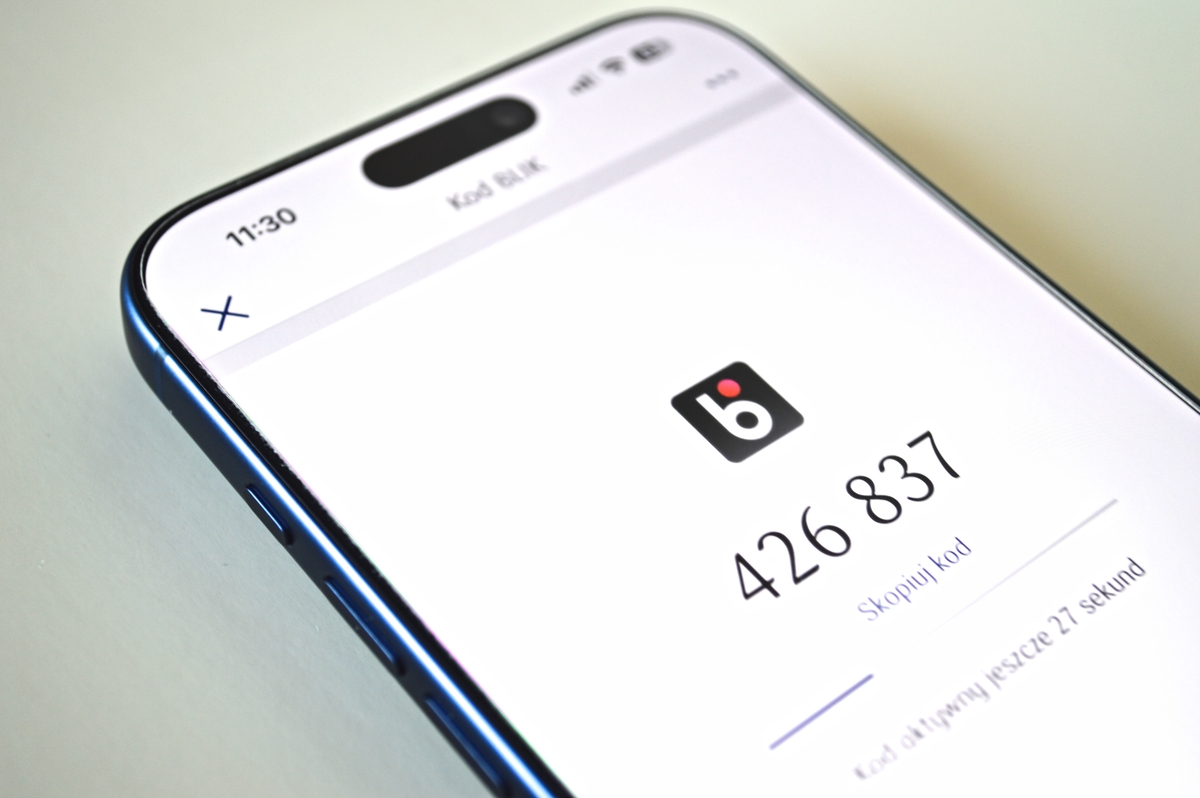
BLIK transactions are secured and settled via the use of six-digital one-time codes which are sent to the payee’s banking app. The code can then be used to be typed into an online or ATM screen to complete the transaction, once authentication is finalised by the receiving vendor.
BLIK is also one of many digital payment services that supports account-to-account (A2A) payments, such as Pix in Brazil. Merchants in Poland have increasingly adopted BLIK by connecting to users’ bank accounts to perform transactions with either a pin code or biometric login.
In February 2026, BLIK revealed it processed €104.9bn across 2.9 billion transactions in Poland last year as the payment method continues to surge in popularity, with e-commerce the most popular channel of payments amongst users.
With a view to launch in several different European countries, a BLIK expansion would enable users in Poland a new avenue to send payments to-and-from the country. It would also provide merchants with an additional payment method at the checkout for greater flexibility.
Europe’s interoperability push to reduce fragmentation?
Last year, EuroPA and the European Payments Initiative struck a partnership to reduce Europe’s dependence on non-European payment rails and methods, primarily Visa and Mastercard.
The initial launch of the partnership brought on board localised payment methods Bizum, Bancomat, etc., and now BLIK, to create an interoperable payment network to leverage the speed and seamlessness of all member digital payment methods into one ecosystem.
High-ranking European financial figures, including European Central Bank (ECB) President Christine Lagarde, has been championing the push for consumers and businesses to adopt European-based payment methods in a bid to protect its sovereignty.
Initiatives like the European Payment Interoperability Coalition are also in place to help reduce fragmentation of digital payment methods and wallets.
During a panel session at Merchant Payment Ecosystem (MPE) in March 2026, Yuriy Kostenko, Partner at Flagship Advisory Partners, believes there are two forms of fragmentation; wallets that act as a consolidator, and the volume of wallets within a region, citing BLIK as a good example of a success story due to it continuing to act on shifting consumer payment preferences in Poland.
“There are two forms of fragmentation,” said Kostenko. “The wallet will act as a consolidator for the multiple features.”
“We don’t want it to act as a payment terminal, it can act as an ID storage, licenses, etc., for multiple purposes.
“Every EU region is very different. BLIK is so successful because customers were so used to bank to bank payments. Fragmentation will continue because by nature, we behave very differently.”