Imagine if you got to the first of the month and your salary hadn’t been paid. Or if your mortgage payment hadn’t gone through, or if your friends’ group chat couldn’t pay you back for that meal you paid for.
It would be stressful, right?
Companies, individuals and the entire economic system work on the assumption that account-to-account (A2A) payments just work as they should. But perhaps we shouldn’t take that for granted.
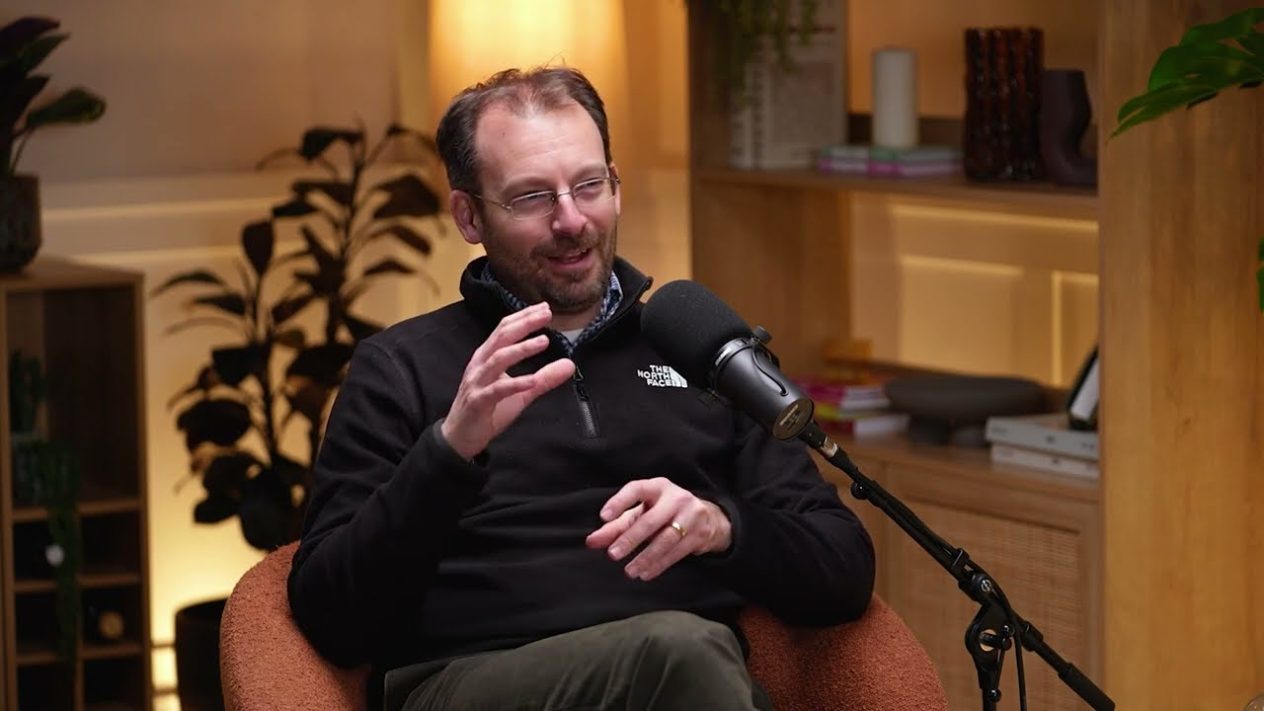
This idea is what Form3 Chief Executive Mike Walters and Chief Revenue Officer Mark Fieldhouse reflected on in the company’s brand-new podcast, Payments Cannot Fail.
Why are account-to-account (A2A) payments vital to the economy?
Episode one explores why Form3 exists in the first place and outlines the complexity of the payments challenges that banks and fintechs face that the company has helped to solve since its formation almost a decade ago.
Walters said that they looked at how cloud technology was evolving in other sectors and how they could apply this to payments to respond to the challenges that banks face.

“We looked at the readiness and the progression of cloud technology from other industries and thought there’s got to be a different way of doing this,” he explained. “If we take proven, scaled cloud-based technology from streaming enterprise, scaled e-commerce and we use that technology to create a platform that financial institutions could use, then we could radically simplify the different technology choices that those banks and financial institutions would need to make.”
Form3 was established in 2016 and is a provider of payment technology to a variety of financial institutions across the UK, EU and the US. It primarily works across account-to-account payments, as Walters noted that these types of payments tend to be “immediate life priorities”.
Fieldhouse noted that A2A payments are growing in use cases, too, far beyond just rental payments or salary payments. More businesses are exploring A2A payments as part of the checkout and payment flows, showing a change in attitude in how money moves between consumers and companies.
“One of the airlines is now saying that you can pay for your flight by direct account-to-account payment, skipping out one or two of those steps.”
But primarily, account-to-account payments are often essential transactions. They are the time of payments people rarely think about until something goes wrong. Making sure these payments continue to work reliably is ultimately why Form3 exists.
“It doesn’t matter whether your card is still working if your salary didn’t hit your account,” warned Walters. “I’ve always been very intrigued by the fact that nobody wakes up to make a payment. There is always a real-world motivation and outcome from the movement of money and account to account and some of this stuff is difficult for many reasons and it’s very important.”
Form3: The maturity of cloud-native payments is underestimated
Form3’s technology is built to be robust and capable of processing the sheer scale of payments that its customers need to be able to handle, Fieldhouse and Walters noted.
The company combines payments expertise with cloud engineering to build resilience infrastructure, ensuring financial institutions can run critical payment flows.

Fieldhouse surmised: “We remove this incredible headache that used to exist so that our customer can focus on their customer.”
Walters added: “One of the complexities banks and financial institutions continuously find is not only does a patchwork exist in an individual market, but if you have multiple markets, or you’re trying to enter a market quickly then the problem is exponentially bigger and the overhead of managing and running that also exponentially increases in complexity. We take on that complexity.”
Form3 processes more than five billion transactions a year for its customers, a figure that’s growing quickly each year. It handles around £5 trillion a year running across the platform from the UK, Europe and the US at a rate of thousands of transactions per second.
“When you start to see those things aggregated, you start to see the importance of where we make investments in security and resilience,” Walters added. “We’ve spent significant money in operating not just in one public cloud, but across public clouds, to make sure that in instances where there is some instability in those providers, it doesn’t impact our customers who are processing with us.”
With that significant investment in robustness and security, alongside Form3’s dedication to allowing its clients to focus on serving their own customers, Fieldhouse simply asked “what would have happened in the last nine and a half years if Form3 was never founded?”
For Walters, the answer was remarkably simple.
“What would have happened over the course of the last nine years is a refresh of how things were being done before. I think what we’ve really brought to the industry is proving that you really can do something as critical as payments in a public cloud environment
at a real scale, and to do that in a safe and industrialised way.
“The contra to that is organisations continuing to invest huge amounts of money in local, customised pieces of software and infrastructure, probably at subscale, at more cost, with probably more issues and bigger challenges in service provision as well.
“I’m really proud of the organisation and the customers that we work with, and the changes that we’ve been able to make with them and I think we’re starting to shine a light on the maturity of that cloud-native environment.”