A new analysis shows US consumers abandon purchases far sooner than businesses expect, with most walking out after just a few minutes of payment disruption.
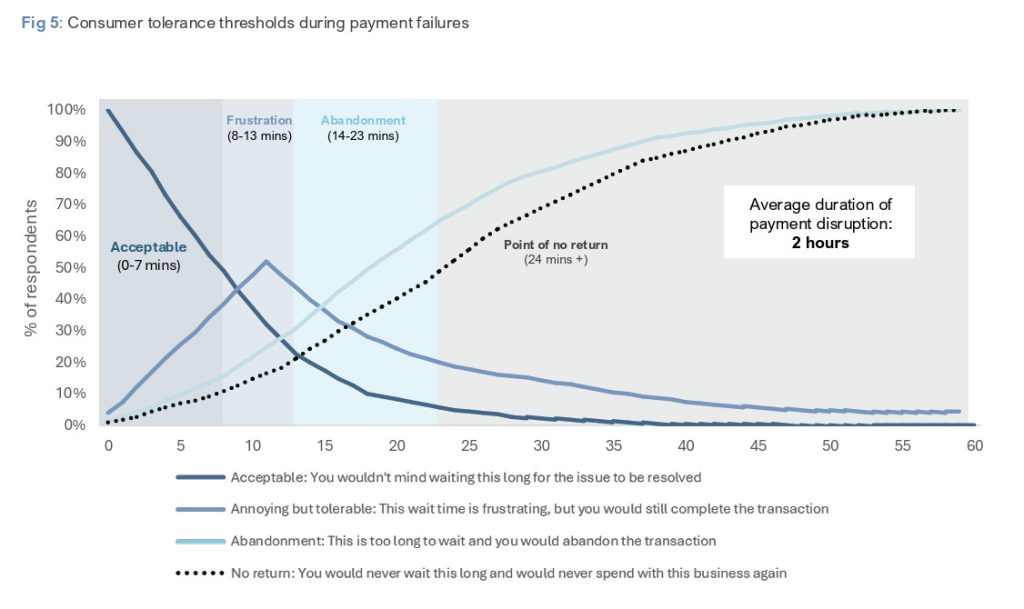
US retailers and hospitality operators are facing a “seven‑minute economy”, with new research revealing most shoppers will tolerate payment delays for no more than seven minutes before abandoning their purchase.
The findings, revealed in a new FreedomPay report, highlight how quickly revenue evaporates during outages, long before systems are typically restored.
The study, covering major consumer states including California, Texas and New York, shows that payment failures now put $44.4bn in annual sales at risk. While outages often last close to two hours, the commercial damage is heavily front‑loaded: by minute eight, customer frustration spikes and losses accelerate sharply.
Economic modelling suggests that between minutes eight and 13, lost sales rise by more than $1.2bn per minute nationwide. By the 24‑minute mark, around 65% of total at‑risk revenue has already disappeared, driven largely by customers who leave without complaining or returning.
The research also highlights a shift in consumer behaviour. Younger shoppers, particularly Gen Z and Millennials, are far less forgiving of delays and more likely to blame the business directly. Many share negative experiences online, turning short outages into reputational flashpoints for stores and restaurants.
When cash remains king
Compounding the issue, cash is no longer a reliable fallback. Only 30% of Americans say they always carry cash, falling to 25% among Millennials. Despite this, many businesses still assume customers will withdraw cash and return – a belief the data shows is increasingly unrealistic.
Retailers face operational pressures too. Two‑thirds of payment failures occur during peak trading hours, and 60% of managers report verbal abuse from customers during outages. One in four say they have witnessed physical aggression linked to payment failures.
While many operators have invested in resilience measures such as offline processing and secondary network connections, 15% still have no digital backup at all. Analysts warn that as digital payments become the default, gaps in preparedness will become more costly.
The findings suggest that the speed of recovery is now as important as the reliability of the system itself.