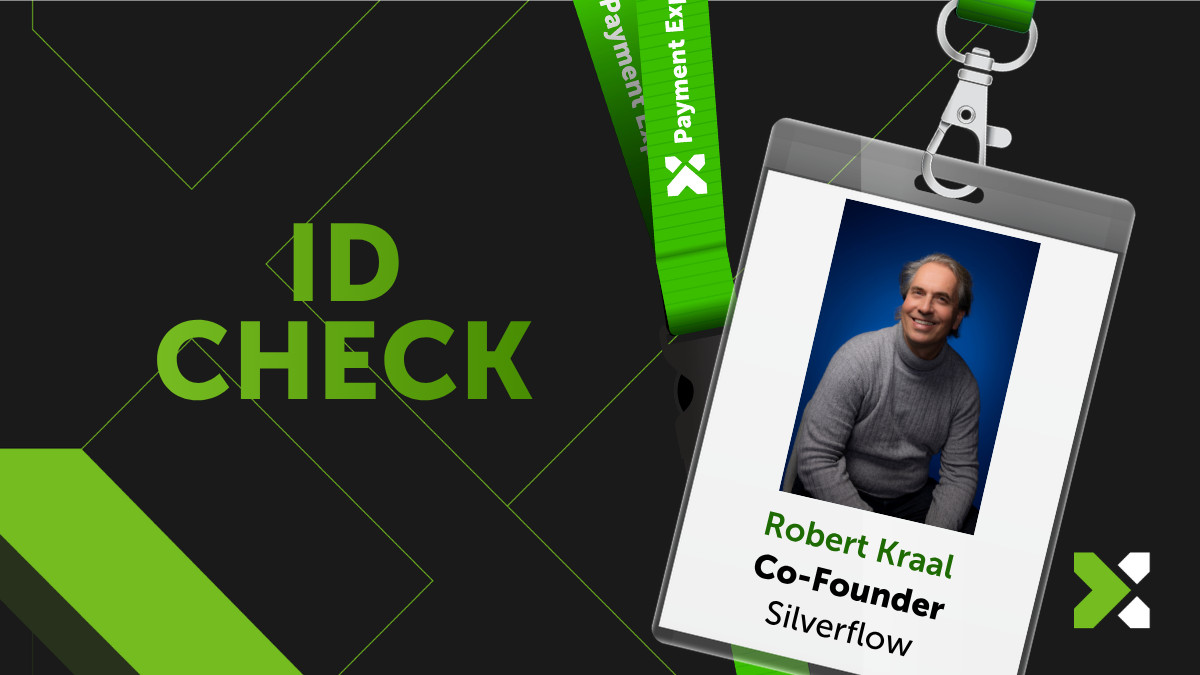
Robert Kraal, Co-founder of Silverflow, reflects on a year of infrastructure change in payments and explains how subscription growth and cloud-native processing are influencing priorities for 2026.
Speaking to Payment Expert, Robert Kraal, Co-founder of Silverflow, reflects on a year which saw pressure on payment providers to confront the limitations of legacy infrastructure as subscription models, tokenisation and embedded payments continued to expand.
Kraal points to partnerships with fintechs such as Solidgate, xpate and Buckaroo as evidence cloud-native acquiring is moving past technical upgrade to a commercial necessity, with approval rates, revenue retention and speed to market tied to infrastructure choices.
He argues outdated back-office systems remain the biggest barrier to innovation across the payments stack, forcing merchants and PSPs to prioritise modernisation over incremental fixes.
Looking ahead to 2026, Kraal expects network tokenisation, modular processing and greater control for merchants to reshape the card-processing landscape, as cloud-native architecture becomes the default rather than the exception.
Read the full interview below.
Silverflow partnered with Solidgate to create a new standard for subscription payments. How did this collaboration shape your year, and what other milestones stand out from 2025?

The Solidgate partnership was a definite highlight in 2025, positioning us to help an ambitious, fast-growing fintech revolutionise subscription payments and scale towards a $100bn target. It underscored the critical role of cloud-native infrastructure in combating issues like poor approval rates and revenue loss in this booming sector. This collaboration, alongside others like our work with xpate and Buckaroo, defined our year. With xpate, we enhanced real-time acquiring services, simplifying global money movement.
With Buckaroo, we enabled a unified, omnichannel acquiring strategy, which accelerated their time-to-market following an acquisition. Overall, 2025 was a transitional year where a great deal of foundational work was done to replace old systems, setting the stage for significant payoffs in 2026.
Which customer segments proved most transformative, and what did you learn from their adoption?
The most transformative customer segments were high-growth subscription businesses and forward-thinking PSPs/Acquirers. Companies like Solidgate, focused on subscriptions, provided a clear lesson, replacing legacy systems with cloud-native infrastructure directly impacts revenue. Specifically, their adoption highlighted the immense power of our platform’s features, like network tokenisation, which immediately boosted first-payment approval rates by up to 8%.
For a subscription business, this revenue uplift is game-changing. PSPs like Buckaroo demonstrated that our modular, cloud-native approach simplifies complexity, accelerates scheme integration, and enables a unified, omnichannel strategy that monolithic systems simply cannot match. The core lesson is that payments infrastructure is no longer just plumbing, but a direct driver of loyalty, expansion and bottom-line success.
In October, Silverflow highlighted the drag of outdated back-office systems on innovation. How did this industry-wide challenge influence your strategy?
The legacy drag of decades-old, fragmented back-office systems is the single biggest obstacle to innovation, speed and efficiency in the payments industry. This industry-wide challenge is the very foundation of Silverflow’s strategy. We believe the industry must stop patching these systems and finally start replacing them – not all in one go of course, but through a measured, intelligence phasing out of systems that aren’t up to the challenges of commerce in the 2020s.
Our cloud-native platform is the replacement. We help merchants and PSPs modernise by providing a single API to the card networks, which is data-rich and scalable. This modular approach enables customers like Buckaroo to unify their complex acquiring infrastructure and accelerates time-to-market. By shifting to our platform, companies gain the flexibility and security of modern processing, breaking apart the outdated monolithic stack, and allowing payments to become a strategic, revenue-driving asset, rather than an invisible cost centre.
Silverflow’s platform expanded significantly in 2025. Which new capabilities had the biggest impact on merchants and fintechs, and how do you see them evolving?
The capability having the biggest impact in 2025 was the rise of network tokenisation. For merchants and fintechs, this capability shifted from a passive security feature to a primary revenue driver. We enabled our partners, like Solidgate, to implement network tokens from the first payment, driving immediate approval rate improvements that translate to revenue growth, often in the range of 3% to 13%. This capability also facilitates advanced features like “Click to Pay” and biometric authentication.
Looking ahead to 2026, I see these capabilities evolving into the core of modern payment strategy. Merchants now understand that infrastructure choices directly influence revenue, expansion speed and customer loyalty, positioning our cloud-native platform as the new standard in payments.
Fintech investment outlooks were divided in 2025. What challenges did Silverflow face in navigating this environment, and what lessons are you carrying into 2026?
Fintech investment in 2025 was divided, slowing from its 2021 peak amid global uncertainty. The challenge was navigating an environment where many firms were still dealing with the repercussions of financial constraints and outdated operational hurdles. This environment reinforced our core lesson for 2026 – now is the time to act and invest in core technology.
We learned that focusing on foundational, ‘bulletproof’ infrastructure is essential for long-term success. Instead of chasing trends, we emphasised that investing in a modern, cloud-native core provides immediate, tangible benefits – like higher transaction volumes and better security through AI – which secure long-term success regardless of the economic climate. This principle of technological reinvention is what will separate the leaders from those still dragging legacy systems into the next decade.
With subscription payments booming and merchants demanding more control, what are Silverflow’s priorities for 2026 in terms of product innovation, partnerships or geographic expansion?
We are focused on product innovation that makes cloud-native the default choice for processors and acquirers. This means continued investment in modular, data-rich solutions that reduce technical debt and allow our partners to gain full control over their payment flow, turning payments into a strategic asset. For partnerships and expansion, our priority is to continue enabling our customers’ growth. This includes supporting new card schemes like American Express and Diners Card, and facilitating our partners’ geographic expansion, particularly into major regions like the US.
As tokenisation and embedded payments gain traction, how do you see the card processing landscape shifting in 2026, and how will Silverflow position itself as a modern alternative?
In 2026, the card processing landscape will be defined by the end of the legacy drag and a fundamental psychological shift. The industry will finally move away from monolithic systems to a modular approach, as no single vendor can innovate across the entire payments stack. This shift makes cloud-native infrastructure the default choice.
Silverflow is positioned as the new standard by being the catalyst for this transformation. We are the modern alternative providing a single, data-rich API to the card networks. Our platform gives merchants and PSPs the control to assemble the best components, reduce technical debt, and transform payments from a cost centre (or ‘plumbing’) into a powerful lever for growth and customer loyalty.