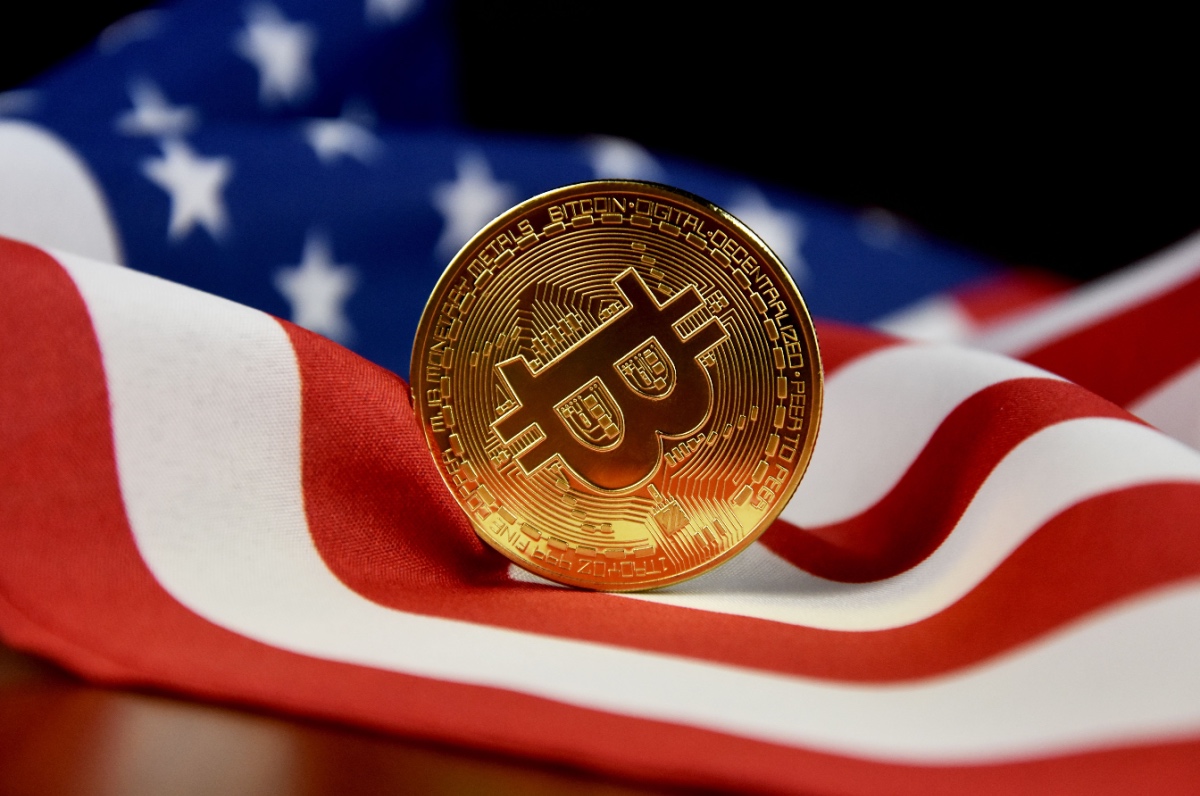
US official submits bill which could direct federal tax payments directly to Trump’s Strategic Bitcoin Reserve in a move to offset de-dollarisation
Americans could soon be able to pay their federal taxes in Bitcoin after Republican House Representative Warren Davidson introduced the Bitcoin for America Act on November 20.
The Act will allow federal tax payments to be paid in Bitcoin and direct all such payments to the Strategic Bitcoin Reserve, established on March 6, 2025 by President Donald Trump.
Davidson said the aim of the Act is to strengthen the long term financial stability and resilience of the US economy, as well as to strengthen the country’s position as a leading nation in digital asset adoption and innovation.
“The Bitcoin for America Act marks an important step toward modernising our financial systems and embracing the innovation that millions of Americans already use every day,” said Davidson in a statement accompanying the bill.
“By allowing taxpayers to pay federal taxes in Bitcoin and having the proceeds placed into the Strategic Bitcoin Reserve, the nation will benefit by having a tangible asset that appreciates in value over time—unlike the US dollar, which has steadily lost value under inflationary pressures.
Is the US worried about de-dollarisation?
But why are US officials putting all their eggs in a crypto basket? De-dollarisation is one answer.
The dollar is still the dominant global currency for trade, finance and FX trading, even though the US share of world output and exports has fallen.
According to JP Morgan, de-dollarization is happening mainly at the margin: central banks are slowly reducing the dollar share of their FX reserves, foreign ownership of US Treasuries have declined, and a growing share of energy and other commodities is being priced and settled in non-dollar currencies (notably yuan and various local currencies).
Emerging markets are still heavily “dollarised” in their bank deposits overall, but China is deliberately moving away from the dollar. If de-dollarization accelerates, J.P. Morgan argues it could mean a weaker dollar over time, higher US bond yields, and relatively poorer performance of US financial assets versus the rest of the world.
The most obvious move by emerging markets to diversify away from the US dollar was the establishment of BRICS in 2009 – Brazil, Russia, India, China and South Africa joined forces to trade in local currencies, with no single official currency used, although the yuan is the most used within the bloc.
This could be why the Trump Administration has been a large proponent of establishing a Bitcoin domestic reserve to consolidate its long-term value, as it is fixed at $21 million, and offers an alternative currency method.
During his Presidential campaign last year, Trump stated he wants all Bitcoin mining to be in the US in order for the country to become the global leader in crypto and digital assets. The US is currently the second largest crypto market in the world, according to Chainalysis, behind India in first, followed by Pakistan (third), Vietnam (fourth) and Brazil (fifth).
Do Americans use Bitcoin?
One of the largest questions pertaining to the Bitcoin for America Act is how many Americans currently use and pay with the world’s largest cryptocurrency.
Bitcoin has primarily been used as an asset reserve and/or an investment tool, which saw significantly increased in value over the last two years, currently valued at $86,141 at the time of writing.
The Securities and Exchange Commission (SEC) also cleared securities markets to begin offering Exchange Trade Funds (ETFs) for Bitcoin in early 2024, and later ETH pools, for outside investors to begin holding each cryptocurrency.
Bitcoin is the most popular cryptocurrency amongst Americans, with 41% of all fiat currency purchases on crypto platforms investing in Bitcoin. eMarketer found that 28% of adult Americans own some form of cryptocurrency, while 51% of Gen Z adults invest in crypto.
eMarketer also found that crypto payments are expected to increase by more than 82% from 2024 to 2026, but this only accounts for 2.6% of the total US population. Bitcoin is also currently accepted at an estimated 2,3000 merchants.
Crypto regulations vary from state to state. While Arizona and Texas have implemented state legislations to reserve digital assets, other states such as Florida and Pennsylvania failed to advance or withdrew their respective bills.