Payment Expert is on the ground at Sibos 2025 in Frankfurt, giving you live coverage from all four days. Expect insights from some of the leading industry leaders engaging in conversations around fintech, payments, banking, digital currencies and much more.
17:00 – That’s a wrap for Day 1 of Sibos here in Frankfurt, multiple conversations on the exhibition floor and conference halls centred around AI, particularly Agentic AI, as well as digital currencies and the need for faster payment processing in an increasingly digital financial landscape.
I’ve been Callum Williams, and stay tuned tomorrow for Day 2.
16:20 – Are banks lagging further behind fintechs in the payment innovation race?
Gareth Wilson, Global Banking Industry Leader at Capgemini and Elias Ghanem, Global Head of Capgemini Research Institute for Financial Services, unpacked the company’s World Payments Report 2026 to Payment Expert.
Wilson has seen that fintechs, such as PayTechs, have reacted quicker to merchants and customer needs with a greater focus on payment data, while Ghanem revealed the onboarding process for PayTechs to onboard merchants is 60 minutes, compared to the seven days it takes for banks.
Wilson and Ghanem also spoke in great length on the challenges and opportunities banks face with integrating AI, like Agentic AI, and how this can not only transform their onboarding processes, but catch up to fintechs in the long-run.
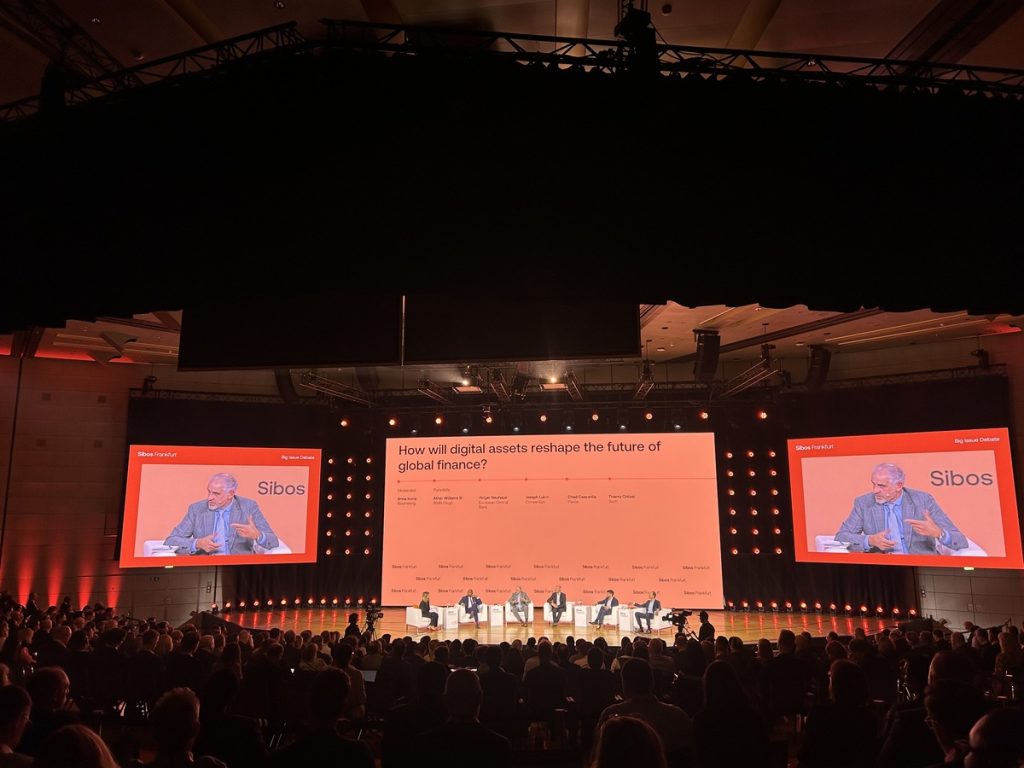
15:20 – Are digital assets causing too much fragmentation?
The traditional finance space has slowly accepted the realisation that digital assets are not only here to stay, but are surging in growth.
While stablecoins and tokenisation are already brining tangible benefits to the wider financial sector, is too much digital assets adding to too much financial services? According to Holger Neuhaus, Member of the European Central Bank (ECB): “Yes, clearly so.”
Despite Neuhaus’ assertion, Joseph Lubin from Consensys, believes “DeFi is going to be a godsend to (real-time payments)” and why the technology can actually serve as a remedy for fragmentation, or, act as “good fragmentation”. Lubin also shared “there is going to be a tremendous proliferation of stablecoins, with hundreds of thousands of white label stablecoins,” having joined the market in the last several years.
But while digital assets and decentralisation has grown exponentially over the last several years, has tokenisation lived up to its billing of “tokenising everything”.
Not to Charles Cascarilla of Paxos, but he shared why the tokenisation of real-world assets has been a slow process.
Cascarilla said: “Part of the reason for lack of tokenisation is regulatory reasons. Also because you don’t have much of a cash line-up, you don’t have much to move it against. There have been some attempts to tokenise US stocks, but it has been pretty slow.”
14:50 – Industry reaction from new Swift blockchain ledger

Barry O’Sullivan Director of Banking & Payments at OpenPayd: “It’s clear from today’s announcement that digital assets and stablecoins are no longer fringe. The industry is moving at a rapid pace, and stablecoins are being adopted globally at such a speed that traditional banks are having to take notice.
“Swift’s blockchain initiative could help bring some standardisation to the global stablecoin ecosystem, but whether it will truly unify the market is an open question. Existing private stablecoins, CBDCs, and regional solutions may continue to operate in parallel, creating pockets of fragmentation.
“With 30 financial institutions already engaged, the momentum is strong, and I believe many more will adopt at pace to ensure they keep up with the growing demand. Adoption, interoperability, and regulatory alignment will take time; however, Swift is clearly positioning itself to play a meaningful role in shaping the evolving stablecoin and tokenised asset ecosystem, and it’s great to see that banks are innovating to be a part of the new world.”

14:05 – Banking Circle COO, Morten Lilleøre on the challenges of adopting/integrating instant payment rails
Speaking to Payment Expert, Morton Lilleøre, COO at Banking Circle, believes there is a challenge adopting instant payments “globally” and is determined to provide multiple rails, whether that be from the Nordic region or in Australia, via single integration to support user friendliness and boost adoption.
Lilleøre‘s views will be shared in full on video this week
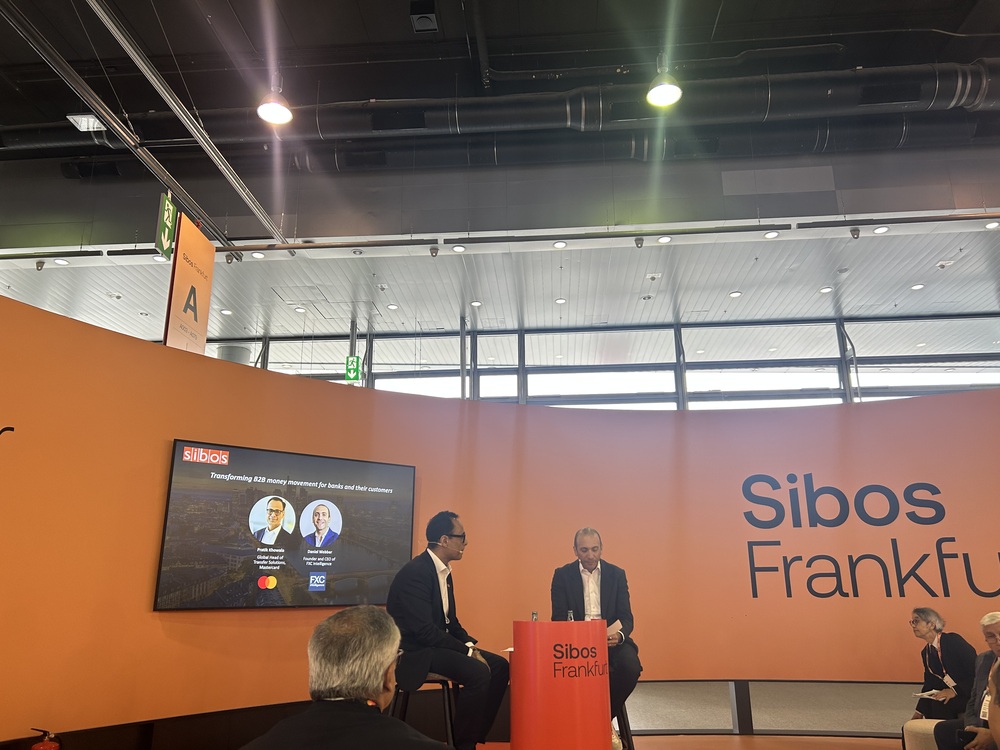
13:45 – Addressing the challenges SMEs face with cross-border payments
While Mastercard’s Pratik Khowala admitted “Mastercard has indeed transformed consumer purchase payments”, host Daniel Webber quizzed him on the ongoing challenges, and solutions, small and medium-sized enterprises (SMEs) continue to face with cross-border payments.
“With globalisation, SMEs have become very important for cross-border payments, and yes, they are underserved by banks”
Khowala stated SMEs are not as sophisticated as financial service companies when it comes to cross-border payments, needing the infrastructure from banks, financial service providers and now, fintech companies. Where Mastercard is aiming to solve this friction is its Mastercard Move service, which Khowala heads.
Mastercard Move provides a stack of solutions that enables banks and partners to move money transfers in a reliable manner. It has 10 billion end points; card, wallets, cash pick up points, etc., packaged in a singular platform to offer it to banking partners and their customers. We have grown our transactions in excess of 35%.
“We want to bring the same user experience for cross-border for customers,” said Khowala. “We are taking a very pragmatic approach for the end user to know where to address these payment challenges.”
13:30 – Barclays and CGI streamline trade finance
Barclays has partnered with CGI to integrate CGI Trade360 with Komgo’s Konsole, creating a fully digital workflow for corporate trade finance. The move aims to increase transparency, speed up transactions, reduce manual input and lower operating risk.
“Our corporate clients increasingly expect seamless, digital-first solutions for their global trade finance needs. By integrating Komgo with CGI Trade360, we will be providing a fully digital experience while simplifying operations processing,” said Jaya Vohra, Managing Director, Global Head of Trade & Working Capital at Barclays.
The collaboration connects Komgo’s multi-bank network with CGI’s processing capabilities, aiming to set a new standard in trade finance digitisation.
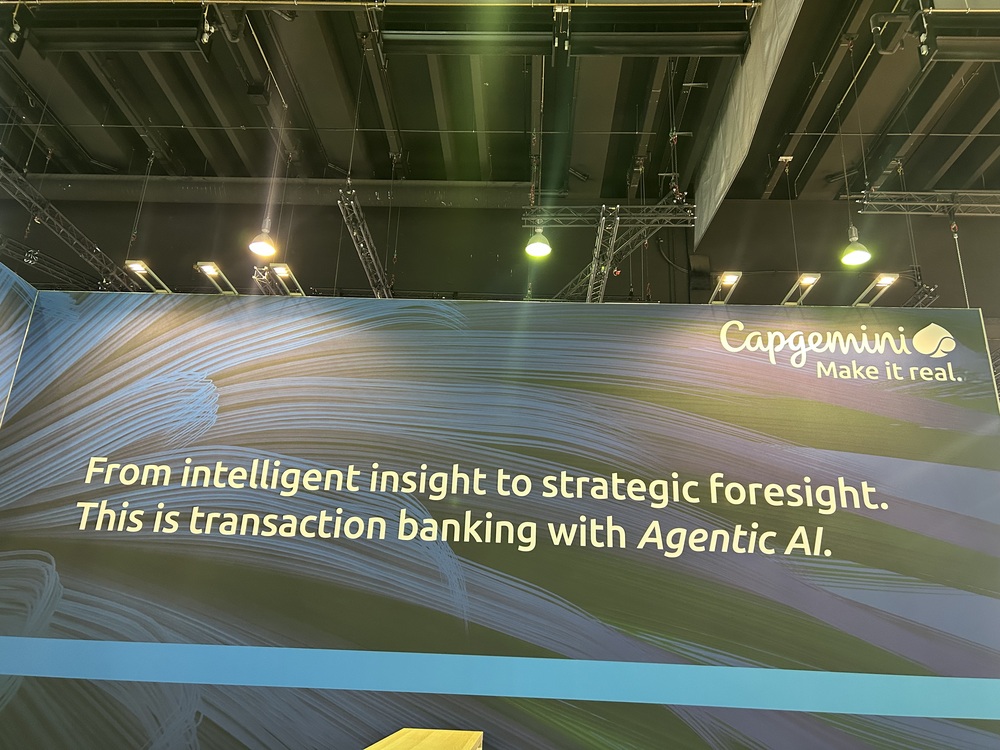
12:45 – The power of Agentic AI
James Maxfield, from Duco Technology Ltd., delivered a keynote on why financial services are no longer waiting to hear the impact Agentic AI can play in their back office and customer onboarding processes… they are using it now, today.
“Financial services industry has been demonised for being slow. That’s quite a lazy narrative, as it has a massive societal impact. I see us at the front of innovation,” said Maxfield.
“Agentic AI is at the forefront of this innovation. What we have seen with GenAI could be the iPhone moment for this industry.”
He shared the three core principles of what makes a successful Agentic AI integration:
- Resilience
- Reliability
- Scalability
Maxfield also shared why Agentic AI is driving value for KYC and customer onboarding with automation. He revealed company’s have begun to start asking questions around the subject to unlock the true value of Agentic AI, centring around the personalisation of the customer in order to change the transformation journey. It’s about “bringing together multiple agents to work autonomously, secure process networks, an “ecosystem that never takes holidays”, said Maxfield.
12:00 – Swift unveils blockchain-based shared ledger
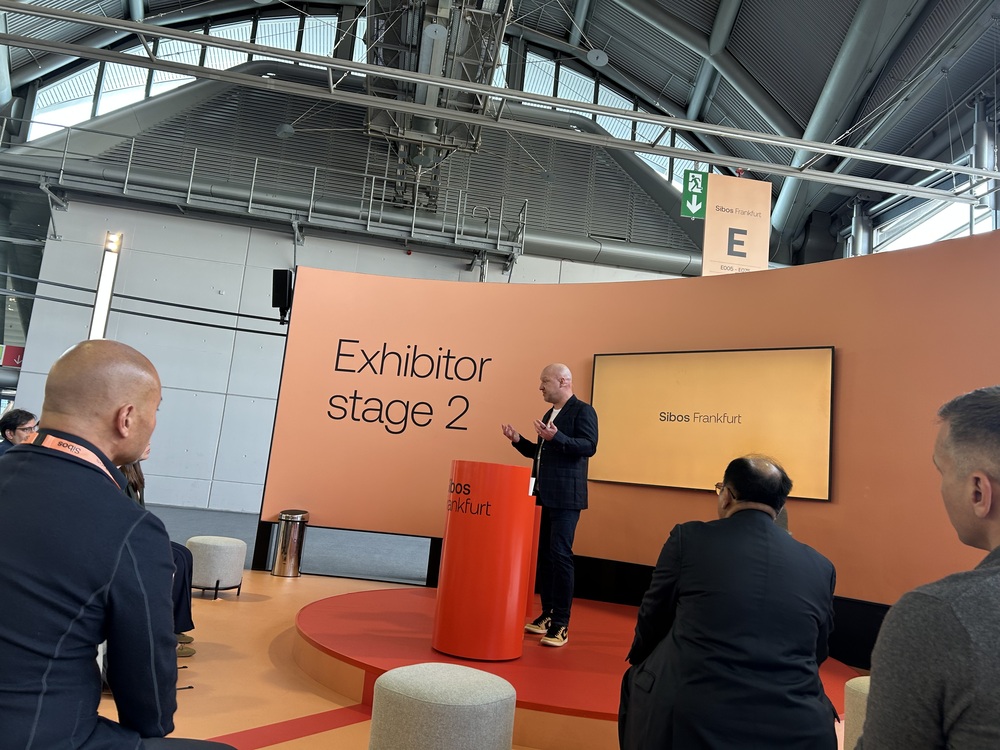
Swift has announced it will add a blockchain-based shared ledger to its infrastructure, aiming to enable instant, 24/7 cross-border payments at scale. The project, in collaboration with more than 30 global financial institutions and developed with Consensys, will focus on interoperability and maintaining Swift’s framework.
“Through this initial ledger concept we are paving the way for financial institutions to take the payments experience to the next level with Swift’s proven and trusted platform at the centre of the industry’s digital transformation,” said Swift CEO Javier Pérez-Tasso.
11:30 – Clear Junction CEO, Dima Kats, on the upcoming Verification of Payee (VoP) mandate
Kats revealed to Payment Expert he is “not a big believer” in VoP and stated he would like to see more consumer education on the rise of fraud and its varying methods as opposed to more payment verification mandates.
Kats’ views will be shared in full on video this week

11:00 – ISO20022, its here and its setting standards
ISO20022 has laid the foundations for payment messaging, and Patricia Sullivan from Deutsche Bank remarked the regulatory standard has brought clean and transparent guidelines for data, as well as trust and reliability.
She also stated, before ISO20022 there was a “tug-of-war” between client needs, such as speed, and from their banking perspective in the search for clarity. ISO20022 has now embedded these payment needs said Sullivan, and said Deutsche Bank is “really pleased that tug of war is now becoming a lot more balanced”, and also emphasised there should not be a demand for more payment data, but rather better quality of data.
“More data isn’t better, better data is better”
On the same panel, Michael Jones from the Bank of England, shared how its handling of CHAPs has required the central bank to adopt ISO2022 to create a greater network for the flow of payment data for its payment rail.
“We act as a catalyst so our system can manage ISO2002”, said Jones, who also revealed the Bank of England has been conducting policy and guidance research in order to reduce friction of CHAPs while also looking at payment agnostic’s from domestic and international providers of similar payment rails.
10:25 – What makes a perfect, unified payment experience?
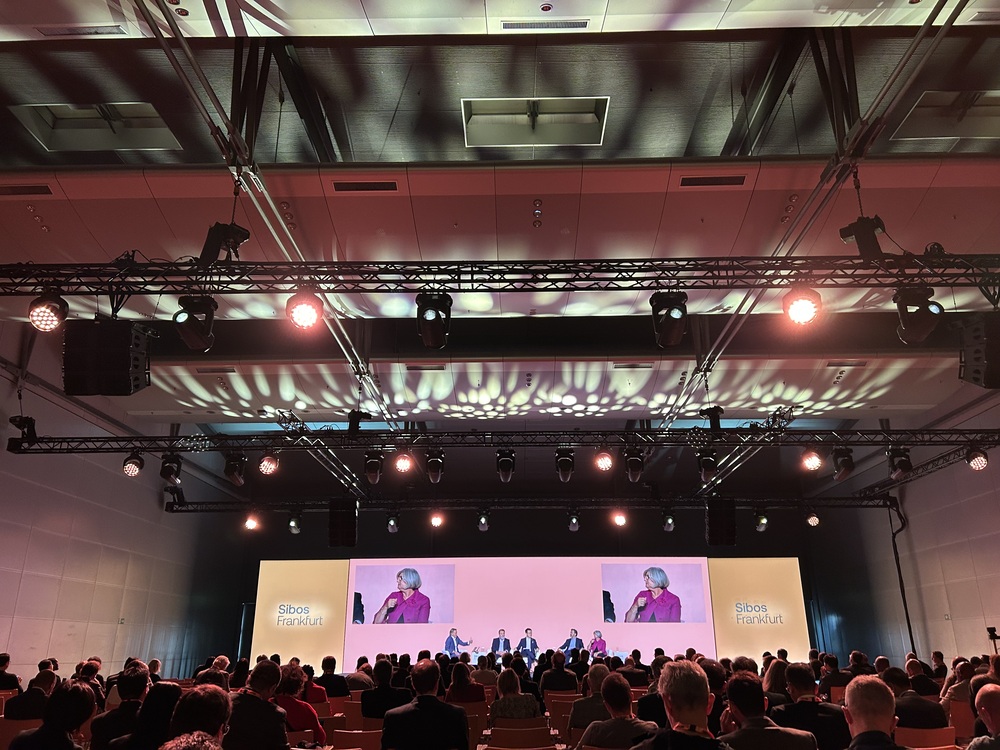
The arrival of emerging digital currencies has dominated conversations across the financial services industry this year, and the recent passing of the GENIUS Act in the US has accelerated adoption and innovation in the US, that is according to Rossana Thomas from Fiserv.
“GENIUS Act has driven a lot more innovation in the US with stablecoins”
Bruno Mellado from BNP PARIBAS, believes atomic instant payments should continue with developing its rules of engagement to make sure both consumers and banking partners are making the most out of each transaction, no matter how large or small. He stated BNP Paribas are trying to create a “simpler experience” with atomic instant payments to achieve simultaneous, instant settlements when making payments cross-border but also domestically.
10:00 – Cross-border boost from Corpay & Mastercard
Cross-border payments entered the spotlight at Sibos this morning as Corpay and Mastercard announced an expansion of their partnership, bringing near real-time payouts to 22 additional markets across Asia, Europe, the Middle East, Africa and Latin America.
The move builds on more than a decade of collaboration and taps into Mastercard Move’s global network, which already spans over 200 countries and 150+ currencies. With international payment flows forecast to exceed $250 trillion by 2027, both firms are moving fast to meet growing demand for speed and transparency.
Pratik Khowala, Global Head of Transfer Solutions at Mastercard, said: “By expanding our collaboration with Corpay, we’re enabling financial institutions to seamlessly access new markets, optimise cross-border operations, and deliver a superior experience to customers.”
*Payment Expert will be speaking to Raj Dhamodharan – Head of Crypto & Blockchain, tomorrow on all things stablecoins, digital currencies, blockchain technology and more
09:35 – Smart transacting with AI?
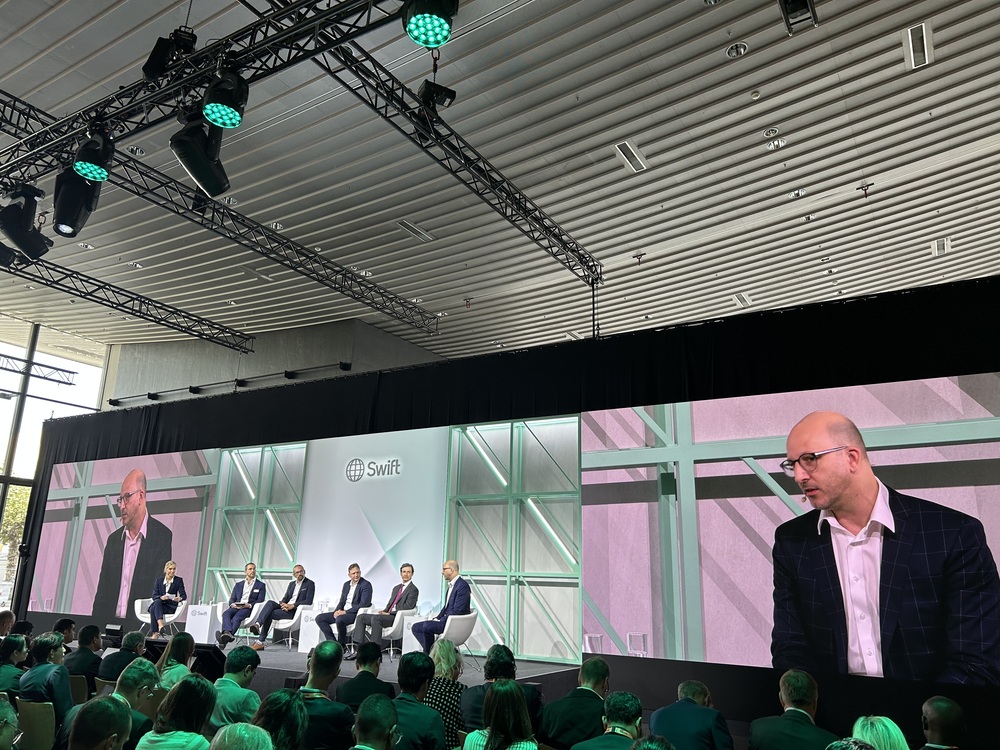
One of the opening conference panel discussions at the SWIFT stage engaged in the conversation of AI’s role in enhancing payment processing and accelerating settlements.
Georges Berscheid argues there needs to be normalisation techniques for common understanding of different AI models, with no financial services seeming to be standardised. Banks have a different interpretation, and need to extend beyond the reach of Swift.
Erwin Kulk, of EBA Clearing, was asked on what needs to be addressed first for AI’s full-scale adoption, where he focused on instant payments.
He stated that there is nine out of 10 fraud recalls pertaining to instant payments, stating there is a “clear sense of urgency in Europe”.
“We should be careful we don’t get tunnel vision of what is fraud with instant data sets. We should use indicators and other data points, KYC from banks,” said Kulk.
09:15 – Temenos announced the launch of Temenos Money Movement & Management, an AI-powered and pre-integrated platform to streamline payments and account services. This unified solution brings together payments, accounts, risk, and treasury modules, enabling financial institutions to move money faster, more reliably and at lower cost.
Temenos Money Movement & Management helps new entrants get to market quickly and existing players to replace fragmented systems with an efficient platform built for growth and innovation. Smart AI-powered services, such as automated payment repair, fraud detection, and copilot tools minimize manual intervention and improve straight-through processing.
Barb Morgan, Chief Product and Technology Officer at Temenos, commented: “With the rapid rise of instant payments and the growing influence of AI in financial services, institutions are actively seeking solutions that are both unified and intelligent to manage increasing complexity, compliance demands, and customer expectations. Temenos Money Movement & Management directly addresses this market need, bringing together payments and account services in a single, AI-powered solution. Building on the success of Temenos Payments Hub, our leading and functionally rich payment hub used by banks worldwide, this new solution further strengthens our position as a trusted innovator in the payments space.”
09:00 – Touchdown at Sibos, I’m Callum Williams and I will be giving you live, instant reactions from Sibos, but first, a quick coffee to start the day.