Trump’s $100k H-1B visa fee sparks airport panic and poses major challenges for U.S. fintechs and payment providers reliant on specialised global talent.
A video filmed aboard an Emirates flight at San Francisco airport over the weekend showed passengers standing in the aisles, phones pressed to their ears. Some were reported to have de-boarded before take-off, their anxiety stoked by fears they might be locked out of the US under President Donald Trump’s abrupt new H-1B visa fee.
In WhatsApp groups and Slack channels, foreign workers debated whether to stay put, rush back, or abandon trips altogether. The sense of confusion underscored the immediate human fallout of a policy that has jolted global technology and payments firms alike.
The proclamation, signed on September 19 and effective from September 21, introduces a one-time fee of US$100,000 on every new H-1B petition. According to the U.S. Citizenship and Immigration Services (USCIS), the charge applies solely to new petitions lodged after the deadline, not to renewals or previously approved visas..
That clarification did little to prevent chaos in the hours that followed the announcement, as uncertainty about its scope prompted companies from Microsoft to JPMorgan to urge employees to avoid international travel until the rules were made clear.
For the White House, the move is framed as a corrective against what it sees as abuse of the visa category by outsourcing and IT services firms. The administration argues that the measure will protect US wages and limit reliance on lower-cost foreign labour.
“The H-1B programme was never meant to replace American workers,” the proclamation stated
Yet critics contend that the abrupt imposition of such a steep fee risks making the US less attractive to global talent at precisely the moment when its technology industries – including payments and financial technology – are in a war for specialised skills.
Inside Trump’s H1-B proclamation
President Trump’s proclamation does not read like a technical adjustment to visa policy. Instead, it frames the H-1B programme as a vehicle for systemic abuse that has, in the administration’s telling, hollowed out parts of the American labour market and undermined national security.
The document argues that the visa – created to bring in “additive, high-skilled functions” – has been “deliberately exploited to replace, rather than supplement, American workers.” It cites statistics showing the number of foreign STEM workers in the US more than doubled between 2000 and 2019, while overall STEM employment rose by less than half that rate. The foreign share of the computer and maths workforce, it notes, increased from 17.7% to 26.1% over the same period.
Particular ire is directed at the IT services sector. The proclamation highlights that the share of IT workers in the H-1B programme grew from 32% in 2003 to more than 65% in recent years. It accuses outsourcing firms of “manipulating” the system to offer entry-level H-1B jobs at a 36% discount to US salaries, while simultaneously overseeing large layoffs of American staff. Some of those workers, it says, were even required to train their replacements before being dismissed.
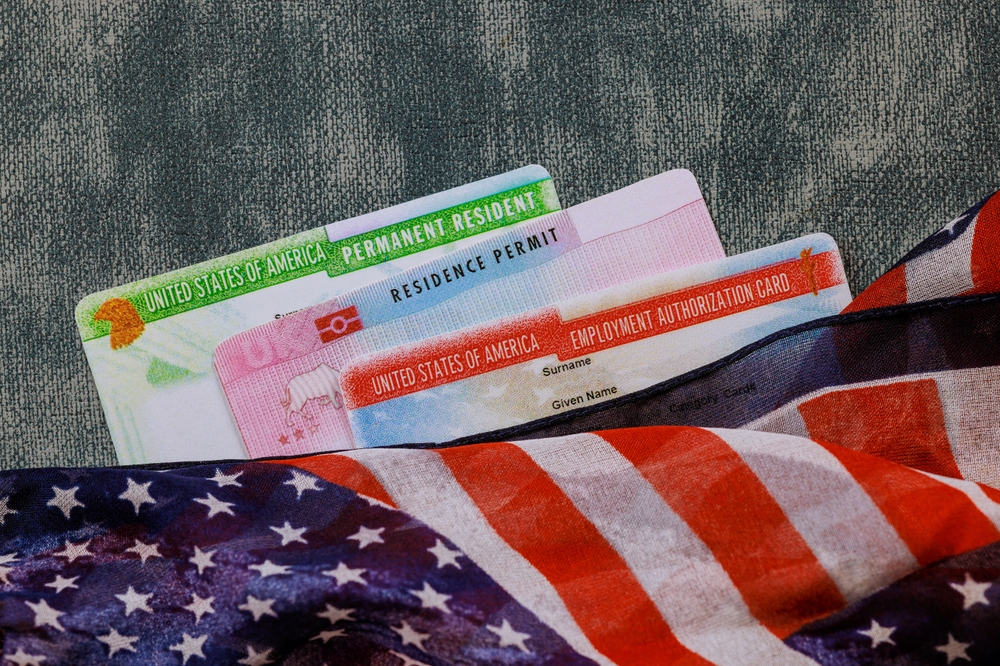
Beyond wage suppression, the White House casts the visa programme as a national security threat. It points to investigations of outsourcing companies for visa fraud, money laundering, and racketeering, and argues that a steady influx of lower-paid foreign workers has deterred young Americans from pursuing science and technology careers. By its logic, the erosion of incentives for US students threatens American leadership in critical fields.
To address this, the proclamation imposes a US$100,000 fee on each new H-1B petition filed after September 21, arguing that higher costs are necessary to curb abuse while still permitting entry for the “best of the best.” It also orders rulemakings to lift prevailing wage levels and to prioritise high-paid, highly skilled applicants in future visa decisions.
The administration couches these measures as both economic protection and a defence of sovereignty. “The severe harms that the large-scale abuse of this programme has inflicted on our economic and national security demand an immediate response,” it declares, justifying what it calls a “restriction on entry” under the Immigration and Nationality Act.
Industry at a crossroads
Industry bodies reacted swiftly. Nasscom, the Indian IT trade group, warned of “ripple effects on US innovation and global job markets”. The Compete America coalition, which represents firms including Apple, Amazon and Microsoft, called for revisions, cautioning that the fee would “stifle innovation and job growth in the US by deterring global talent”.
“We stand at a crossroads for the future of American innovation. The Administration’s new Proclamation imposing a $100,000.00 payment per worker undermines the President’s goal of strengthening the United States’ leadership in cutting-edge technology and threatens to surrender the future of our country’s innovation and technology industries to our biggest global competitors,” said Scott Corley, Compete America’s Executive Director.
“If we want to ensure America’s future economic and national security, our government policies must be based on the realities of global competition. High-skilled immigration is a vital complement to the US workforce. […] Policies that artificially inflate costs or drive away investment from our country do not protect American workers; they limit opportunities for US job growth, shrink our economy, and cede the future to our competitors abroad.”
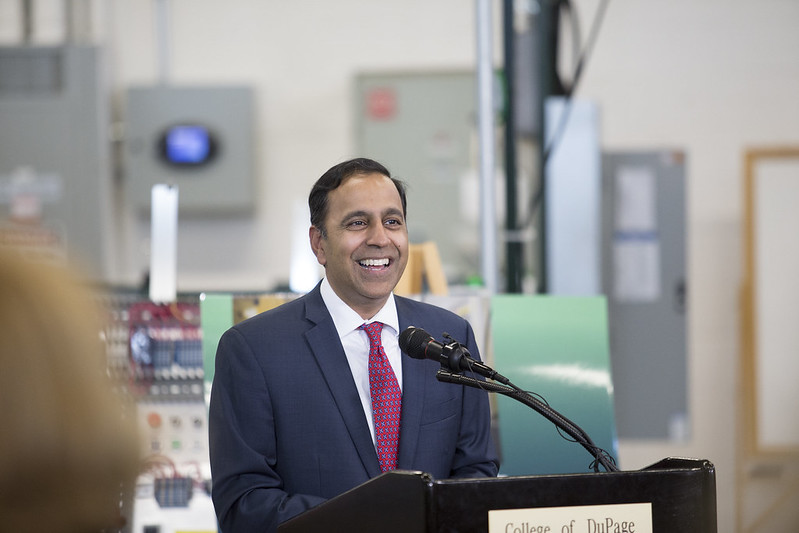
Congressman Raja Krishnamoorthi went further, describing the measure as “a reckless attempt to cut America off from high-skilled workers who have long strengthened our workforce, fuelled innovation, and helped build industries that employ millions of Americans”.
For payment providers and fintech firms, the implications may be particularly acute. The sector has long depended on engineers versed in cryptography, data security, fraud detection and compliance architecture – fields where domestic labour supply is limited. The one-off charge may be absorbable for deep-pocketed incumbents such as Visa or PayPal, but could prove prohibitive for start-ups attempting to scale.
Many fintechs already face rising compliance and capital costs; adding $100,000 per foreign hire could slow product development or shift work abroad. “This could crush small businesses and startups reliant on diverse talent,” said Ajay Bhutoria, a former Biden adviser.
Investors are also recalibrating. Analysts at Jefferies estimate that the fee could reduce operating margins for Indian IT-services groups by 50–150 basis points. Shares of Infosys, Wipro and Tata Consultancy Services fell by up to 5% on the first trading day after the announcement.
While payment-focused fintechs are less exposed than large outsourcing firms, the signal is clear: reliance on foreign talent carries fresh financial and regulatory risk.
For now, companies have some breathing room. Existing visa holders and renewals are exempt, sparing thousands of workers already embedded in US fintechs and payment firms. But the uncertainty that produced the airport videos is itself instructive. Even if the practical scope is narrower than feared, the perception of capricious policy shifts could drive talent elsewhere – to Canada, the UK or Europe, where visa regimes remain more predictable. In global payments, where innovation and regulatory agility are paramount, such perceptions matter.
Ultimately, the $100,000 fee may achieve its political aim of limiting new inflows of foreign labour. Whether it strengthens US competitiveness is less certain. Payment providers grappling with tight margins and global competition may now think twice before basing their most critical development work on American soil.