The incident highlights growing tensions between crypto’s payments ambitions and the operational standards expected of firms handling customer funds at scale.
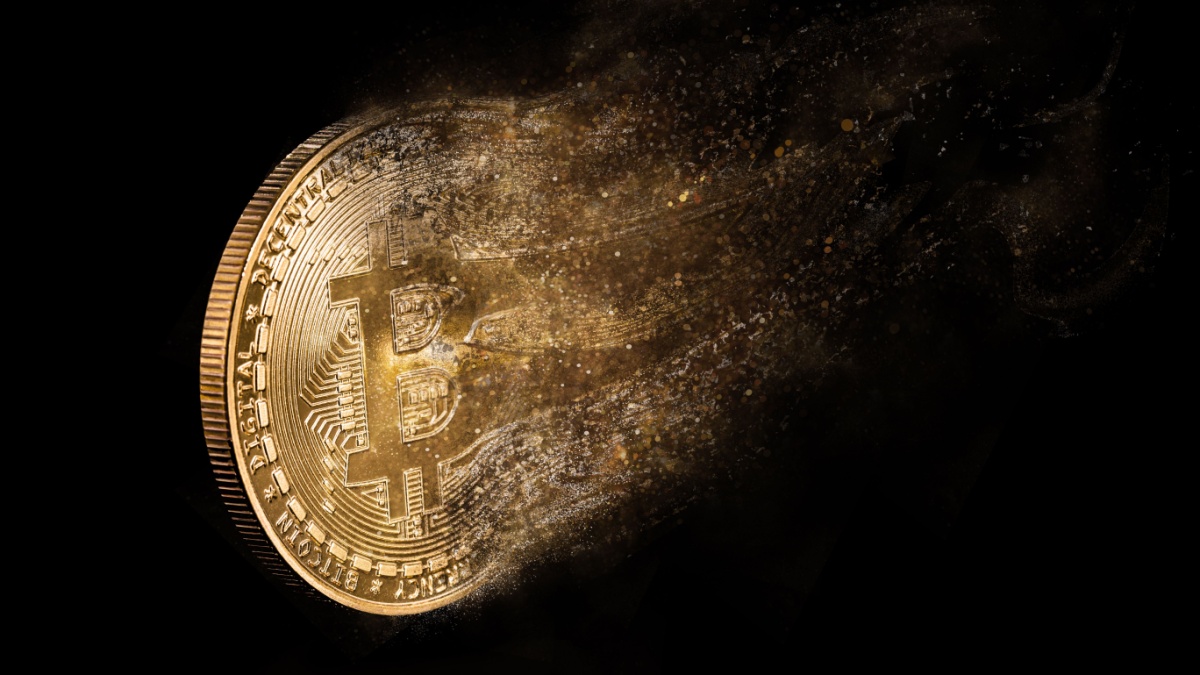
Latin America-focused crypto payments firm Kontigo has confirmed it suffered a security breach which resulted in the theft of customer-linked crypto assets, adding to a growing list of incidents testing confidence in the sector’s operational maturity.
The company disclosed on January 5 in a post on X that unauthorised access to its systems led to the loss of approximately $340,000 worth of USD Coin (USDC). Kontigo said it has since contained the incident and pledged to reimburse impacted customers in full.
In its statement, the firm said it had isolated the affected systems, initiated an internal investigation, and engaged external security specialists to determine how the breach occurred. Kontigo has not yet publicly detailed whether the incident stemmed from compromised credentials, wallet infrastructure weaknesses, or other operational failures.
A familiar pattern in crypto security
While the sums involved are modest compared with some of crypto’s largest exploits, the incident follows a well-established pattern. Over the past decade, crypto-asset theft has repeatedly exposed weaknesses not only in smart contracts and protocols, but also in the surrounding operational layers, including custody arrangements, key management and internal controls.
However, according to Paul Sibenik, CEO of Cryptoforensic Investigators, the majority of real-world crypto thefts still occur well before protocol-level or infrastructure failures come into play.

“The bulk of thefts still relate to user access and the exfiltration of private keys or seed phrases,” Sibenik tells Payment Expert, pointing to phishing attacks, approval drainers, malware and credential harvesting as the dominant vectors. In many cases, attackers are able to access seed phrases that users have stored insecurely in email accounts or cloud storage.
High-profile failures such as the collapse of Mt. Gox in 2014, the Ronin bridge exploit in 2022, and a steady stream of wallet and exchange breaches since have underscored a persistent challenge: as crypto firms expand beyond niche trading into payments and consumer-facing services, the consequences of security lapses increasingly resemble those seen in mainstream financial services.
Sibenik notes infrastructure-level breaches do still occur, but are statistically far less common than user-level compromises. “Recent incidents involving wallet infrastructure or DeFi protocols certainly happen,” he says, “but they tend to generate much more press when they do.” By contrast, he adds, large private key thefts occur daily with little public attention, despite often involving higher losses.
Colin Knight, an expert witness for Alpha Quantum, tells Payment Expert that Kontigo’s decision to reimburse customers after a $340,000 security incident highlights “three unresolved fault lines in crypto: where losses originate, how accountability is assigned, and how external stakeholders gauge institutional maturity.”
“By 2026, most crypto losses affecting customers no longer stem from fundamental protocol failures as core blockchain designs have proven resilient. Instead, vulnerabilities typically arise at the intersection of crypto and organizational processes,” he explains. This includes: in wallet infrastructure, key management, access controls, and withdrawal procedures. However, Knight acknowledges account takeovers, compromised signing environments, weak segregation of duties, and insufficient transaction monitoring “remain the dominant failure modes”.
What differentiates recent incidents is not simply the frequency of attacks, but how firms respond. In traditional payments, consumer reimbursement following fraud is typically an obligation, embedded in regulation and scheme rules. In crypto, by contrast, reimbursement has historically been discretionary, dependent on balance-sheet strength, governance and commercial incentives.
Sibenik argues that reimbursement decisions are often pragmatic rather than principled. “Reimbursement is not well-established, and arguably not required,” he says. “In cases like this, it is usually a cost-benefit calculation. $340,000 is a relatively small price to pay to preserve user trust and prevent long-term damage to adoption.”
Kontigo’s decision to compensate users therefore places it closer to the expectations applied to regulated payment institutions, even as the sector continues to debate where responsibility for losses should ultimately sit.
Payments ambition meets regulatory reality
Kontigo positions itself as a stablecoin-powered alternative to traditional banking for users in Latin America and the US Latino market, offering dollar-denominated accounts and cross-border functionality. This model sits at the intersection of crypto infrastructure and everyday payments, a convergence that is drawing increasing attention from regulators, banks and payment partners.
For policymakers and commercial counterparties, repeated crypto thefts raise questions about whether firms operating at this boundary are ready to scale safely. As stablecoins move further into payments, treasury and remittances, operational resilience is becoming as important as technological innovation.

“Unlike traditional payments, where consumers expect reversals of unauthorized transactions as standard, crypto repayments are largely discretionary, shaped by custody models, contractual terms, jurisdiction, and whether a firm accepts fault,” Knight explains. “When a provider makes customers whole, it is often to preserve trust and franchise value, not because of an industry-wide obligation. Each such case gradually reshapes user expectations, even without a settled norm.”
For regulators and partners, however, reimbursement alone is unlikely to be sufficient. “It shows some crypto firms are willing to absorb losses and act more like regulated financial institutions,” Knight says. “But it does not resolve deeper concerns about whether control environments are robust enough for scale.”
Sibenik adds that these incidents also highlight the limits of regulation in the crypto context. While the sector remains poorly regulated by traditional standards, he notes that it cannot be governed in the same way as banks or card networks. “These applications are still relatively new, and there are and always will be inherent risks,” he says. “Attackers are constantly looking for new and innovative ways to steal cryptocurrency.”
The incident comes amid heightened scrutiny of crypto firms’ controls, particularly as jurisdictions including the EU and UK advance frameworks designed to bring stablecoin and crypto payment providers closer to traditional financial regulation.
Kontigo said it will share further details once its investigation is complete. For now, the breach serves as another reminder that in crypto, security incidents are no longer isolated technical events, but signals that shape trust, regulation and the sector’s ability to operate alongside established payment systems.