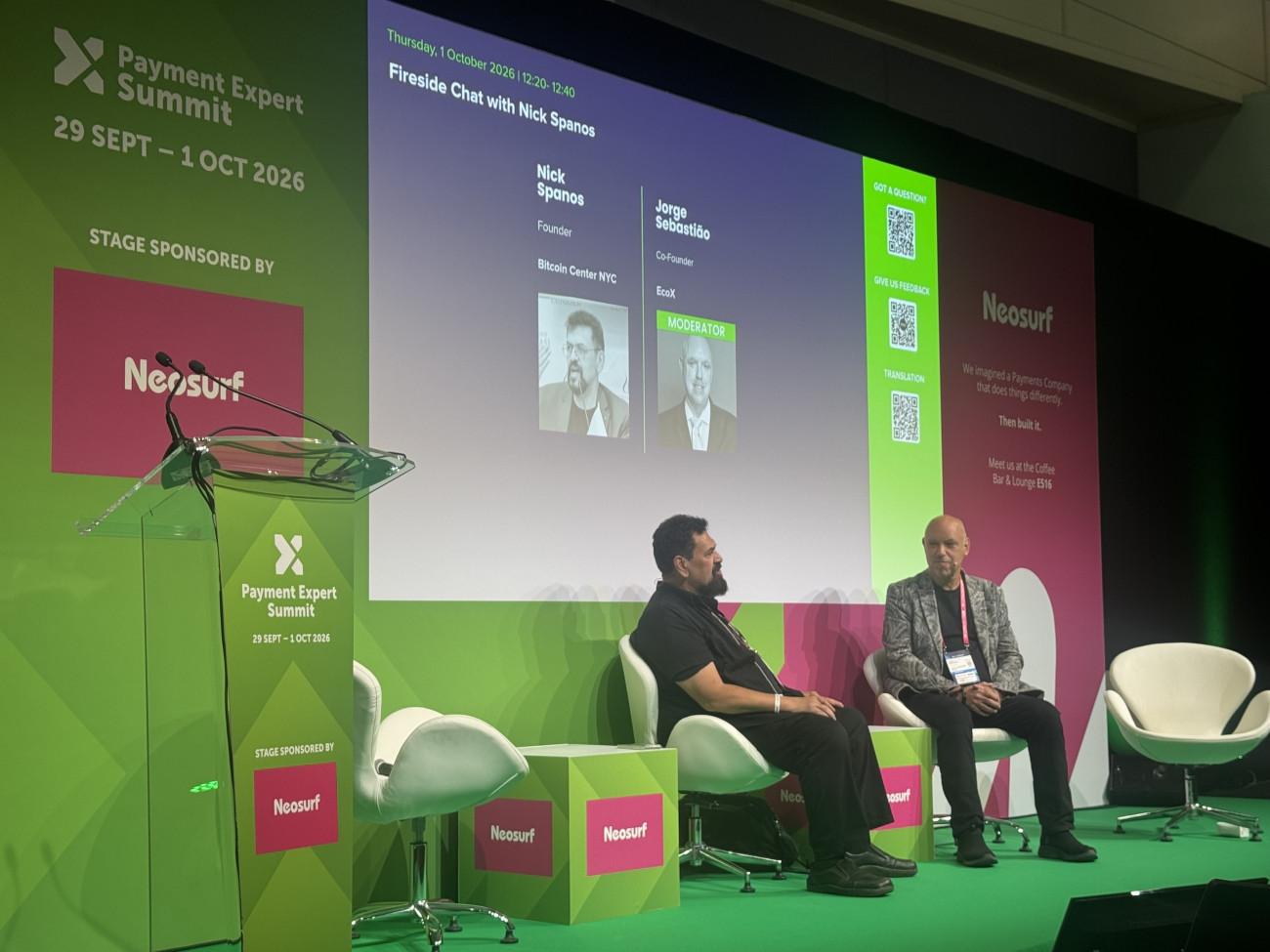
Payment Expert was on the ground at SBC Summit in Lisbon this year quizzing both gaming and payments leaders on what have been some of the biggest emerging trends within the both industries this year.
Last week, we asked figureheads from Worldpay and Yaspa on some of the emerging trends within the gambling payment sector, and where the compliance onus falls upon, the payment provider or the gambling operator?
This week, Breno Oliveira, Head of Product at payabl., shares his views on the integration of Wero in Europe, Thomas Voaden, Head of Global Partnerships at BR-DGE explains why optimisation is what merchants are looking for, and Viktoriia Degtiarova, Co-Founder and Chief Commercial Officer of Paysecure, reveals why AI routing into payment systems is the next key for payment growth.
What are some of the developing trends this year and is there a danger of oversaturation with digital wallets?
Breno Oliveira: I believe what we have been seeing is the consolidation of wallets, especially in Europe. This brings a new challenge, but also a new opportunity for financial institutions. The likes of iDeal and other payment platforms in Europe will adopt and be part of Wero and I believe that this adoption won’t initially challenge the card schemes, but instead, the more traditional payment methods, such as cash, which will transition to Wero like what happened in Brazil with Pix.
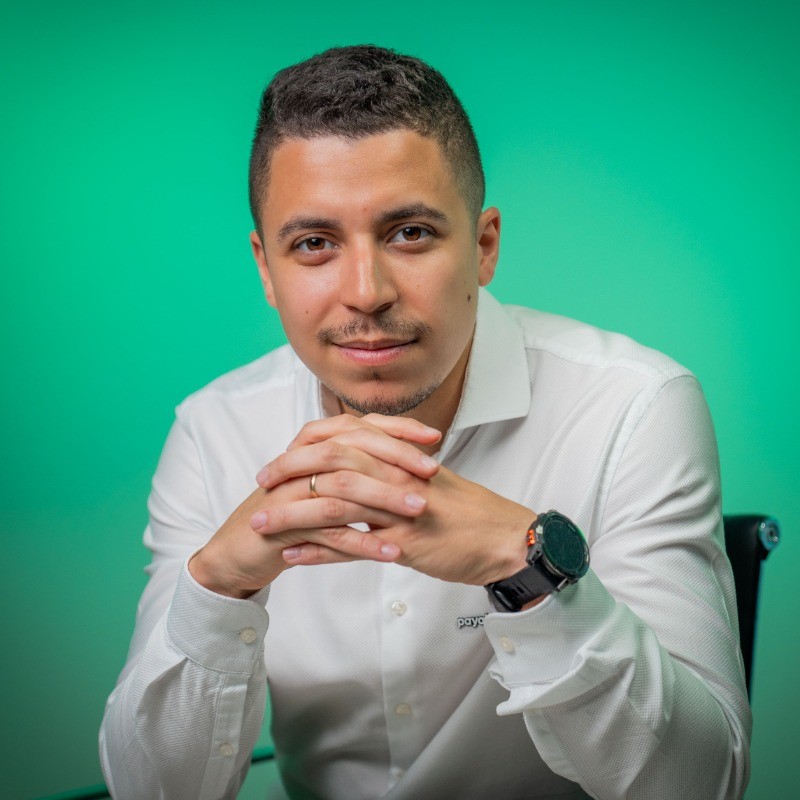
We will then see the integration of Wero into more super apps and then this integration of one or two other payments and instant payments. By the end of the year, there will be implementation across the region.
I don’t really think that this will be segregated, rather consolidation of wallets like Wero, and then it will set the tone for the coming years. In Europe overall, we have some countries that are not part of the Eurozone, and that makes this a challenge. There is a potential possibility of adding all European-based currencies to Wero, which we should be aware of, as they are not all compatible with European-based wallets.
Thomas Voaden: We work in a very verticalised approach, across gambling, retail, travel and in certain aspects, these companies actually want it to be overcrowded.
In gambling, some take payments in any form, and we ultimately want to give our customers what they want. Whereas you take something like travel, it’s a lot more selective and really they’re just trying to find payment methods and wallets at a lower cost.
I think what is interesting that we’re starting to see is more of a drive to personalisation. What we’re doing around personalisation is around customer groups. Some of these customer groups are of a young demographic, therefore, they’re happy to be bombarded with ten payment methods and they are probably used to paying in more payment methods. Whereas an older demographic or VIP customers, you might want to offer a select, more kind of premium payment method.
What we are seeing more and more crop up are interesting methods like Revolut Pay, becoming very popular amongst our merchant base. I think what’s interesting is that if you take something like open banking or other local pay methods, a lot of people don’t recognise them and actually gaining that customer awareness is really hard to drive usage.
Whereas something like Revolut Pay, for example, where 80% of the Irish market and in the UK 10 million people have a Revolut card, you instantly gain that customer group. I think what we’re seeing from a merchant perspective is where there’s a big customer driving method with a pre-existing customer base, merchants will want to launch that method at pace.
Viktoriia Degtiarova: From a payment orchestration perspective, the most important trend is the personalisation and customisation of payment methods.
We launched this year the most customisable Cashier feature this year which allows any merchant that goes into our system to easily customise the checkout experience for the end user themselves, without any help from the developers.
Personalisation and customisation is such a big trend this year and is one that is going to continue to develop, which we are in line with.
In an age of digital currency growth, what do payment service providers have in place to facilitate both digital and fiat currencies to achieve true interoperability?
Breno Oliveira: I think we need to be honest with ourselves and remember the effort it took while we were building the proof of concepts in the past and tackle them today to adapt our infrastructure and ensure that it’s scalable to connect with these new currencies.
We need to provide the best product experience. It’s not only about the speed, but how the customers trust this financial solution, with fast, reliable payment methods. It’s a mix of ensuring that the infrastructure is in place, tackling the challenges of the past process and at the same time, not losing the product experience, the title of me.
Rather than more sophistication, it’s a part of an evolution. We have been reliant on SEPA, Swift, for a long time, and now with stablecoins, I believe that we will adapt these use cases where Swift and SEPA will build products that are fit for purpose. I hope that we start seeing retail consumers using stablecoins for trips or exchanging money in a way that’s regulated within the regions.
Thomas Voaden: Payment service providers, orchestrators and platforms like us, we need to get ahead of the merchant to lead them. Like a lot of the time we’re led by the merchants, the merchants know what they want, they understand it. I think they know there’s a lot of buzz around this.

It feels when you talk to most of some of our partners and payment service providers and even us to an extent, we really need to nail down what our narrative is around how and when we think it’s a good idea to be accepting digital currencies.
It’s fairly early days on that front, we are starting to see some merchant interest, but I think it’s a lot more from a cautious approach. Merchants want to be led by people they trust, like their payment service providers, and then there’s a lot of competing, third party propositions, wallets, which can accept digital currencies with some card schemes are already doing, but it’s not really clear yet what the best route is probably.
Viktoriia Degtiarova: As a payment orchestration platform we provide crypto and fiat solutions, with crypto solutions becoming more and more popular.
We have different flows, crypto-to-fiat, fiat-to-crypto, and more merchants want to enter crypto payment flow methods. It’s definitely a big trend and becoming a lot easier to flow, especially for marketing and business development, it’s easier with crypto to grow into markets.
With fiat, you have to register licenses, onboard, etc., but with crypto it’s easy. You integrate the crypto cash flow into the cashier and then into the investment market. That’s it done.
I definitely see growth from within the crypto payment flow space and usage from within the gaming space as well, as crypto gaming is massive at the moment.
What is the one key payment trend this year you would like to see explode in usage next year?
Breno Oliveira: The adoption of stablecoins in a level that is both B2B and BTC related, and then taking them into the market without the need for the buzz from crypto, but be value driven. Because what happens is that it is able to provide technological rails that we need, and at the same time, it’s the beauty of a currency that is backed by crypto.
I think that if we see this moving forward and one day, we don’t know, we’ll see, like cryptocurrencies in Apple wallets. That would be something amazing.
Thomas Voaden: There is a lot more focus on routing in certain sectors. Take gambling for example, how can we start to optimise payout flows to decide when the best time to use bank transfers, to decide when it’s best to use card-based, like instant OCT payments based on cost or success rate.
There is also a big drive to tokenisation now, it’s very widespread, but the questions are now what types of tokens should I be using that will lead to the best customer experiences. How can you start to use those to enable one click checkout?

I think what we’re seeing is a desire to package tokens together and alternative payment methods (APMs) to really drive optimisation, but not just in authorisation rates, but end-to-end conversion rates too.
Viktoriia Degtiarova: I think more and more people next year will understand payments features, such as cost, optimisation, orchestration, etc., that can be built into a system through AI.
Before everything was very manual, and then you add in rules and then you have to change your systems manually too, it was becoming a very difficult infrastructure to manage your payments.
But now, we are embedding more AI features through algorithms that can help merchants in just one click, they gain access to customisation tools, such as chargeback optimisation, approval optimisation, etc.
This basically means the system itself approves the payment traffic into the payment service provider’s system, so they do not have to manually choose and select a provider, as the technology will automatically select the best possible solution for your end user, all in a fluid and quick process.