FinCEN and OFAC have moved to cut Cambodia’s Huione Group off from the US financial system, alleging the conglomerate laundered billions in crypto linked to investment scams and North Korean cyber heists.
The US Department of the Treasury has taken its most sweeping enforcement action yet against crypto-linked scam payments, designating more than 140 individuals and entities in Southeast Asia and formally severing Cambodia’s Huione Group from access to the US financial system.
The move, announced on October 14 in coordination with the UK’s Foreign, Commonwealth and Development Office (FCDO), targets what the Treasury described as a “transnational criminal empire” laundering proceeds from virtual currency fraud, online investment scams and heists attributed to North Korean state hackers.
FinCEN, the Treasury bureau responsible for anti-money laundering enforcement, invoked Section 311 of the USA Patriot Act to prohibit US banks and payment firms from maintaining correspondent accounts on behalf of Huione Group, effectively cutting the company off from dollar-based clearing and international payment rails.
Impact on payments
According to the Treasury, Huione laundered at least $4bn between August 2021 and January 2025, including $37m from North Korea–linked crypto heists, $36m from virtual investment scams and $300m from other cybercrimes. The network allegedly acted as a payments hub for so-called “pig butchering” scams, in which victims are lured into fake trading platforms before their funds are siphoned into crypto wallets.
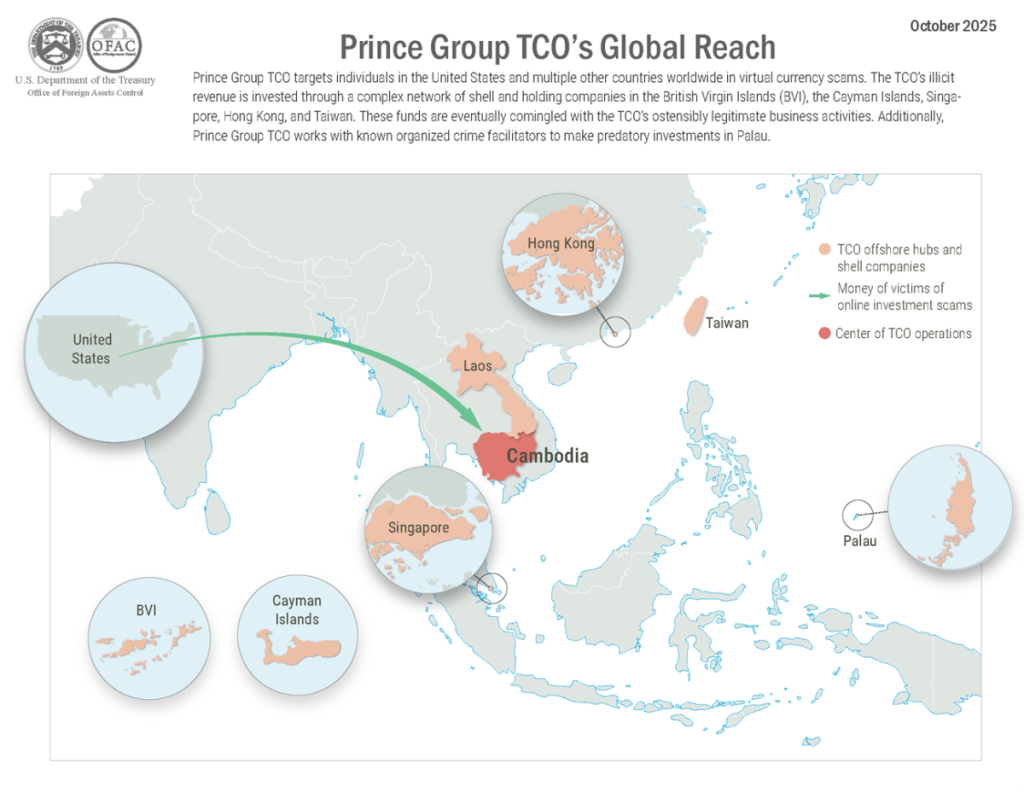
By finalising the Section 311 rule, FinCEN has extended prohibitions to any US or foreign financial institution using US correspondent accounts that process transactions involving Huione Group, a measure intended to prevent indirect access through nested relationships. The designation follows a string of Treasury advisories warning banks and fintechs about “financially motivated sextortion” and the use of virtual assets to obscure cross-border fraud flows.
“The rapid rise of transnational fraud has cost American citizens billions of dollars, with life savings wiped out in minutes,” Treasury Secretary Scott Bessent said. “Treasury is taking action to protect Americans by cracking down on foreign scammers.”
Compliance ramifications
For payments companies, the ruling means immediate sanctions-screening updates and heightened due diligence for transactions touching Cambodia, Laos or Palau, where related entities have operated. VASPs and exchanges must block associated wallets, strengthen blockchain analytics, and monitor for DPRK-affiliated wallet exposure.