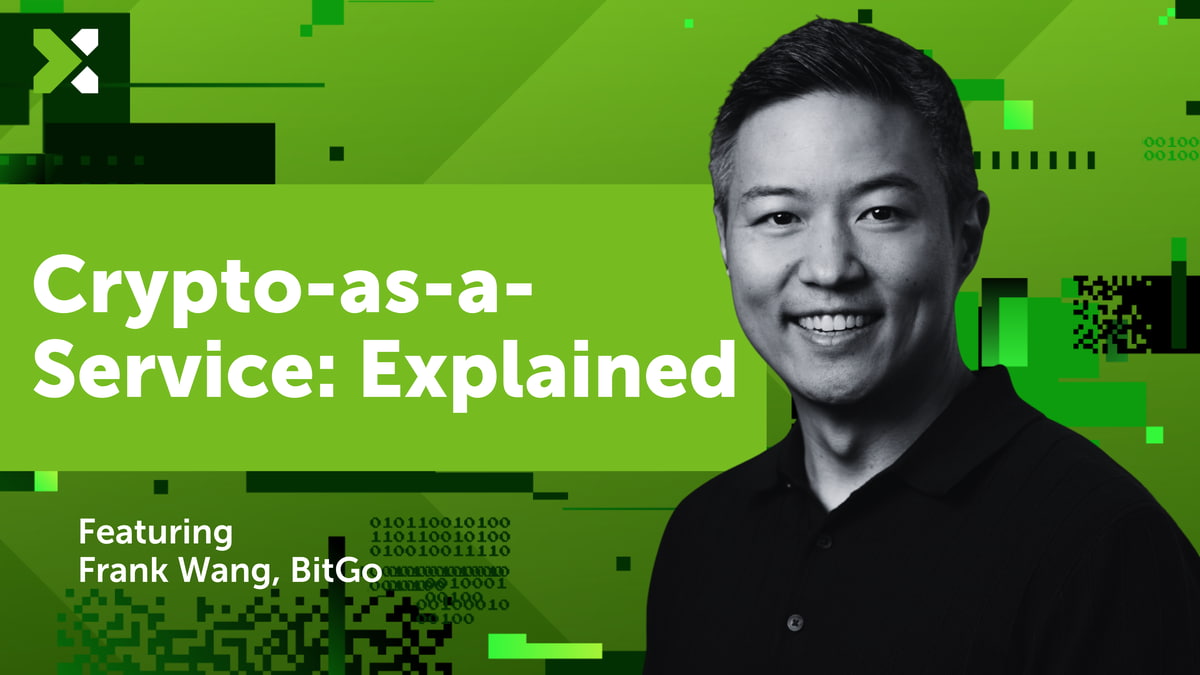
Blockchain Bulletin: Unchained invites some of the leading figures from the industry to explain, analyse and breakdown some of the key themes and news stories transpiring in real-time in an ever-evolving sector.
In the latest episode of Blockchain Bulletin: Unchained, Frank Wang, Managing Director and Head of North America Fintech Sales at BitGo, breaks down how Crypto-as-a-Service (CaaS) has become decentralised finance’s (DeFi) answer to embedded finance.

CaaS is the process of a white-label provider installing their APIs or software to non-DeFi companies to enable the company to offer blockchain and crypto services.
CaaS’ current day prominence parallels and shares similarities with traditional embedded finance, such as banking-as-a-service (BaaS), and Wang simplifies what some of the early stage opportunities look like for companies seeking to embed CaaS for the first time.
“It starts with the on ramp, partnering up with a fintech company to enable the customers to go from a USD or Euro, into a stablecoin or Bitcoin, as an example,” explains Wang.
“Fintech has now monetised that, they have taken a small slice of the conversion fee, and they have enabled their end customer to acquire a digital asset. That is step one. That is the foundation.”
“Now you have one, tens of thousands or hundreds of thousands of users that you have enabled to on ramp to digital assets, and now you go ‘well, what’s next?
Opportunities and questions around Crypto-as-a-Service
CaaS providers like BitGo offer services such as custodial management of digital currencies, spot and derivatives trading, on/off ramping of fiat-to-crypto – and vice versa – conversions, as well as crypto lending and stablecoin yield.
Fintech firms, such as Revolut, have begun incorporating crypto and DeFi services as part of their tech stacks to not only diversify their services to new and existing customer and client segments, but also to generate new revenue streams.
But there still remains caution throughout the traditional finance space on the risk assessment of servicing crypto and digital asset products to their end customers, even if CaaS providers like BitGo are handling all the backend infrastructure
“If you have a motivated and experienced technical team, you can be up and running in six weeks,” says Wang.
“(Clients) do come and ask questions about; what about compliance? What about AML?. The great news for these fintechs is that CaaS is sort of the easy button to solve all of these compliant and regulatory issues for the fintech.
Regulatory and compliance assurance
The crypto regulatory landscape across the world is constantly evolving as traditional finance looks to harness DeFi’s potential while supporting it with the necessary regulatory frameworks to ensure consumer and business compliance.
The US has already passed the GENIUS Act and the US Senate is currently working on passing the CLARITY Act. The UK has committed to launching its regulatory market in October 2027, while the European Union, United Arab Emirates and Singapore already have established frameworks in place to allow regulated activities to take place.
The varying rules and guidelines for fintech firms, which may not have as much experience as it does to traditional regulation, could fall into compliance traps if not carefully managed. This is where CaaS providers come in to leverage their existing regulatory licences to assist traditional finance firms and take on the compliance and regulatory burden.
“It depends on the nature of a client that we are servicing,” says Wang.
“If our client is a fintech, their burden as an unregulated company is fairly limited. As they are largely unregulated, the burden of that compliance comes to (BitGo).
“BitGo as a regulated entity is responsible for compliance with the Bank Secrecy Act (BSA), the KYC, the customer due diligence, the transaction monitoring, the on-chain monitoring, etc.
“So largely, these fintechs can get away with a limited compliance staff when they partner with a regulated entity like BitGo.”
To watch more in-depth interviews from some of the blockchain’s leading industry figures on Blockchain Bulletin: Unchained, click HERE to subscribe to the Payment Expert YouTube channel.
You can also subscribe to the Blockchain Bulletin LinkedIn Newsletter feed HERE.